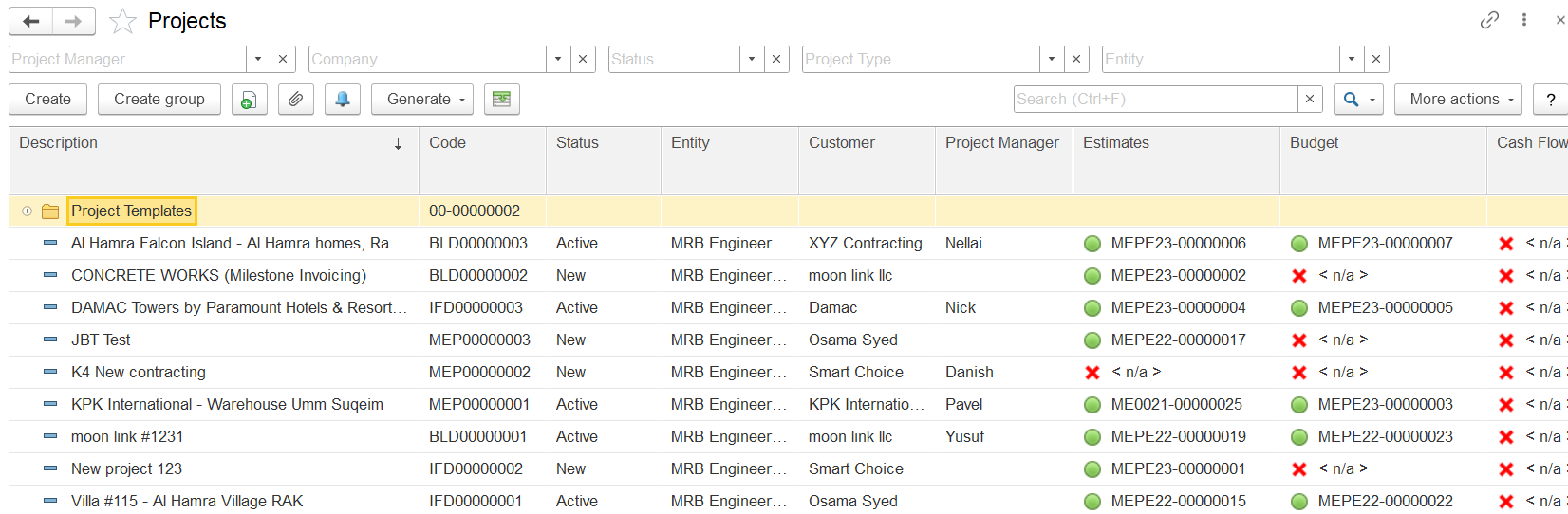
To access the list of projects, select Project Costing (the left panel) > Master Data > Projects.
The project master data contains information about the company's external and internal projects.
Before starting project creation, it may be necessary to create master records of the following types: Project Roles and Project Types. However, all required master records of these and other types can also be created easily during the project creation process.
Project records can be organized in a folder (or group) structure. For example, projects can be grouped by customer, project type, or in any other logical way. No projects or folders are available by default in a newly implemented system.
The project list displays all projects in the system, organized in this hierarchical structure. If a specific project is not visible, try opening a different folder or using the Search field to locate the project by part of its description or the customer’s name.
The Toolbar Buttons
To add a project, click the Create button on the toolbar. To edit an existing project, double-click the line containing its name. Alternatively, select the line, right-click it, and choose Edit, or use the toolbar option: More actions > Edit.
For a selected project in the list, the Generate button enables the creation of the following document types:
Customer Order – Records goods and services the customer requests for the project.
Invoice – Bills the customer (client) for goods and services provided within the project.
Purchase Order – Orders goods and services required for the project.
Invoice Received – Registers the purchase of goods and services for the project.
Inventory Write-Off – Records the issue of inventory items from a warehouse for project needs.
Requisition – Requests goods and services required for the project.
Proforma Invoice / Payment Application – Requests payment from the customer (client) for goods and services delivered.
Proforma Invoice Received – Records a supplier’s payment request for goods and services purchased for the project.
Progressive Invoice – Bills the customer (client) based on project progress.
Requisition (for Estimate) – Requests estimated prices of goods and services from the supplier.
Creating a folder
To add a group (folder), click the Create Group button on the form toolbar. This opens the Projects (Create folder) dialog box. In the Description field, enter the description of this group (folder).
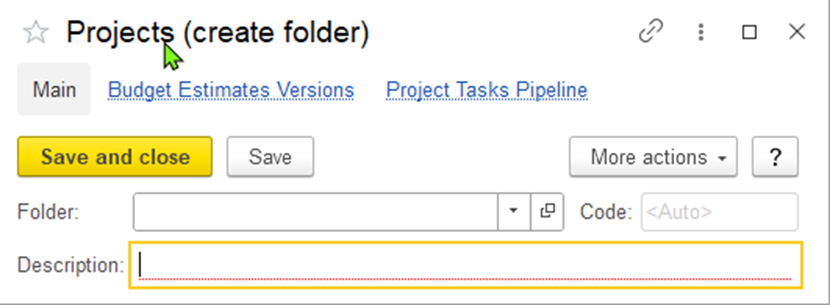
To create a group within another group (a parent group), specify the parent group in the Folder field (see the figure below). This action adds a new level to the hierarchy. There is no limit to the number of hierarchy levels that can be created. After setting the parent group, click Save and Close.
Projects can be moved between folders either by using the drag-and-drop method or by selecting a different folder in the project card while editing the project.
Adding a Project: The Main Parameters Tab
This tab contains the main information related to the project, including the entity, customer, project manager, and planned start and finish dates. As the project progresses through its life cycle, actual start and finish dates can also be entered.
The required fields are: Description, Entity, and Project Warehouse.
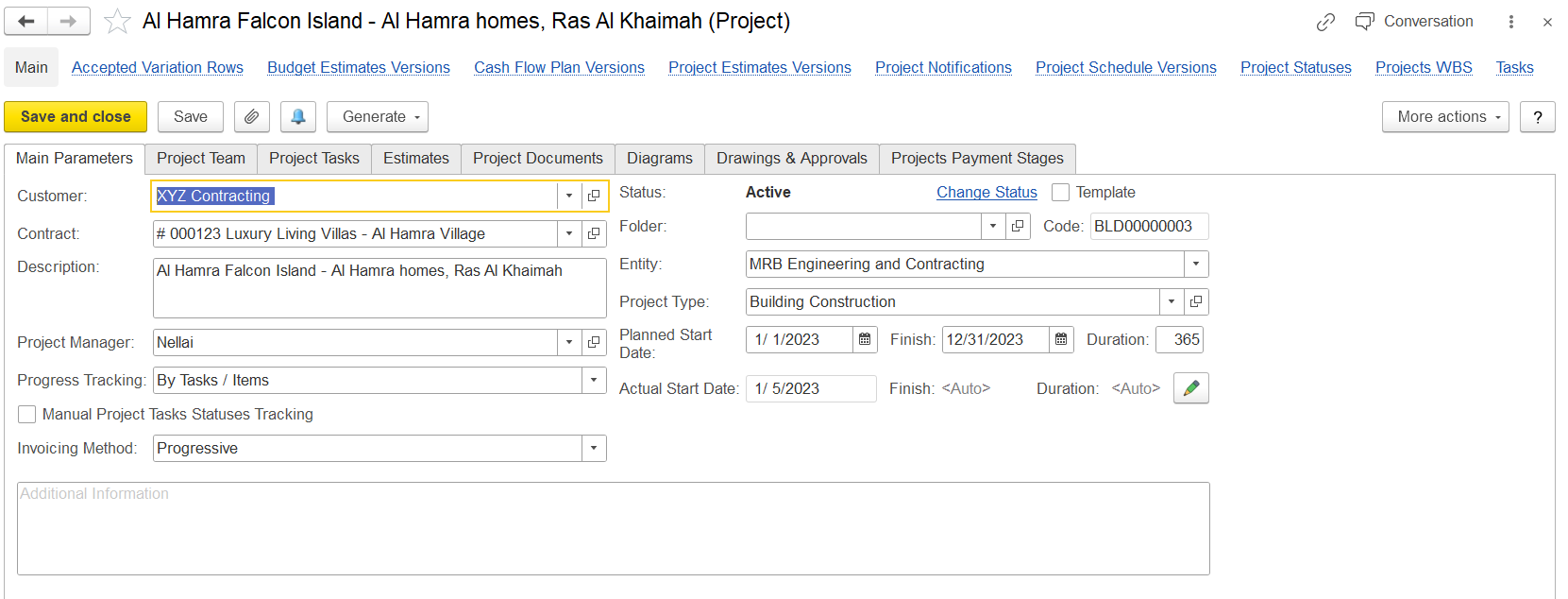
In the Customer field, specify the client for whom the project is intended. Optionally, in the Contract field, you can specify a contract which is related to this project.
In the Description field, type a clear and concise description of the project. This description will identify the project in project lists.
In the Project Manager field, select the employee who is responsible for this project in your company.
In Progress Tracking field, select the type to track the progress of the project. There are two type of progress tracking:
If you want to track your progress manually by changing the statuses of your tasks then Check the box for the Manual Project Task Statuses Tracking.
In the Project Warehouse field, select the warehouse which will used for consumption of the items in project.
The default status of a new project is Proposed. You can change status as the project moves through different stages in its life cycle. The following statuses are available: Proposed, Active, Completed, and Cancelled. For details, refer to the Project Status Changes subsection below.
If you want to add the project to a specific group of projects, select this group in the Folder field. If the necessary folder has not been added yet, you can create it by clicking to the right in the field and then clicking (Add).
Additionally, by using the Project Type field, you can select the project type among project types defined by using the Project Types form.
In the Entity field, select an entity of your company that is related to this project.
In the Planned Start Date, select the date when it is planned to start the project. In the Finish field, specify the planned finish date of this project. The duration (in days) of the project will be automatically calculated and will appear in the Duration field.
The actual start date can be assigned automatically once you change the project status from Proposed to Active. This option is indicated by <Auto> to the right of the date field. Also, the actual date of the project completion will appear in the Finish field once you change the project's status to Completed, as it is also indicated by <Auto> to the right of the date field.
If you need to specify the start and finish dates manually, click (Edit) to the right. Once you click this button, the Actual Start Date and the appropriate Finish fields become enabled, and you can enter the respective dates.
In the Additional Information text box, you can enter any information that is relevant to the project.
The toolbar buttons
After filling out the tab, click the Save button to save the project. Click Save and close to save the project with all the changes and close the form.
If you need to generate a new document for the project, click Generate on the toolbar and select the type of the document from the following ones:
You can change the project status by using the Change status link to the right of the current project status. The link appears once you save the project.
The Project Status Change (create) form appears when you click the Change status link.
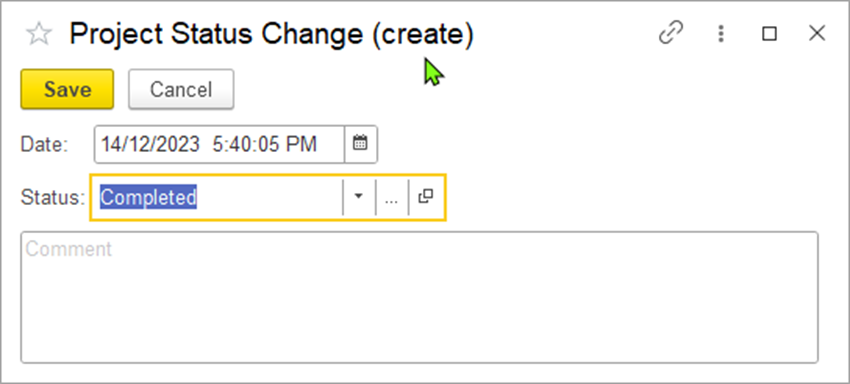
Figure 8: The "Project Status Change (create)" form.
Select a new status for the project in the Status field.
Optionally, you can edit the date of the status changing.
Then, click Save to assign the selected new status.
To view the history of project's status changes, click the Project Statuses link right under the project title.
Available links
The following links are available at the top of the form under the project title:
On this tab, you can list the project team members.
The tab contains the following two panes:
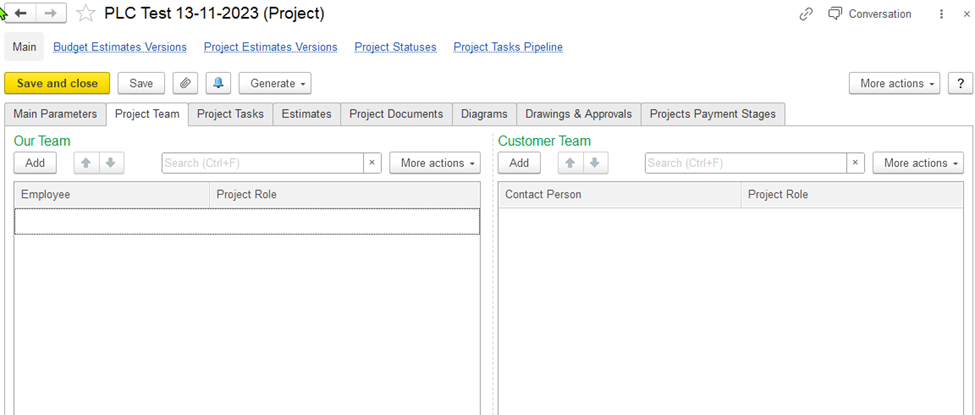
Figure 9: The "Projects (create)" form. The Team tab
To add a new member to Our Team, click Add on the left pane toolbar and select an employee from the Employees list.
In the Project Role column, you can select a role that this employee will play for the project as a team member. You can select the role from the list of Project Roles or add a new one on the fly.
To add a new member to Customer Team, click Add on the right pane toolbar and select a customer contact from the Company contacts list of the customer company contacts.
In the Project Role column, you can select a role that this contact will play for the project as a team member. You can select the role from the list of Project Roles or add a new one on the fly.
On this tab, you can review existing project tasks or add new ones to the project.
The tab contains the following two nested tabs:
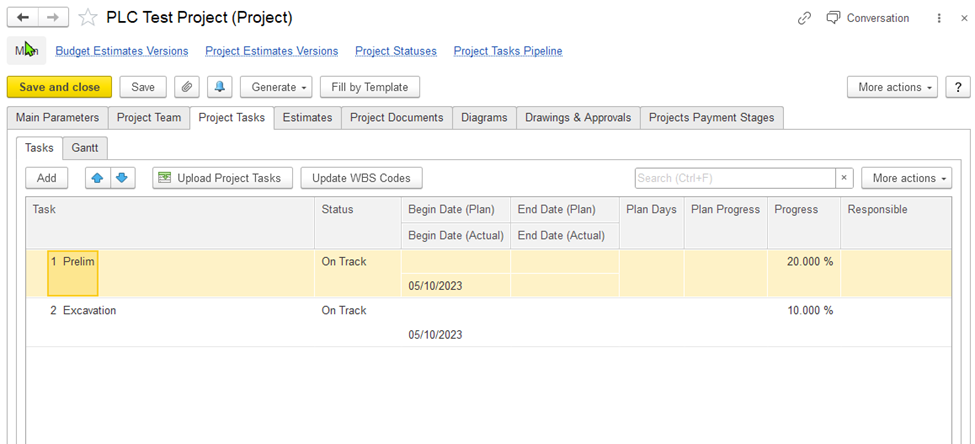
Figure 10: The "Projects (create)" form. The Project Tasks tab (the Tasks nested tab)
On the Tasks tab, you can view the list of tasks with their attributes. If needed, you can add new tasks to the project.
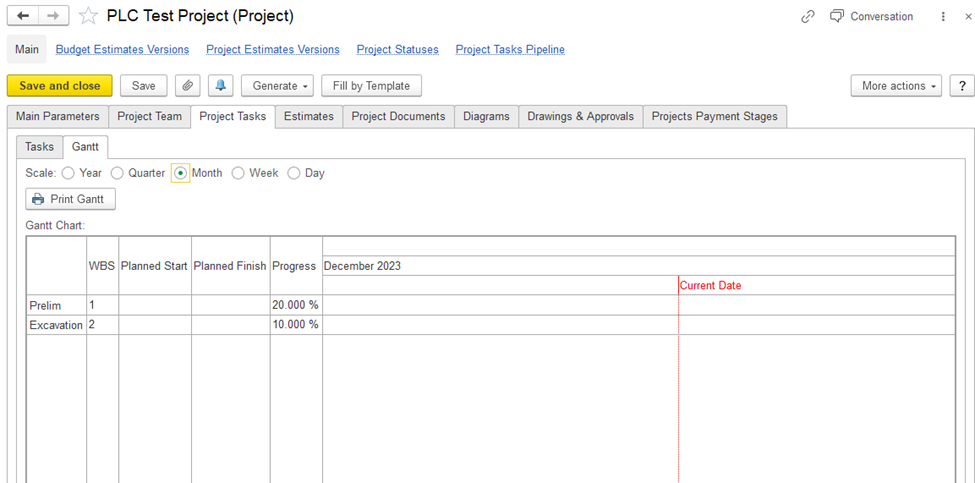
Figure 11:The "Projects (create)" form. The Project Tasks tab (the Gantt nested tab)
On the Gantt tab, you can view the task, planned start and end dates, their progress, and how the tasks are related.
Adding a Project. The Project Estimate tab
By using this tab, you can view the revenue and cost estimates for the project. Estimates for the project are created by using the Project Costing > Project Costing Documents > Project Estimates form.
If you need to edit the current estimates of the project, click the Edit Current Estimates button.
If you need to create a revision of the project estimates, click the Create Revision button.
If you need to create or edit project budget, click the Create/Edit Budget button.
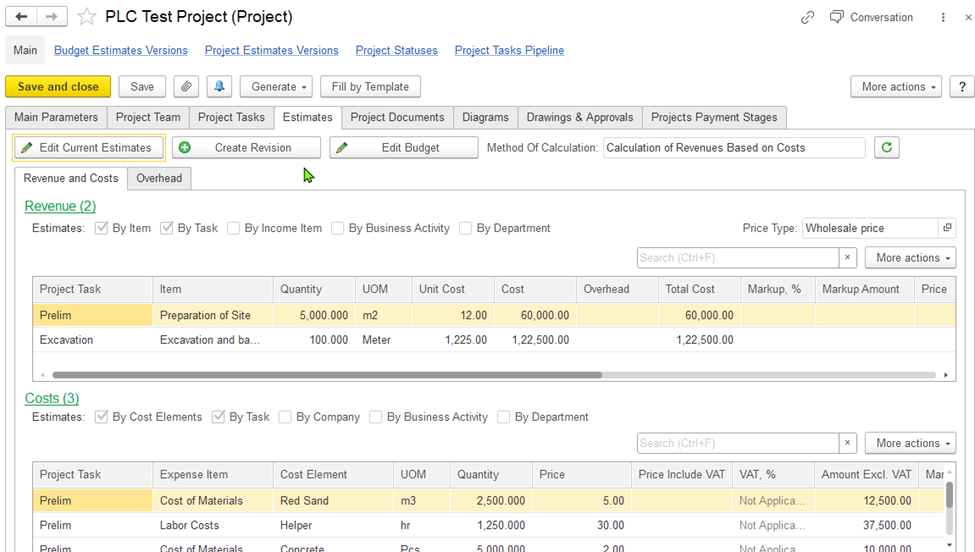
Figure 12: The "Projects (create)" form. The Estimates tab
There are two ways to create project estimates:
On this tab, you can enter general information about the project's estimate: the project, customer, project type, entity, and the employee who is responsible for the project. Also, you can specify whether you need to split estimates by planning period.
If for any method, the Estimates by Period check box is selected, one more tab, Estimates by Period, appears.
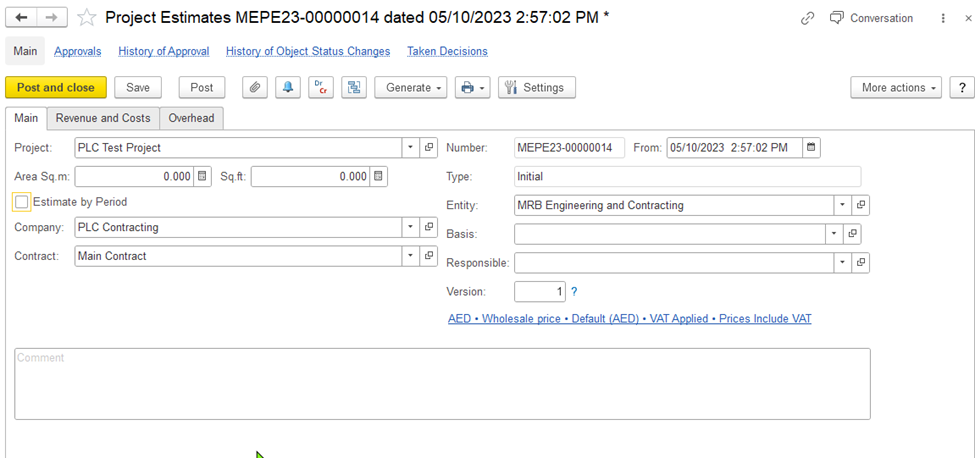
Figure 13: The "Project Estimates (create)" form. The Main tab
<Auto> in the Number field indicates that a number for this document is assigned automatically when you save the document. The From field is populated automatically with the current business date. You can select another date, if necessary.
In the Type field, its weather this estimate is a initial version or revision or variation, it will be populated automatically by the system.
In the Entity field, select the legal entity of your company for which this document is being prepared.
In the Project field, specify the project for which you want to create estimates.
In the Company field, specify the company for which this project is being planned.
The Contract field is auto-populated with the default contract of the company; select another contract if needed.
The Estimates by Period check box is available. If you need to create estimates for each planning period within the project duration, select the Estimates by Period check box. This brings up the Estimates by Period tab.
In the Responsible field, you can select the employee who is responsible for this project.
The Version field is auto-populated with the version of the project budget.
Notice the hyperlink below the Version field – VAT Applied* Prices include VAT on the screenshot above (can be different in your document).
By clicking the hyperlink, you can open the Prices and Currency dialog box and change the price-related and taxation-related settings to be used for the project estimates. For more details, refer to The Prices and Currency dialog box.
In the Comment text box, you can enter any information related to this project's budget.
This tab is used for building the project budget using the Calculation of Revenue Based on Costs calculation method. The tab contains the following two panes:
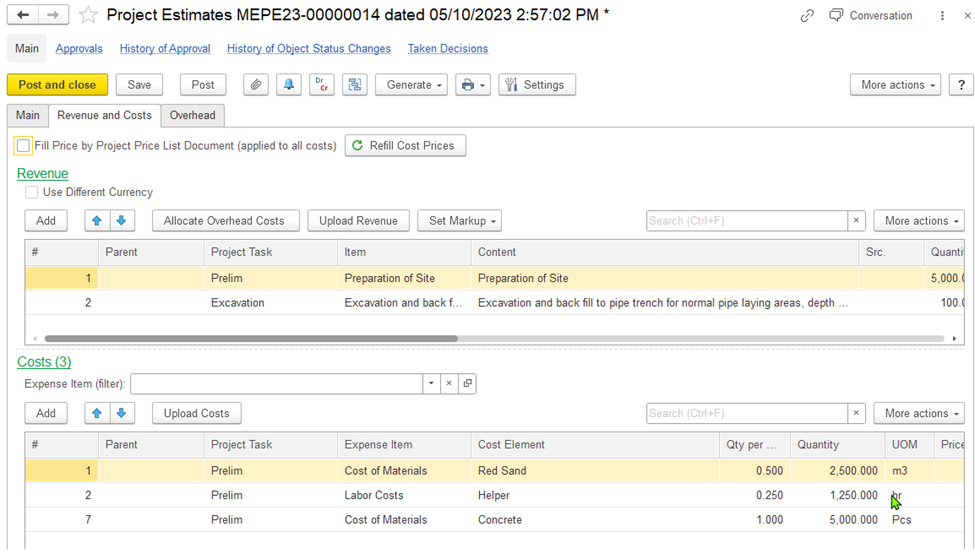
Figure 14: The "Project Estimates (create)" form. The Revenues and Costs tab
The Revenues pane
For each revenue listed in the upper pane, you can create a list of costs in lower pane.
In Project Task, select the project task for the revenue estimate.
In Item, select the item (revenue item/service) for the specific project task.
In Content, give detailed information for item (revenue item/service) it will populate by default when you select the item but it’s an editable field.
In Quantity, provide the quantity for the item (revenue item/service)
The UOM column (available if the Item is selected as the project revenue analytical parameter) is populated with the unit of measure used for the item.
If you don't need to specify estimates by item, you can type the revenue estimate amount in the Amount column.
In the Overhead column, enter the other costs and expenses related to the item. Generally, this column is auto-populated from the overhead amount allocated from the Overheads tab.
The Total Cost field shows the cost of the specified quantity of the item with the allocated overhead amount.
In the Markup, % column, you can specify the percentage of increase to be applied to costs to get the revenue estimation. Generally, the revenue amount can be calculated based on markups specified for related costs in the lower pane.
In the Markup Amount column, you can view the added amount for the specified percentage or you can enter the amount directly if no percentage is specified.
The Amount column shows the amount for the specified parameters.
The VAT,% column is auto-populated with the VAT rate applicable to the revenue.
The VAT Amount column shows the amount of VAT calculated for the revenue.
In the Price column, you can view the resulting revenue item price. If the Markup is specified, the price is calculated based on the cost and markup.
The Total Amount column shows the revenue amount.
The Cost Pane
For each revenue, you can specify multiple costs in the Costs pane.
Click Add to add a new cost for the revenue selected in the upper pane.
Project Task will come automatically based on the revenue line..
In Expense Item, select the type of expense you want to add (for ex: Cost of material, labor Cost etc).
In Cost Elements, select the Cost item to be able to view project costs detailed to cost elements which you can select from the Items, Employees, Positions, Fixed Assets lists.
In Qty per unit, select the quantity required for 1 revenue item, so whenever we change the quantity in revenue line, it will automatically change the quantity on cost side.
Quantity field will be populated automatically based on Qty per unit field, or you can enter manually also.
UOM Field will be populated based on item. We can change that also.
In Price, enter the cost price for the selected cost element.
In the Price column, you can enter the item price.
The Amount column shows the total amount for the specified expense or cost with the VAT amount added if applicable.
In the Markup, % column, you can enter the percent of increase to be applied to the cost to get the revenue estimate related to this cost or expense.
The Markup Amount column is auto-populated with the amount of markup. Alternatively, you can enter the amount and the markup percentage will be recalculated.
The Amount Incl. Markup column shows the cost with markup for this cost/expense.
This tab is used to enter the estimates of overhead costs for the project. This tab is available if the estimation method is Independent Calculation of Costs and Revenues.
To allocate the overhead costs, use the Allocate Overhead Costs button on the toolbar of the Revenues and Costs tab.
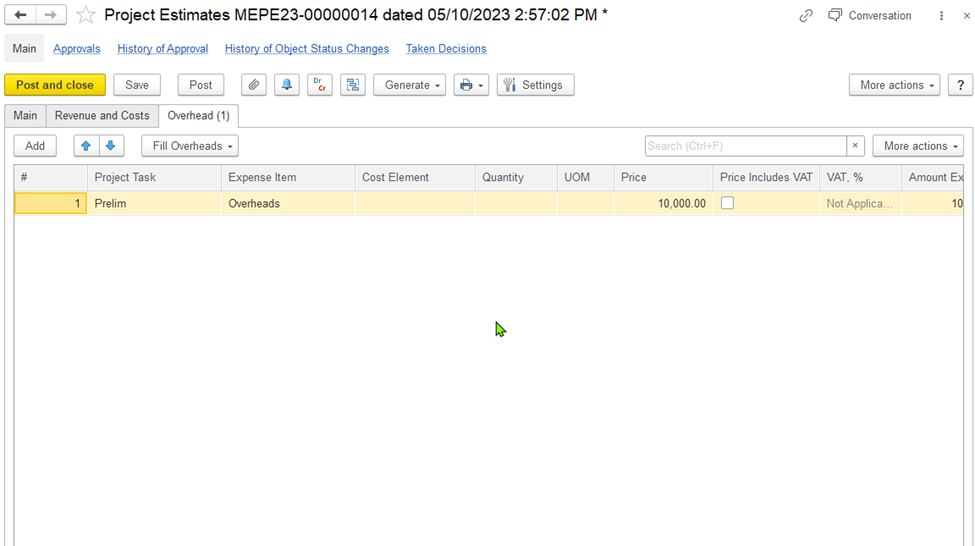
Figure 15: The "Project Estimates (create)" form. The Overheads tab
Click Add to add a new overhead cost associated with the project or you can fill overheads cost by project tasks.
Select Expense Item to categories the expense item (i.e. Overheads)
Select Cost Element, Quantity, UOM. They are optional fields.
Enter Price of the overhead cost.
The VAT,% column is populated with the percent of VAT applicable to the overhead cost. You can change the rate if needed.
The Amount Excl. VAT column shows the total amount of this overhead cost without VAT amount. This amount will be allocated to project estimates.