As before
- Purpose of the document.
- how to create. based on progressive invoice.
- main tab attributes.
- Table: how to fill, columns description.
A Credit Note based on a Progressive Invoice is used when previously invoiced progress (under a project or contract) needs to be reversed or adjusted. This can occur due to:
Overstated progress in a project
Revisions in certified quantities or values
Errors in the original progressive invoice
Agreed deductions after invoice issuance
To create a credit note based on a progressive invoiceA credit note can be created manually through the sales documents screen:
Sales → → Sales Documents → Credit Notes.
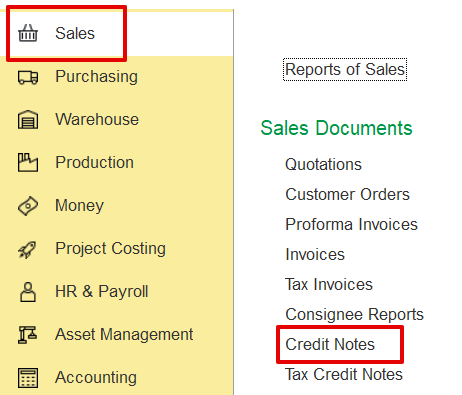
Alternatively, it can be automatically generated from the related invoice, which serves as the reference for the credit note. All the details must be automatically filled in.
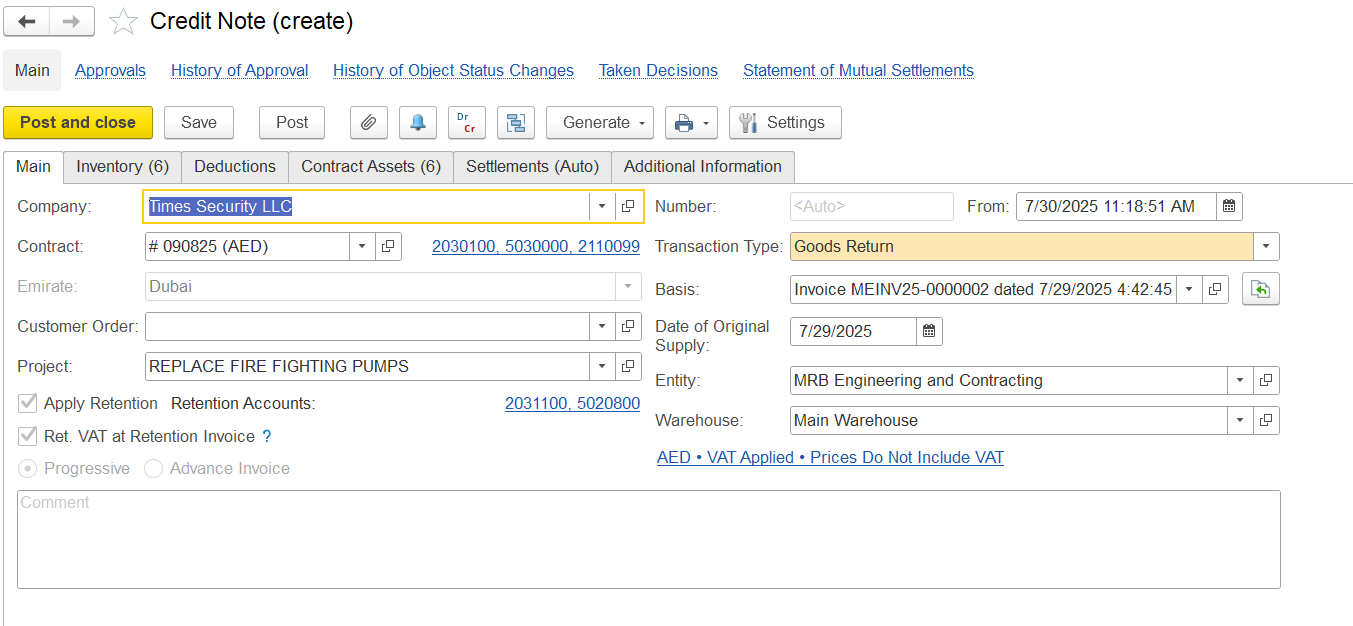
Main Tab
The Main Tab captures the essential details that identify and control how the credit note is processed.
Company Name - The company or client for whom the credit note is created
- Contract - Refers to the agreement associated with the transaction.
- Emirate - Indicates the emirate where the transaction was carried out.
- Customer Order - Represents the client’s order linked to this credit note.
- Project - Specifies the project or job connected to the transaction.
- Apply Retention / Ret. VAT at Retention Invoice - Indicates if retention should be applied (as defined in the contract) and specifies how VAT is handled for retention-related invoices
- Progressive / Advance Invoice - Indicates whether the credit note is linked to progressive billing or related to a previously issued advance invoice.
- Comment - A field used for entering internal comments or notes.
Transaction Type describes the kind of credit note being created. For adjusting progressive invoices, you can use:
Goods Return: Used when physical items or materials are being returned. While posting it makes reverse transactions in GL.
Invoice Correction: Used when correcting amounts or quantities without returning items, such as fixing errors or updating values. While posting it makes adjustments with negative numbers (values with minus "-").
- Basis - Indicates the original invoice that the credit note is reversing.
- Date of Original Supply - The date when the original goods or services were provided.
- Entity Name - The legal entity that issues the credit note
- Warehouse - The location of the inventory involved, if applicable.
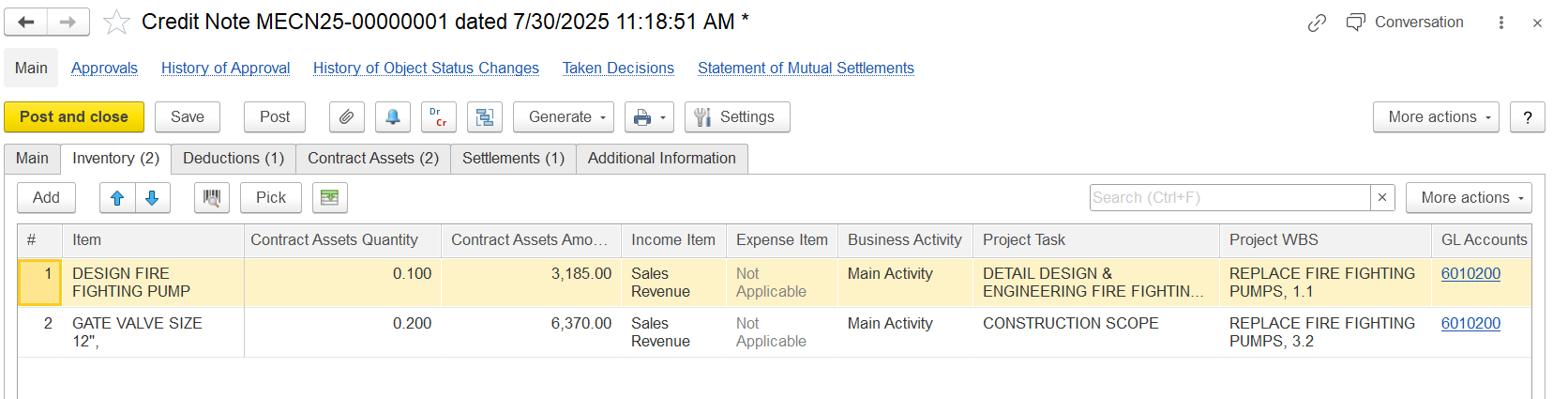
Inventory tab
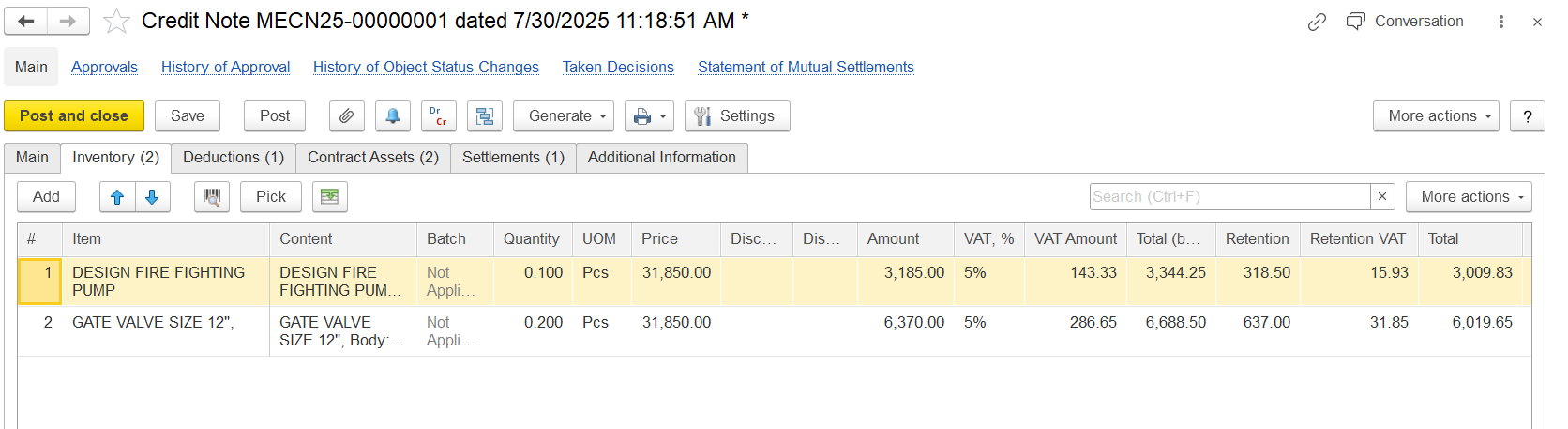
The Inventory Tab records and adjusts credited items and their financial details in the credit note.
- Item Description - Name of the returned or reversed item
Quantity-Number of units being credited back.
Unit Price-Price per unit before any deductions.
Amount-Total value for the line (Quantity × Unit Price).
VAT (%)-The VAT rate applied to the item.
VAT Amount- The VAT calculated on the item value.
Total Before Retention-The sum of the item amount plus VAT, before deducting any retention.
Retention-Amount withheld according to the project's retention rules.
Retention VAT-VAT amount related to the retention deduction.
Net Total-The final credited amount after retention and VAT on retention are deducted.
Contract Asset Quantity-Portion of the item quantity being reversed from the contract asset records.
Amount (Contract Asset)-The value reversed from the contract asset, calculated by multiplying the unit price by the contract asset quantity.
Note: These fields auto-fill when you click “Fill Contract Assets” in the Contract Asset tab.Income Account-The account where the original revenue from this item was recorded.
Business Activity-The reporting category this item belongs to (e.g., Main Activity).
Project Task / WBS-Links the item to a specific project task or work breakdown structure segment.
Deduction Tab
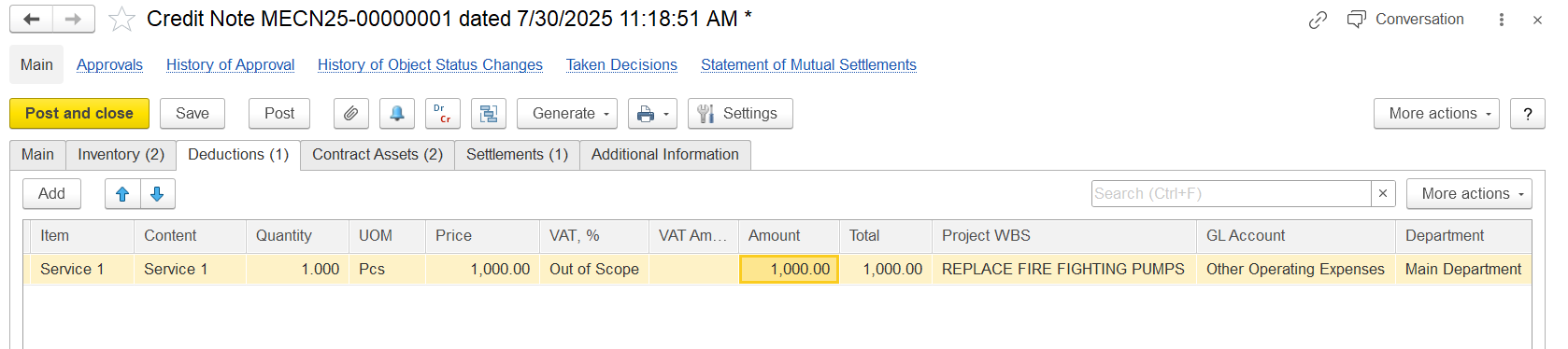
The Deduction tab is used to record and manage any deductions related to the credit note, such as penalties, withholding taxes, or other amounts withheld before settling the credit.
Item-Name of the deduction or credited item.
Content-Brief description or reference, often the same as the item name.
Quantity-Number of units being credited or deducted.
UOM (Unit of Measure)-The unit used to measure the quantity (e.g., pieces, kg).
Price-Price per unit of the item.
VAT%-VAT rate applied to this item.
VAT Amount-VAT calculated based on the price and quantity.
Amount-Total value before VAT (Quantity × Price).
Contract assets Tab
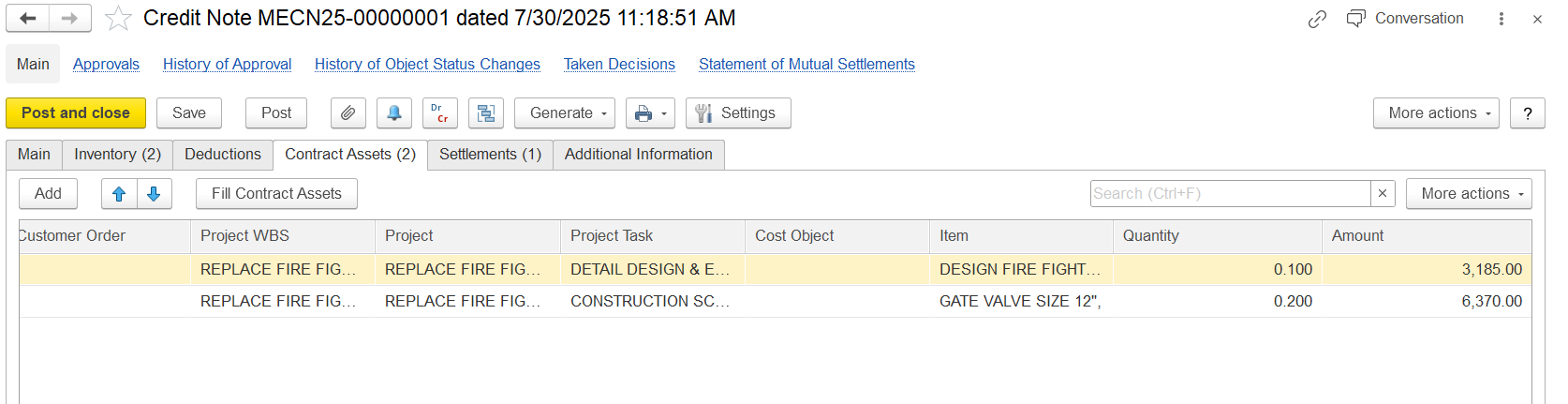
The Contract Assets tab records reversals or adjustments to previously recognized contract asset values in the credit note.
Note: These table not relevant for Credit Note with Progressive type. Transactions will be posted directly to the PL.
Customer Order - Reference to the client’s request or work order.
Project WBS - The Work Breakdown Structure level is used to track the specific scope of work.
Project - The main project linked to this credit note.
Project Task - The specific task or activity being credited or reversed.
Cost Object - The cost center or budget account assigned to track expenses.
Item - The material or service being credited.
Quantity - The amount being credited (returned or reversed).
Amount - The credited value, calculated by multiplying the quantity by the unit price.
Settlements Tab
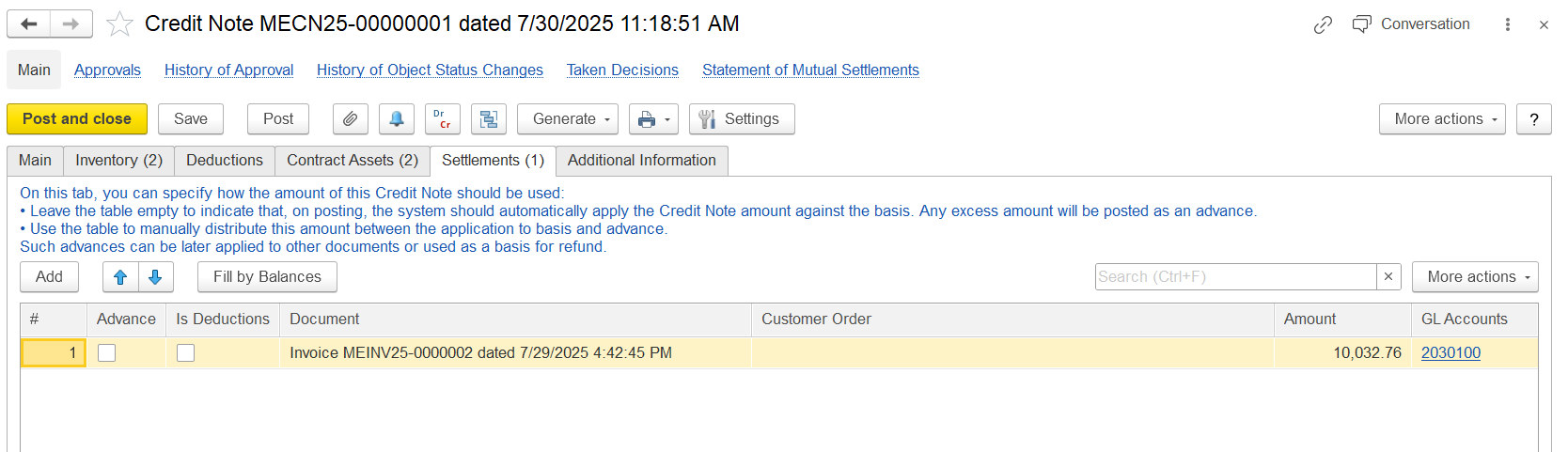
This tab shows how the credit note amount is automatically applied or settled against related payments and documents:
Advance - Indicates if the credit note adjusts a previous advance payment.
Is Deductions - Shows amounts from earlier deductions (like penalties) included in this credit note.
Document - The original invoice linked to this credit note (e.g., MEINV25-00000002).
Customer Order - Reference to the customer order tied to the original invoice.
Amount - The credited amount related to the original document.
GL Accounts - General ledger accounts affected by the credited amount.
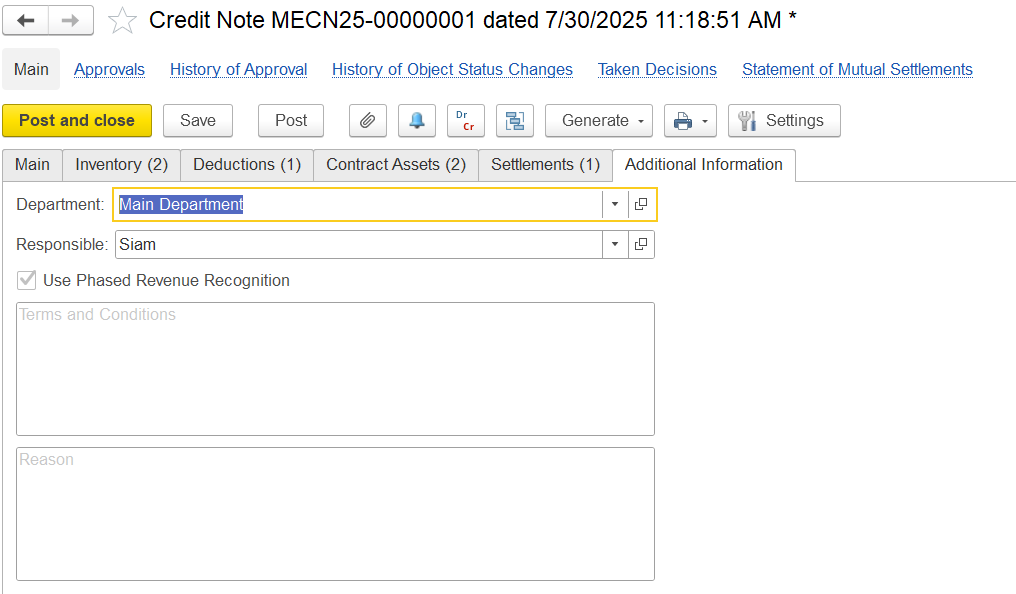
Additional Information tab
- Department - Specifies the internal division that issued the credit note
- Responsible - Name of the employee responsible for the transaction
- Use Phased Revenue Recognition - Checkbox indicating whether phased revenue recognition is applied
- Terms and Conditions - Text field for contract-specific terms
- Reason - Describes the reason or justification for issuing the credit