According to IFRS, income and expenses must first be recognized in the Profit and Loss statement. Only after the period’s financial result is determined does it flow into Retained Earnings. Recording operating income or expenses directly in Retained Earnings is not permitted under standard IFRS requirements.
Posting gains or losses directly to Retained Earnings represents a significant deviation from established accounting practice and may raise concerns with auditors and tax authorities. In general, bypassing the Profit and Loss statement can mislead shareholders and result in incorrect dividend distributions, since dividends are typically based on reported profit. This approach compromises financial transparency and may lead to compliance issues.
...
Problem: How to recognize income and expenses directly to Retained Earnings due to the correction of prior-period errors
...
?
Solution: Adjust the opening balance of Retained Earnings
...
via a manual journal entry in the General Ledger.
To correct a prior-period error in accordance with IAS 8, record a manual journal entry in the General Ledger:
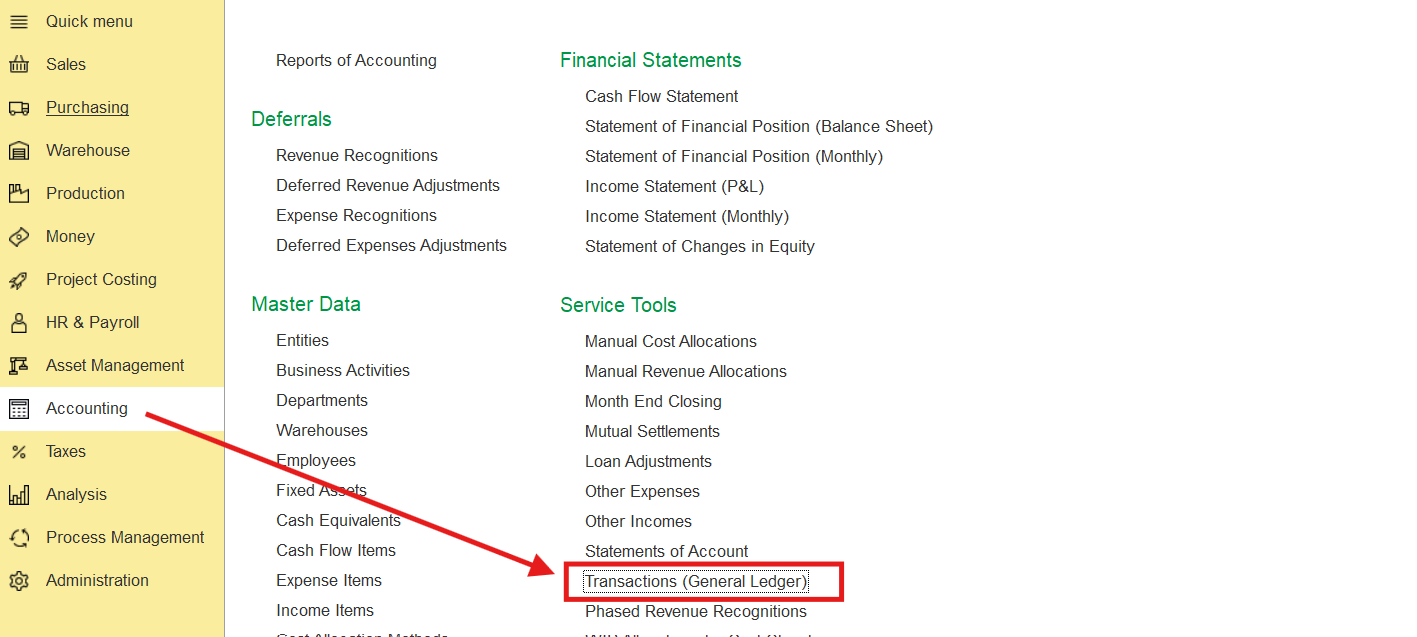
- Create a new journal entry.
2. Specify the following lines:
Debit: Retained Earnings (the GL account for retained earnings)
Credit: the appropriate asset, liability, or expense account (e.g., Other Administrative Expenses), depending on the nature of the correction.
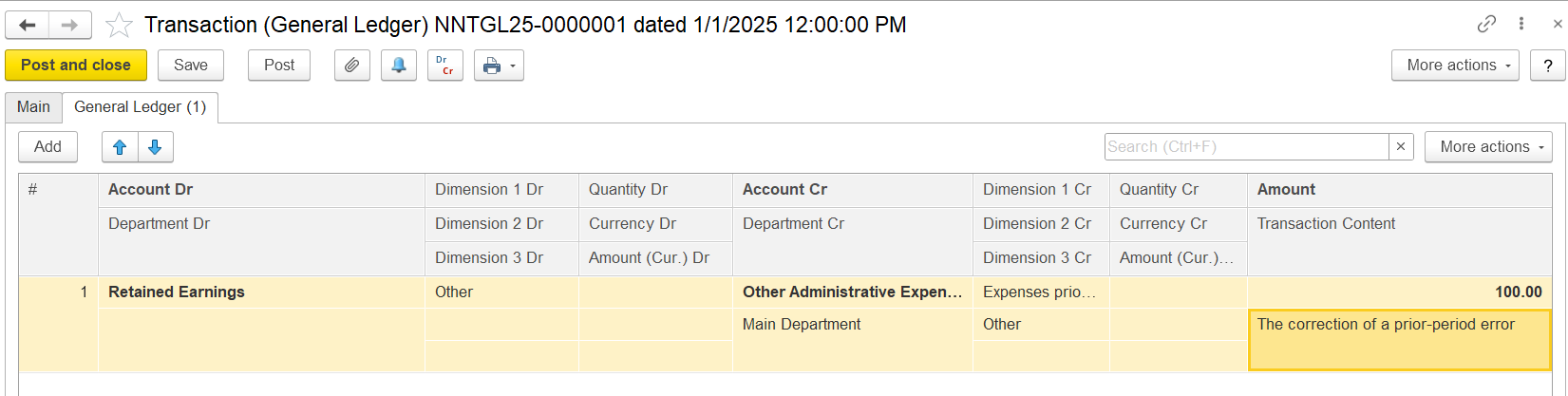
3. In the Transaction Content (description),
...
indicate that this entry represents a correction of a prior-period error
...
.
4. Date the journal entry in the current reporting period as an adjustment to opening Retained Earnings
...
.
5. Post the journal entry to finalize the correction.
Thanks for being a Firstbit Customer!
...