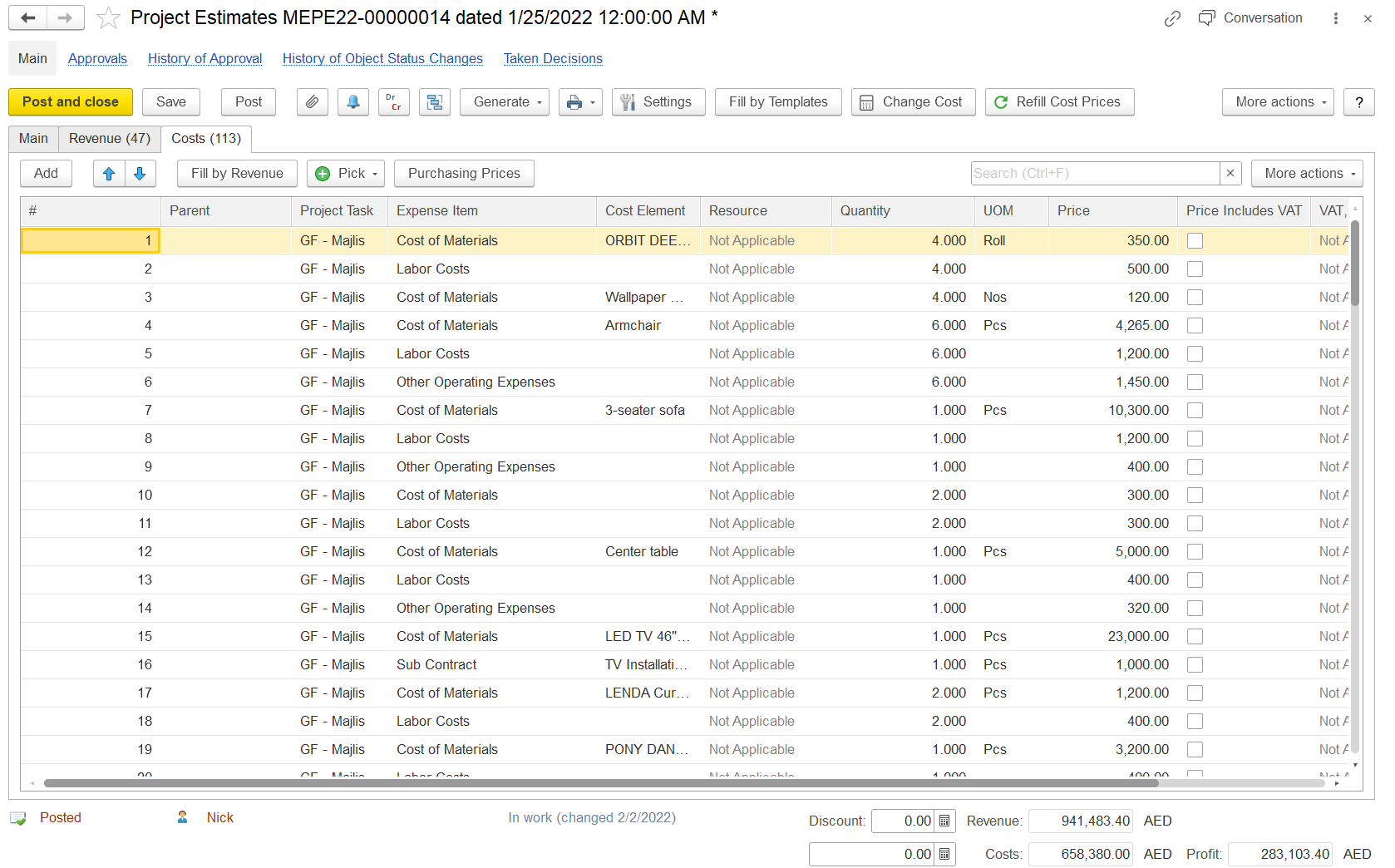
The Cost tab in the Project Estimates form allows users to enter and manage all cost-related data for a project when the estimation method is set to Independent Calculation of Costs and Revenues. This means cost and revenue figures are maintained and calculated separately.
Differences Based on Revenue vs. Independent Calculation
Feature | Revenue-Based Calculation | Independent Calculation |
|---|---|---|
| Cost derived from revenue | Yes (markup applied) | No (costs are entered independently) |
| Revenue auto-filled based on cost | Yes | No |
| Separate handling of VAT, price, and items | Limited | Fully flexible and detailed |
| Cost and revenue linkage | Direct | No linkage (manual entry) |
Fill by Revenue
This is a button available on the Costs tab of the "Project Estimates (create)" form when the estimation method is set to "Independent Calculation of Costs and Revenues." When clicked, it automatically fills in cost estimates using the revenue figures already entered on the Revenues tab. This provides a quick way to generate initial cost values, which can then be edited manually if needed. The feature is useful for maintaining consistency and saving time during project budgeting.

Refill Cost prices
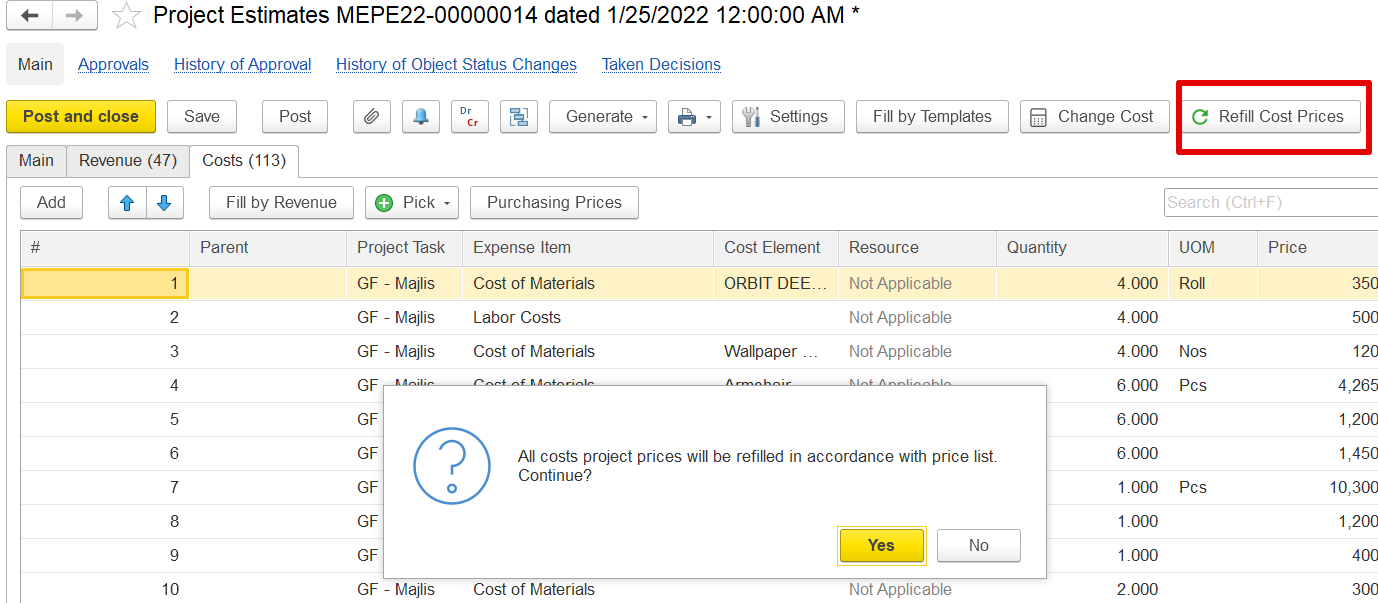
The "Refill Cost Prices" button updates the prices of all listed cost items in the Costs tab using the system’s current price lists. When clicked, a confirmation message appears, and if confirmed, the system fetches the latest prices from the purchasing or vendor price list and replaces the values in the Price column.
This function helps ensure that the cost estimates reflect the most current and accurate pricing, based on official or approved lists. It does not change quantities, UOMs, or other fields—only the price. If a price is not available in the list, the existing value remains unchanged.
Purchasing Price
The Purchasing Price form lets users select and apply the most relevant price for an item from historical purchase data, supplier tenders, or price lists.
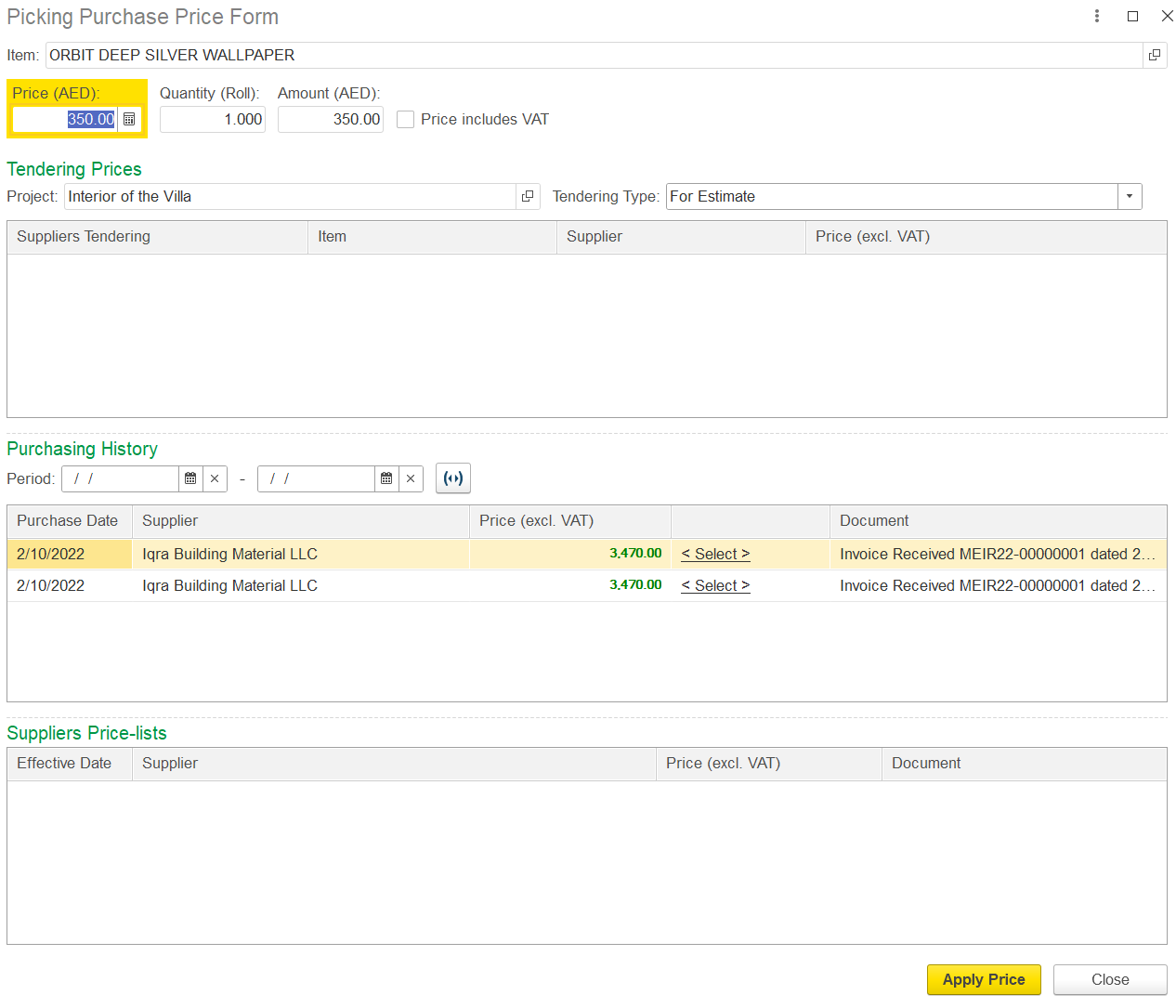
Shows quantity and price in AED.
Includes a toggle for VAT inclusion.
Displays history of purchases by supplier and price.
Allows applying the selected price directly to the estimate.
This ensures cost accuracy and standardization based on previous procurement.
The Change Cost Form enables bulk adjustment of existing cost estimates by a defined percentage or AED value.
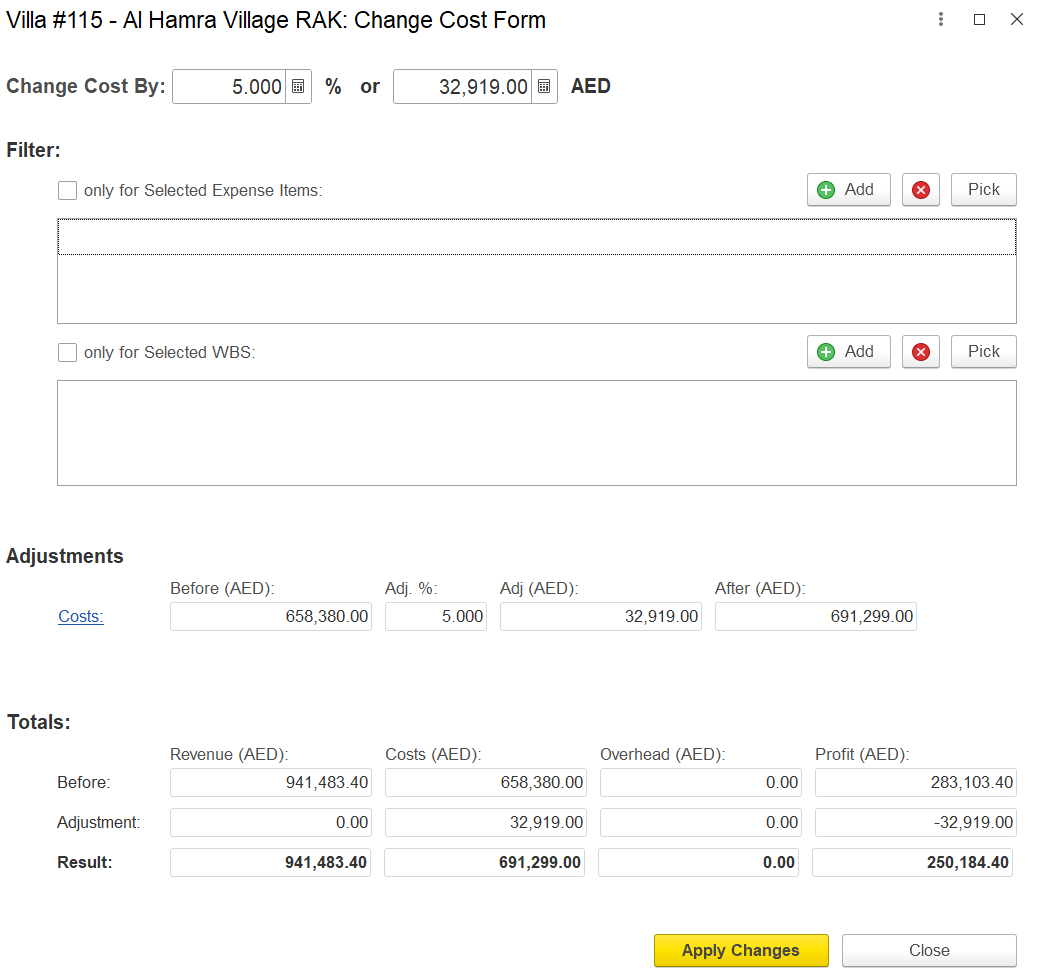
Key features include:
Change Cost By: Input either a percentage (%) or absolute value (AED) to increase or decrease the total project cost.
Filters: Adjustments can be restricted to specific Expense Items or WBS elements using selection filters.
Adjustments Table:
Displays current cost (“Before”), entered adjustment, and updated cost (“After”).
Auto-calculates the impact of changes on total cost.
Totals Section: Shows how changes affect:
Revenue
Costs
Overhead
Profit
Apply Changes: Confirms the update and recalculates totals.
Close: Exits without saving changes.
Example: Increasing cost by 5% on a 658,380 AED budget automatically adds 32,919 AED, updating the total cost and reducing profit accordingly.
The Pick button (when used with Resource Type filters) helps select relevant cost elements such as:
Employees (for labor)
Items (materials or goods)
Fixed assets (equipment usage)
Speeds up the process by filtering available elements according to the type of cost being estimated.
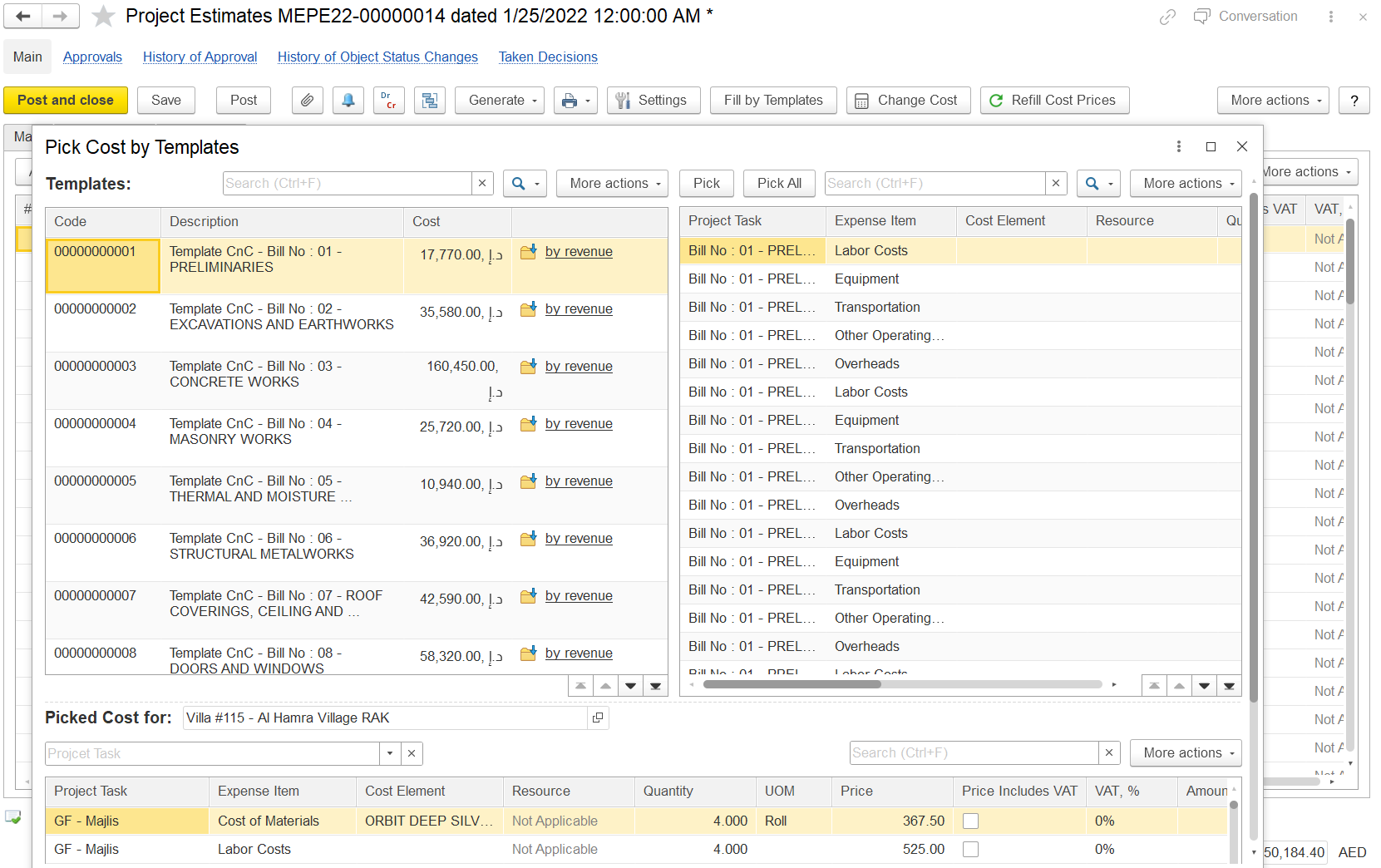
The Fill by Templates feature allows loading pre-defined sets of cost structures into the Cost tab.