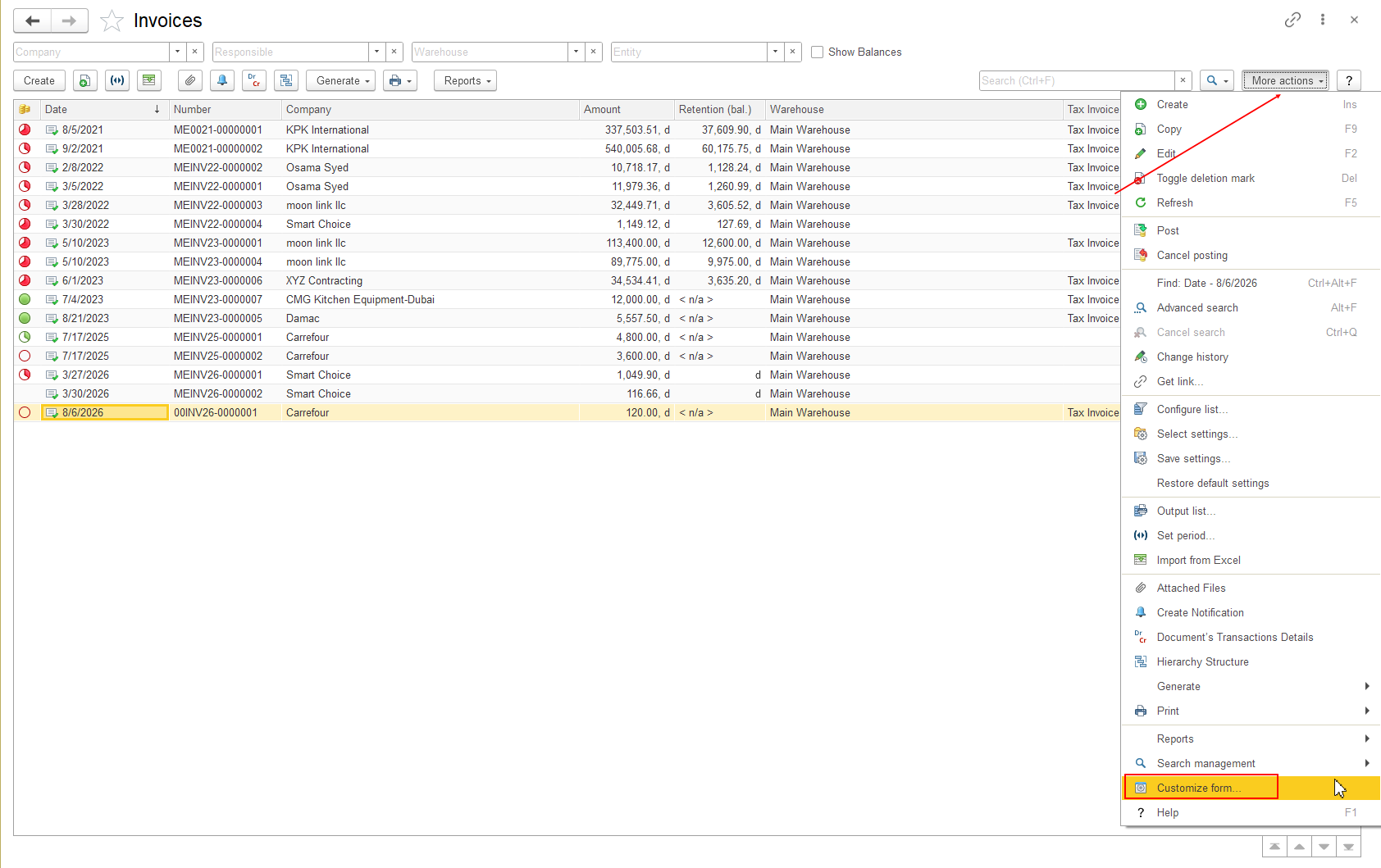
Customize Form allows you to personalize the structure and appearance of a List Form according to your working needs.
You can use it to:
The customization is personal: it applies to the current user and does not change the List Form for other users.
The Customize Form window displays the structure of the List Form under Form items.
The exact structure depends on the particular List Form. It may include elements such as:
Screenshot: Show the Customize Form window with the Form items structure visible.
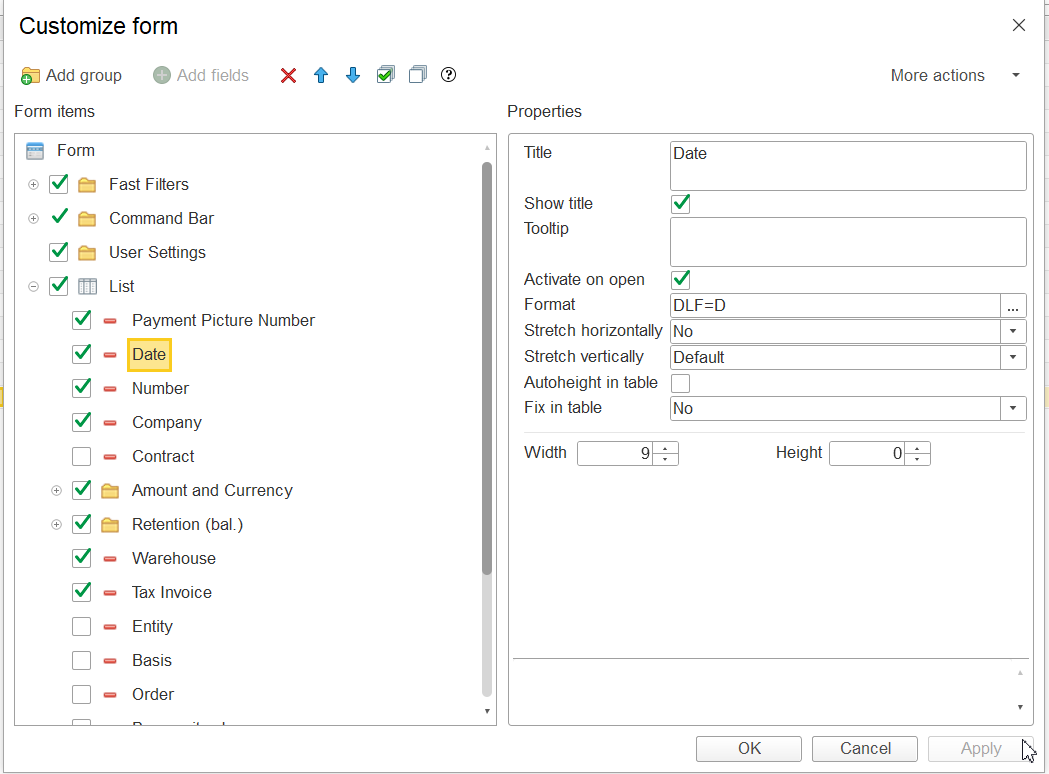
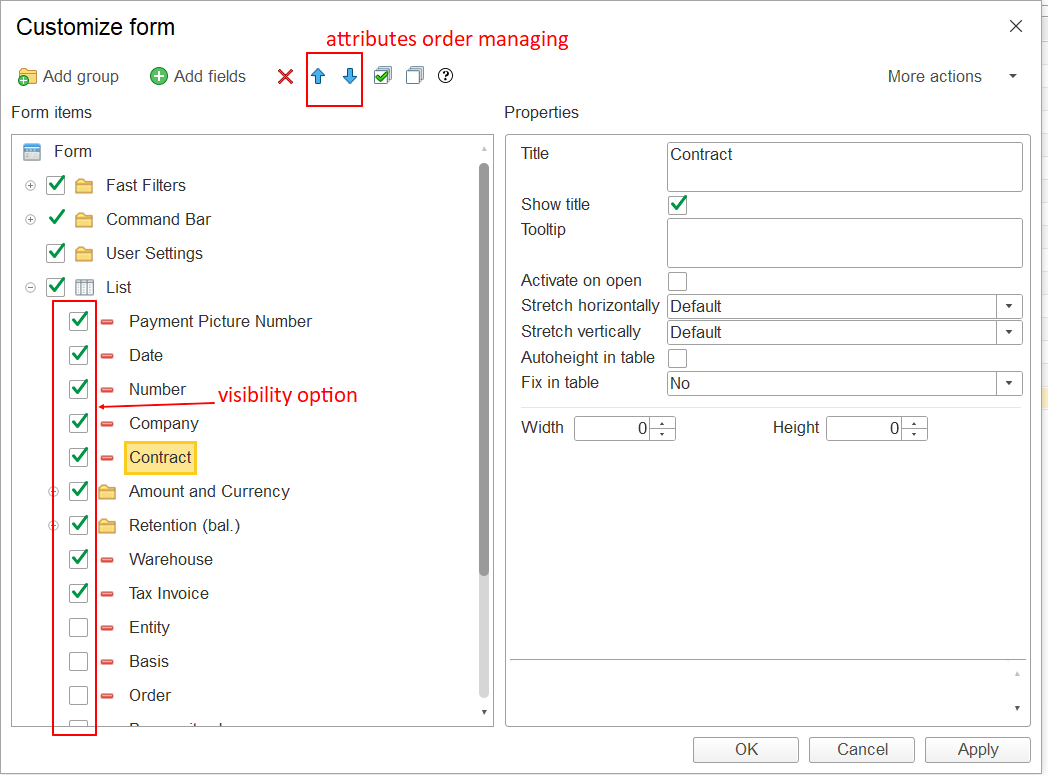
The List element contains the fields displayed in the List Form.
To show or hide a field:
Clearing the checkbox hides the field from the List Form. Selecting it makes the field visible.
You can change the order in which fields are displayed in the list.
The field is displayed in the new position in the List Form.
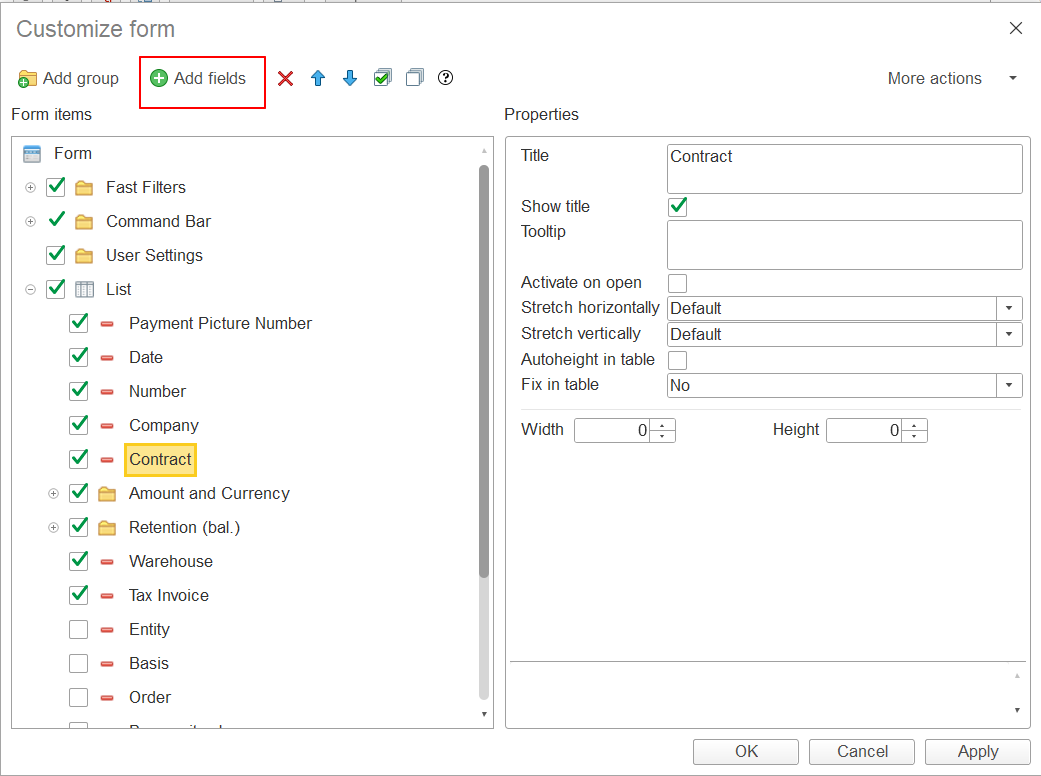
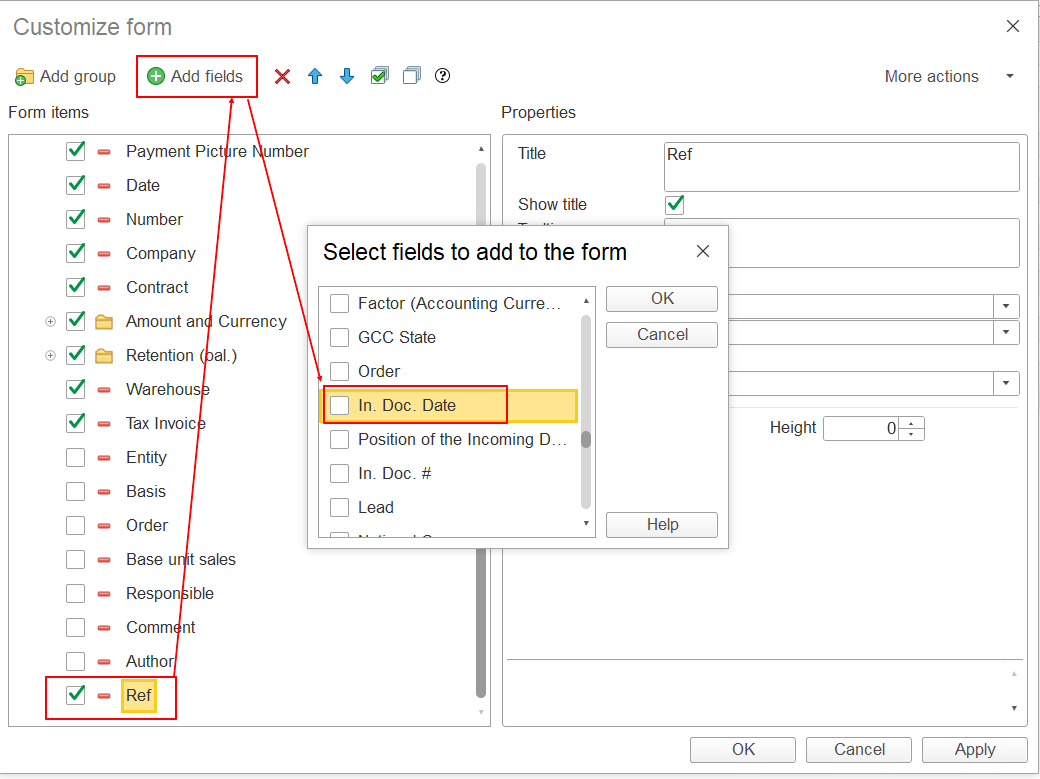
If the required field is not currently included in the List structure, use Add fields to check whether the field is available for the List Form.
The selected field is added to the List Form and can then be positioned or configured as required.
Note: Only fields available for the particular List Form can be added.
You can use a Ref (reference) field to display additional data from a related object in the List Form.
For example, a list may contain a reference field such as In. Doc. Date (Ref). This field allows the List Form to display the date from the related incoming document.
Reference fields are useful when the information you need is not a direct field of the current object but is available through a related object.
To add a reference field:
The available reference fields depend on the particular List Form and the relationships defined for its data.
Note: Reference fields available for one List Form may not be available for another.
Groups allow you to organize related fields and other form elements together.
You can use groups to:
The exact group options depend on the particular List Form.
Quick Filters provide quick access to frequently used filtering options directly from the List Form.
If Quick Filters are available in the List Form, you can configure their position and visibility through Customize Form.
This allows you to keep frequently used filters easily accessible without changing the filtering conditions themselves.
For information about configuring and using filters, see Filtering Data.
The Command Bar contains commands and actions available on the List Form.
Where supported, you can customize the available form element properties, including its visibility and position.
This can help you organize frequently used commands so they are easier to access.
The exact customization options depend on the particular List Form.
The Customize Form window may contain other elements in addition to the List and Command Bar.
For example, the form may contain User Settings or other groups and elements specific to the particular List Form.
The available elements and customization options depend on the List Form.
You do not need to configure every available element. In most cases, you can customize only the parts of the List Form that are relevant to your work.
When you select an element in Form items, its available properties are displayed in the Properties area.
The available properties depend on the selected element and the particular List Form.
For example, an element may have properties related to its:
Use the properties that are relevant to the customization you want to make. You do not need to configure every available property.
Screenshot: Show an element selected in Form items with its available properties displayed in the Properties area.
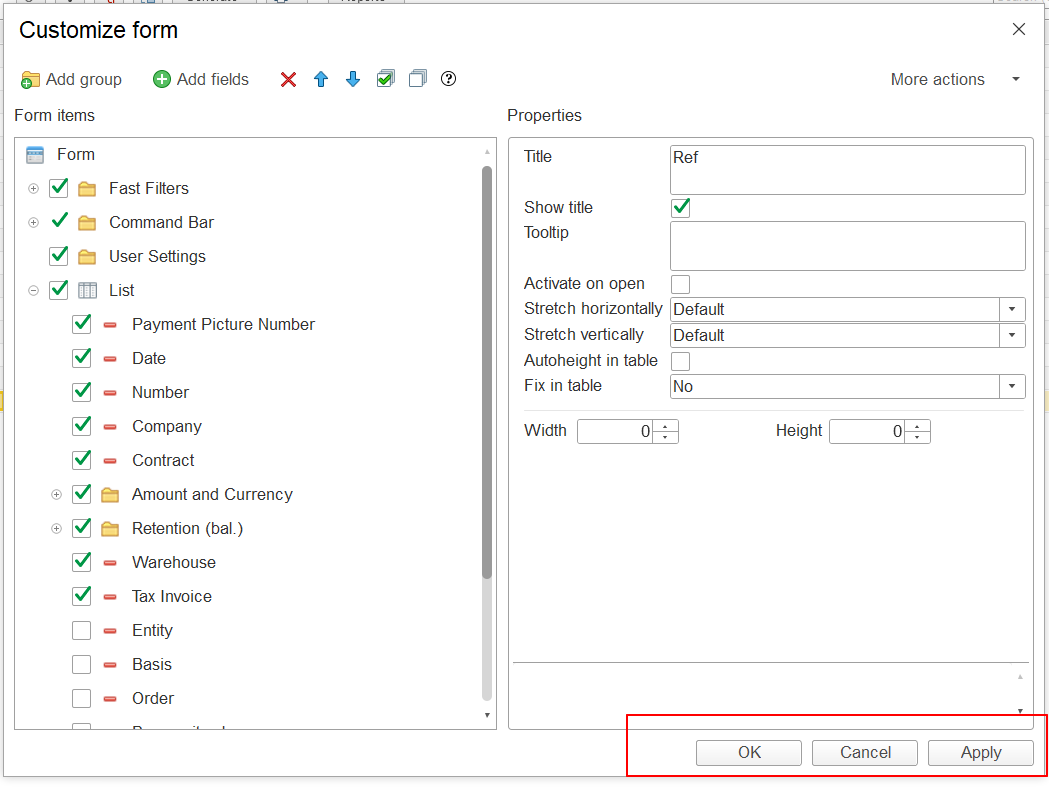
After making the required changes, use the buttons at the bottom of the Customize Form window:
A convenient way to work with the form is:
Select an element → make the required changes → Apply → check the result → continue customizing if necessary.
After customizing a List Form, you can save your personal configuration and apply it later when needed.
Use More actions → Save Settings to save the current List Form configuration.
You can later use More actions → Select Settings to apply one of your previously saved configurations.
If you want to return to the standard List Form configuration, use More actions → Restore Default Settings.
For detailed instructions, see Save and Restore List Form Settings.
Important: Saving, selecting, or restoring List Form settings changes only the configuration of the List Form for the current user. It does not delete or modify business data, documents, or other system data.
Thank you for being FirstBIT Customer!