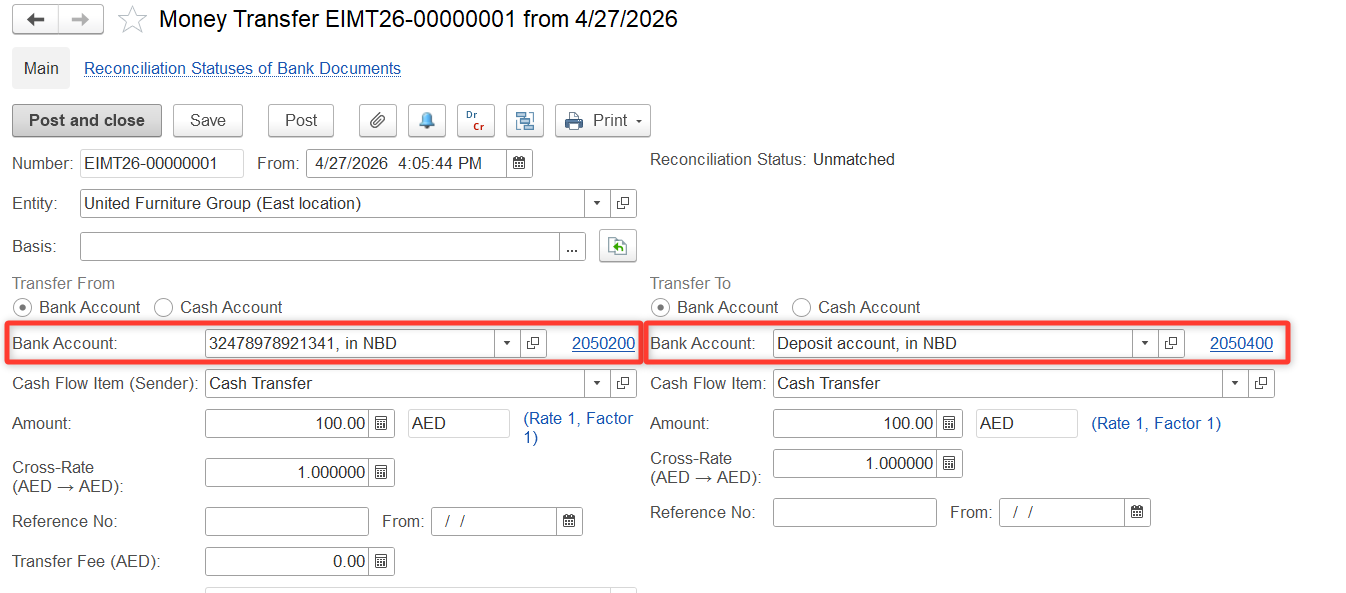
The accounting treatment of a deposit depends on how the funds are received and used:
If the deposit is used to store company funds for later withdrawal:
Entry:
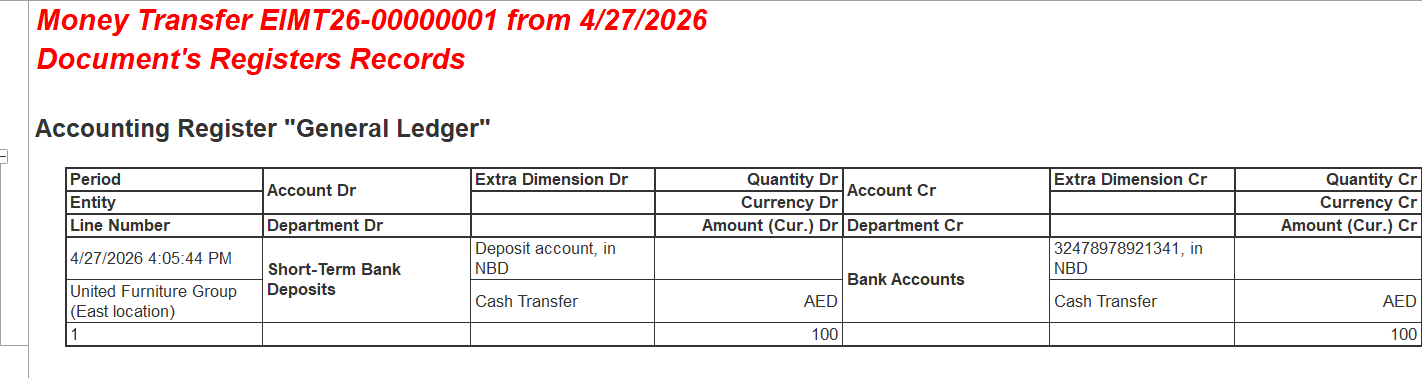
The return of funds to the current bank account can also be performed via Money Transfer.
See more on Money Transfers
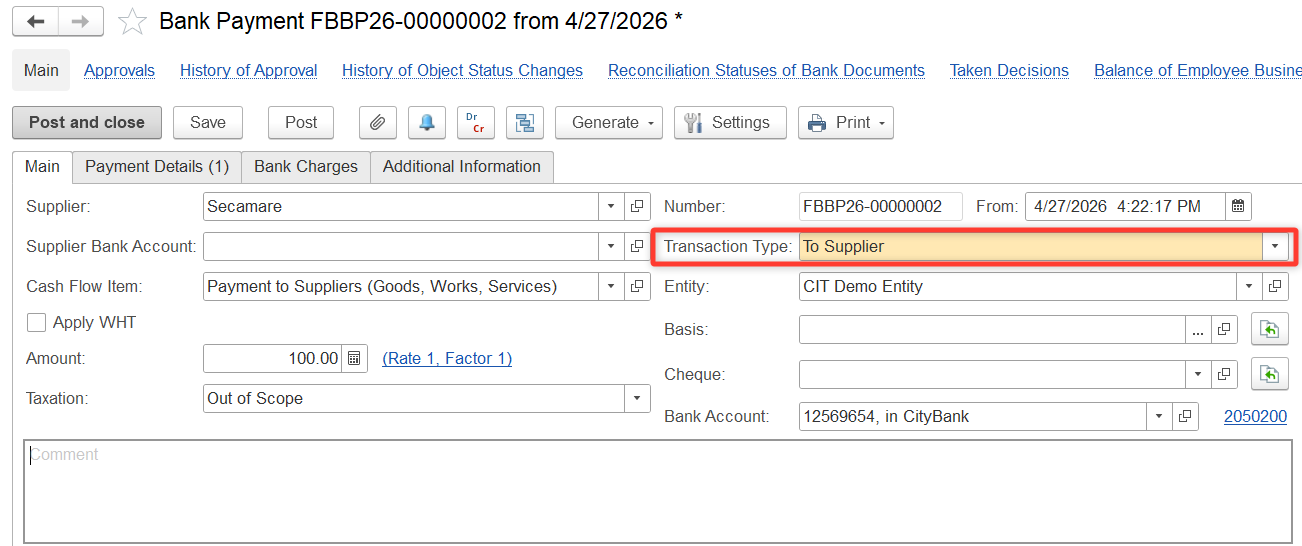
If money is transferred to a supplier as a deposit, it is not an expense, but an asset (prepayment/deposit):
Create a Bank Payment (or Cash Payment) with the Transaction Type: To Supplier.
On the Payment Details tab:
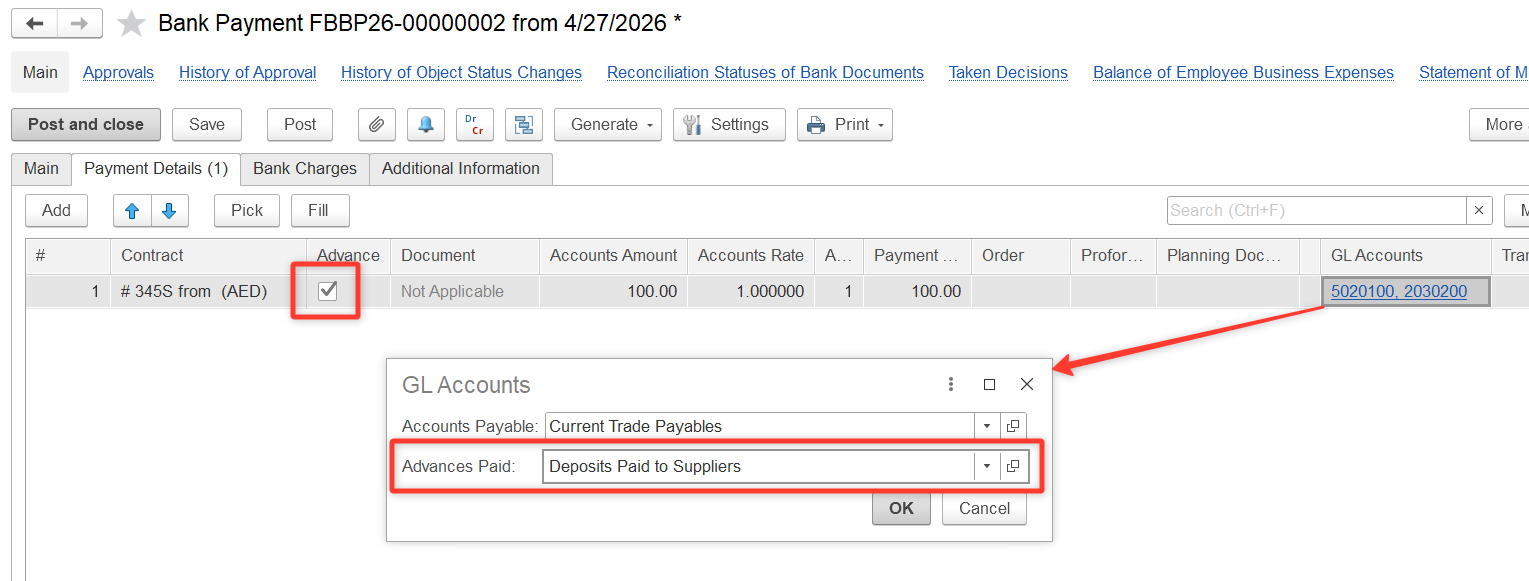
Entry:
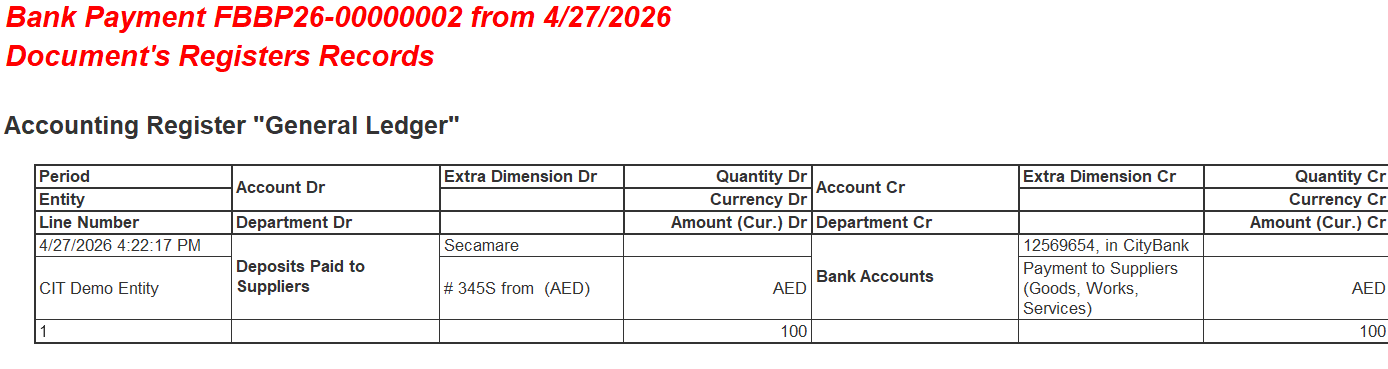
See more on Cash/Bank Deposit (to Supplier)
Create a Bank Receipt with the Transaction Type: Others.
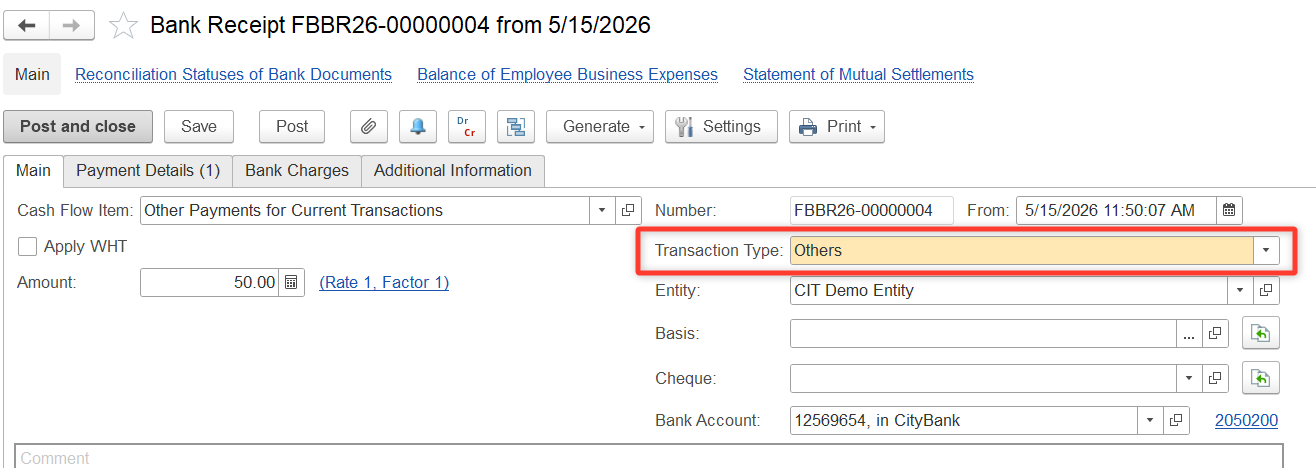
On the Payment Details tab, enter the following:
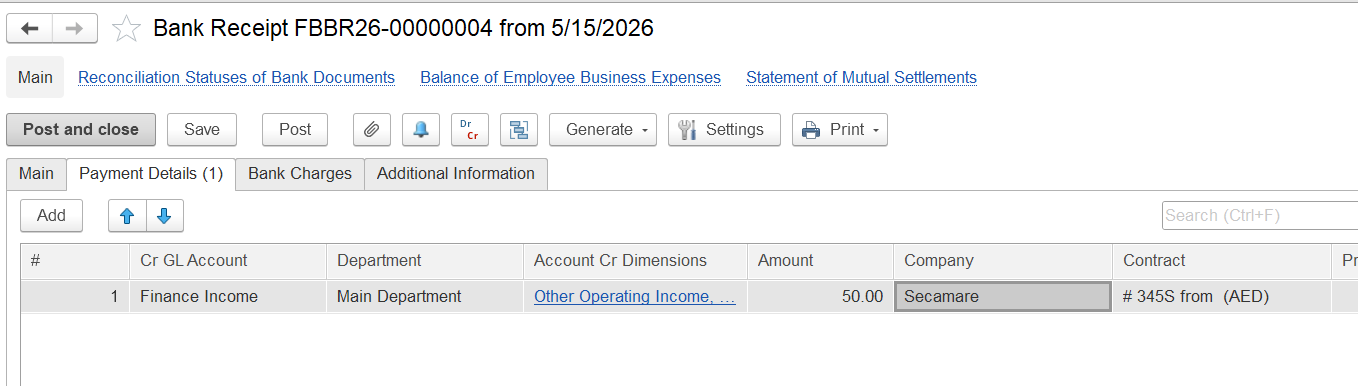
Press Post or Post and Close
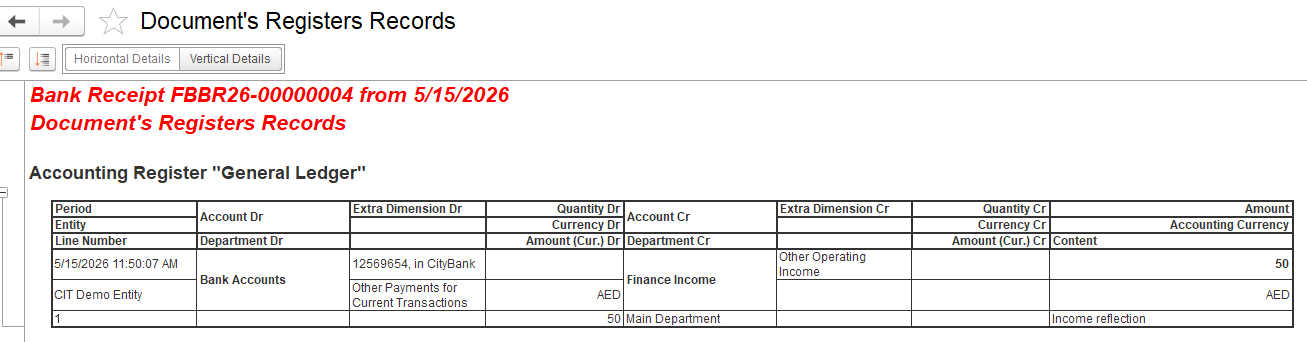
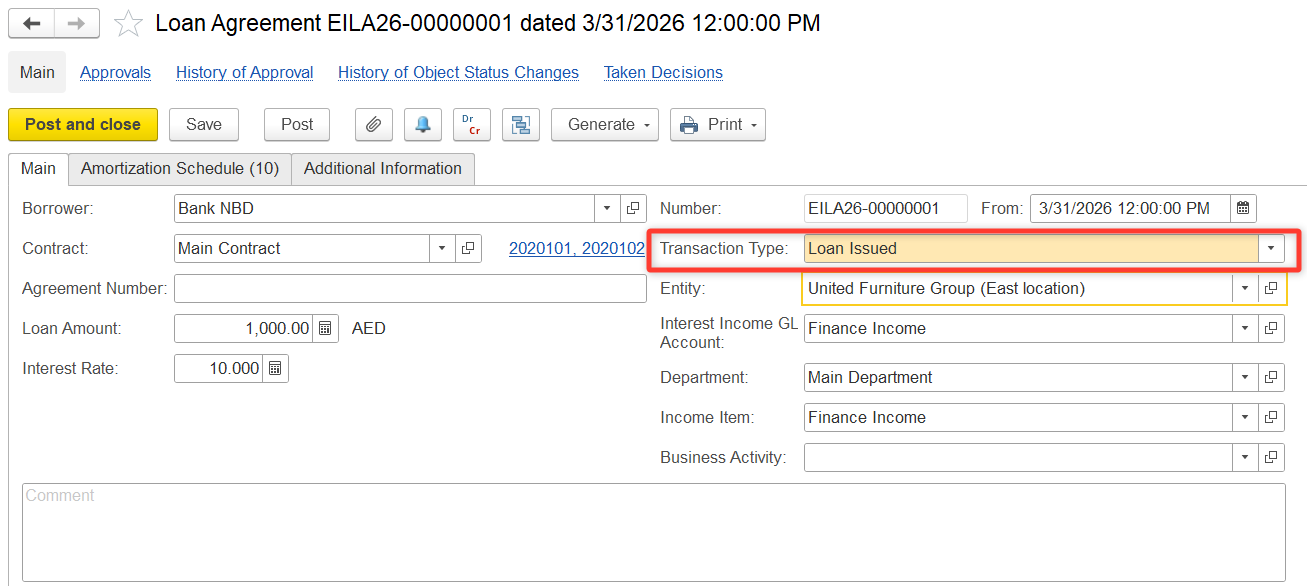
If the deposit represents a loan issued to another party (with interest):
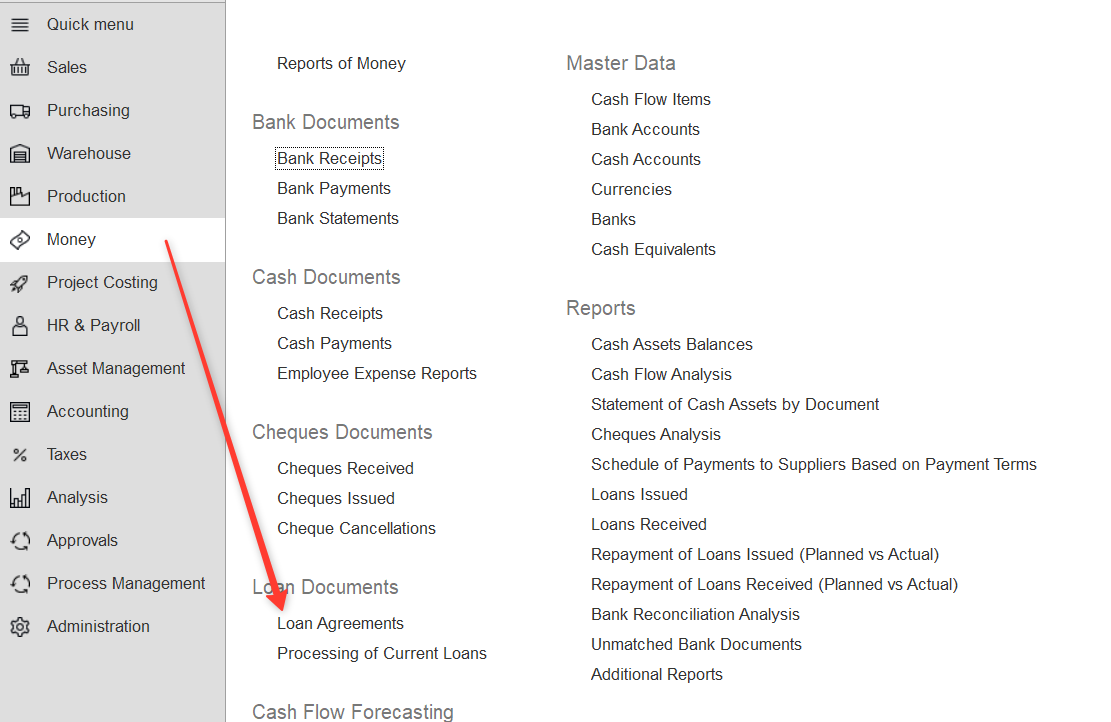
Path: Money > Loan Documents > Loan Agreements
On the Amortization Schedule tab:
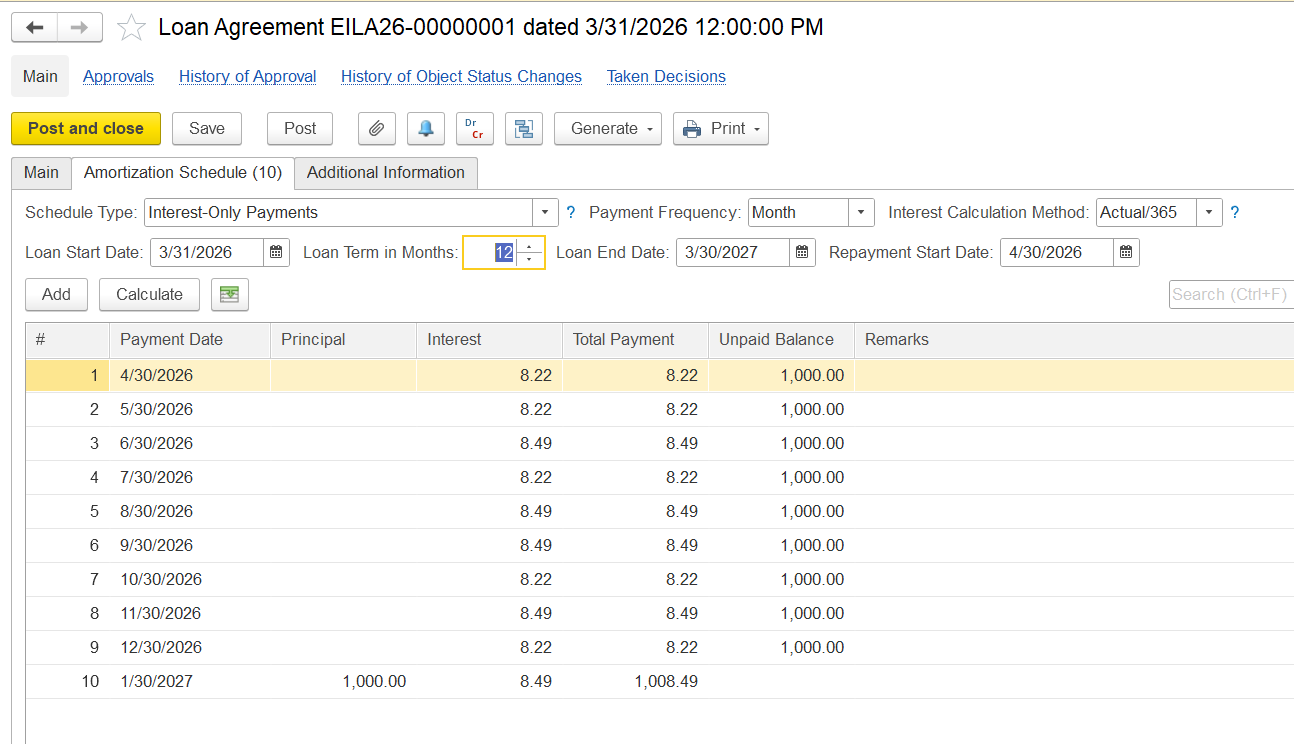
See more on Loan Agreements
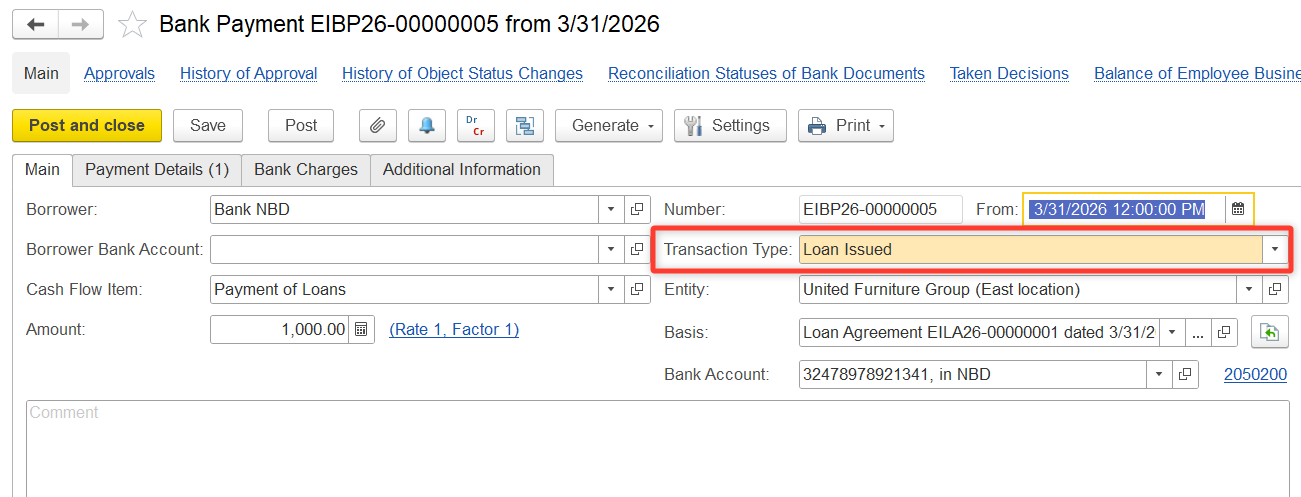
On Payment Details tab, select:
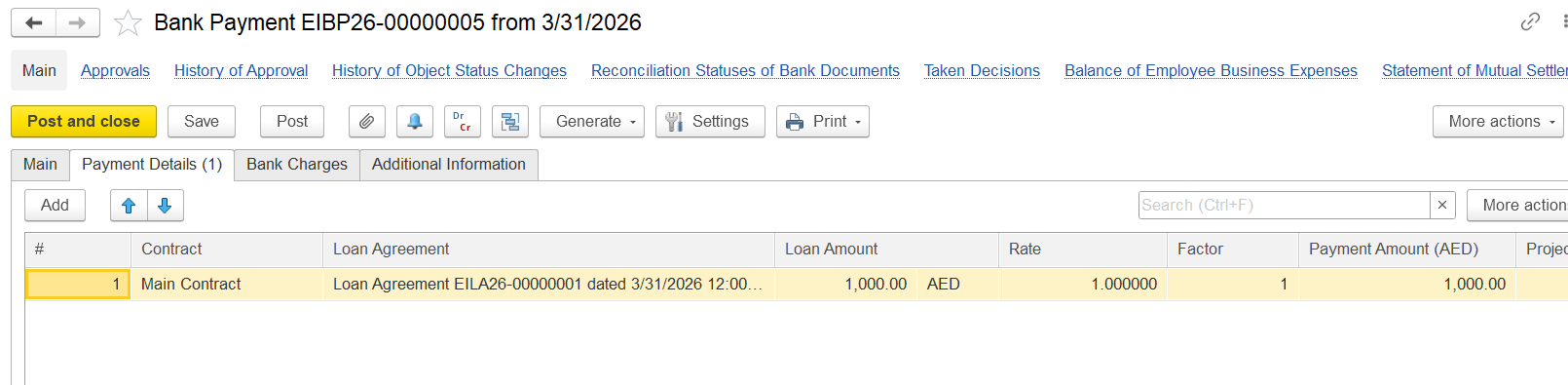
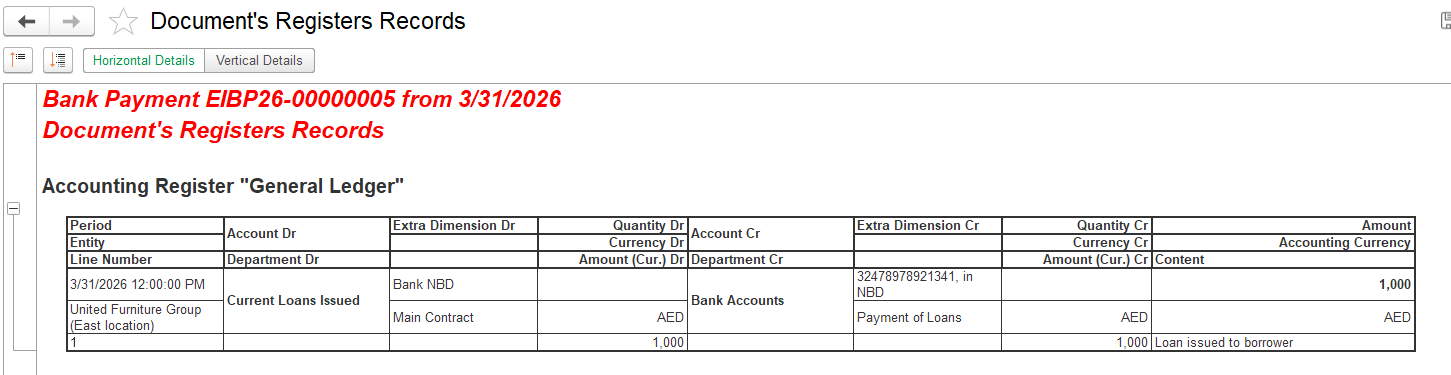
Entry:
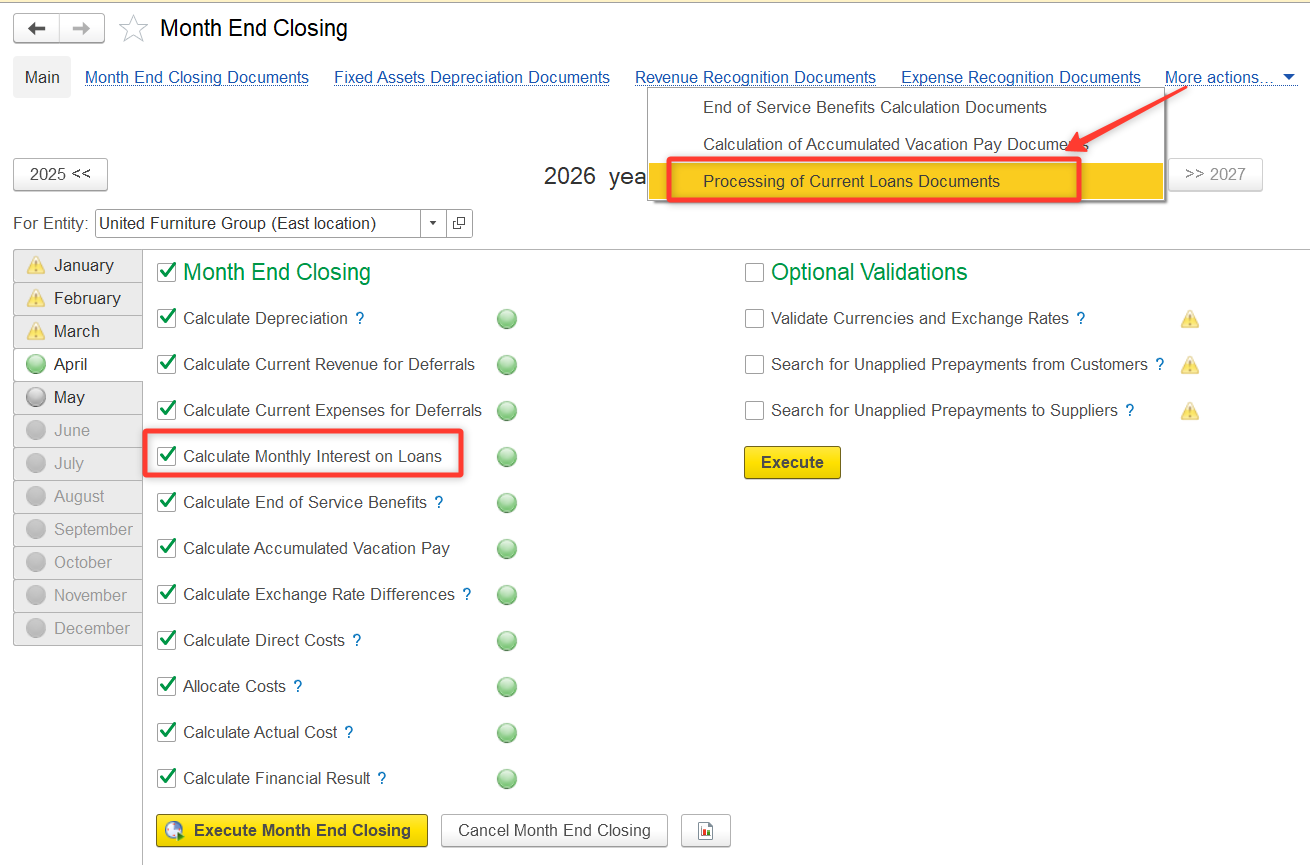
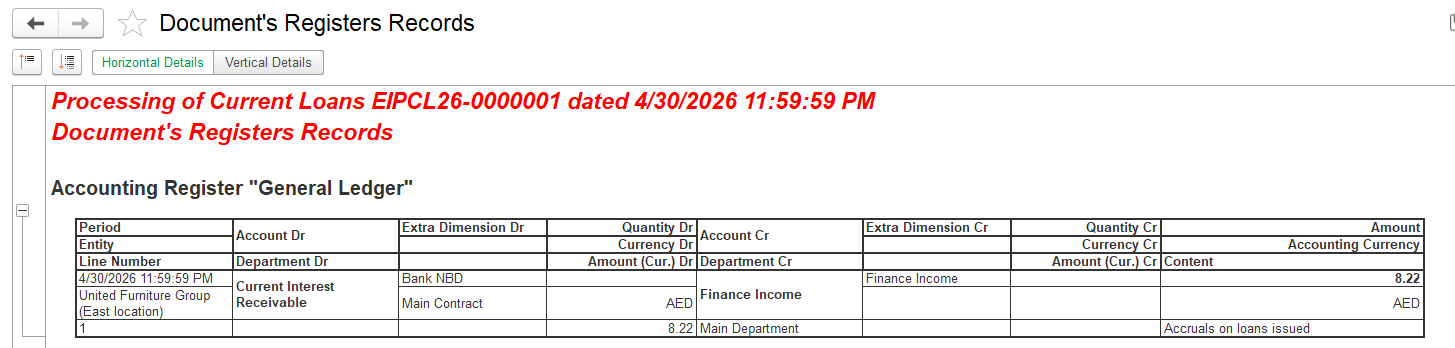
During Month-End Closing, if the "Calculate Monthly Interest on Loans" option is selected in the Month-End Closing assistant, the system automatically generates a Processing of Current Loans document.
This document lists each loan (including loans issued) with the monthly interest and fee amounts to be posted as income (for loans issued) or expenses (for loans received) for the current period.
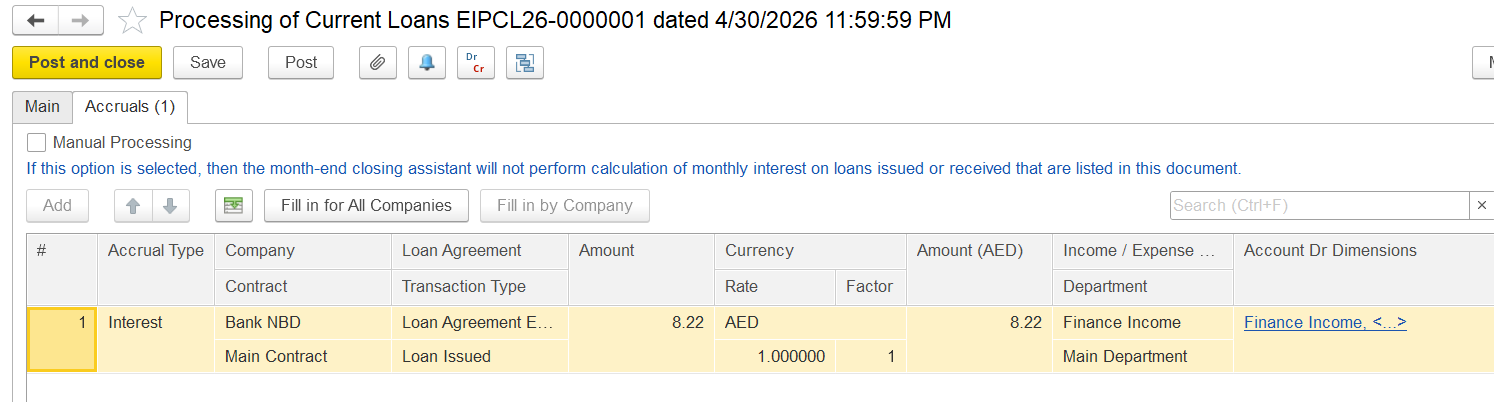
The interest is calculated based on the loan agreement terms and is posted automatically for the closing period.
Entry:
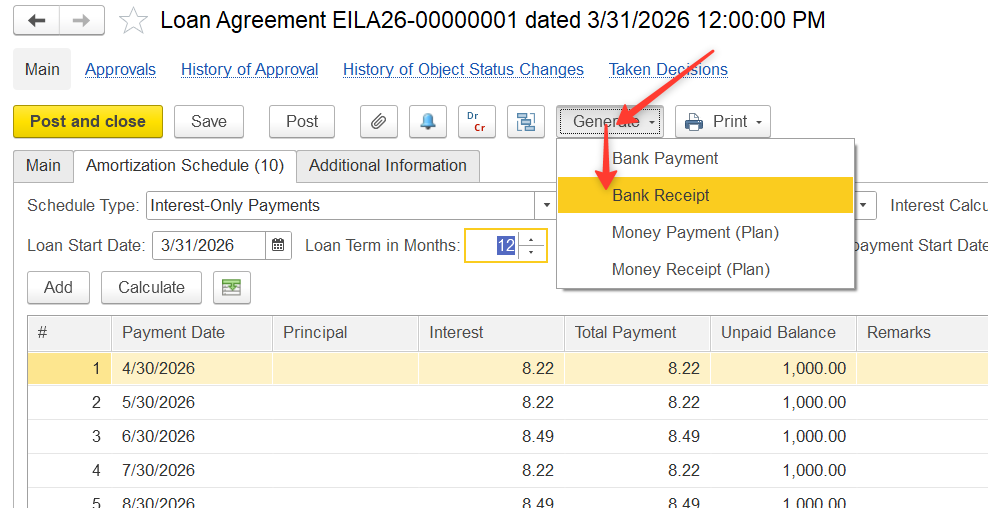
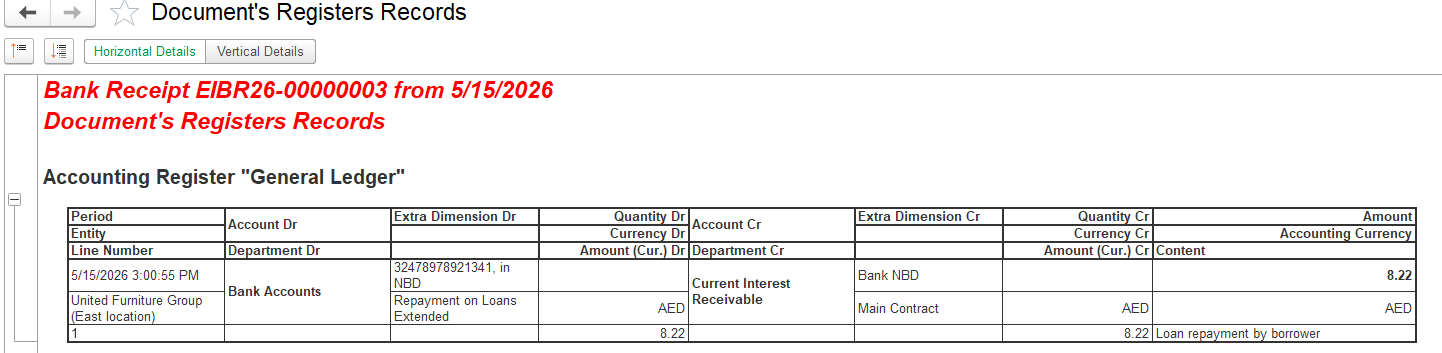
Create a Bank Receipt directly from the Loan Agreement.
Click Generate > Bank Receipt.
Alternatively, on the Main tab, select Loan Agreement as a Basis and click Fill by Basis.
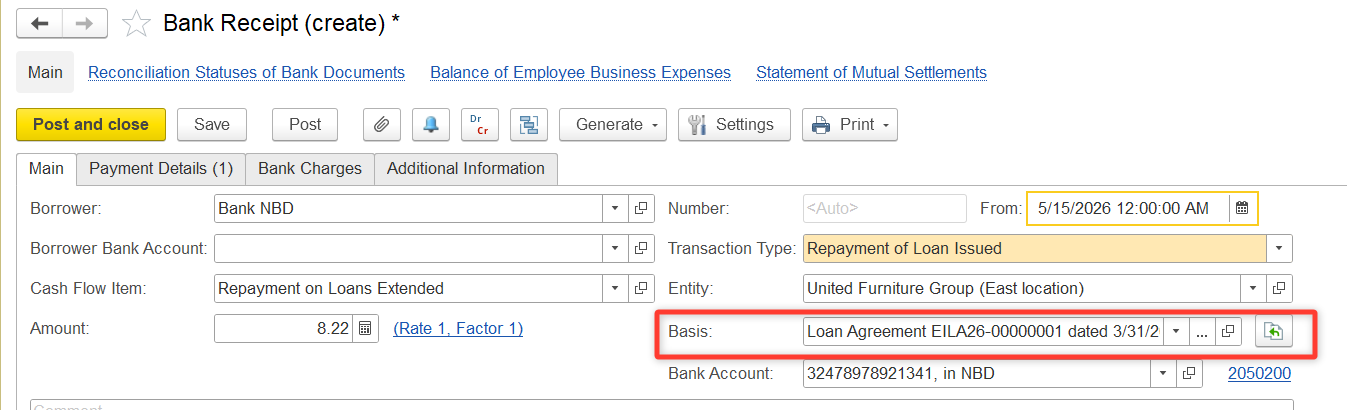
All data will be filled automatically based on the loan agreement schedule.
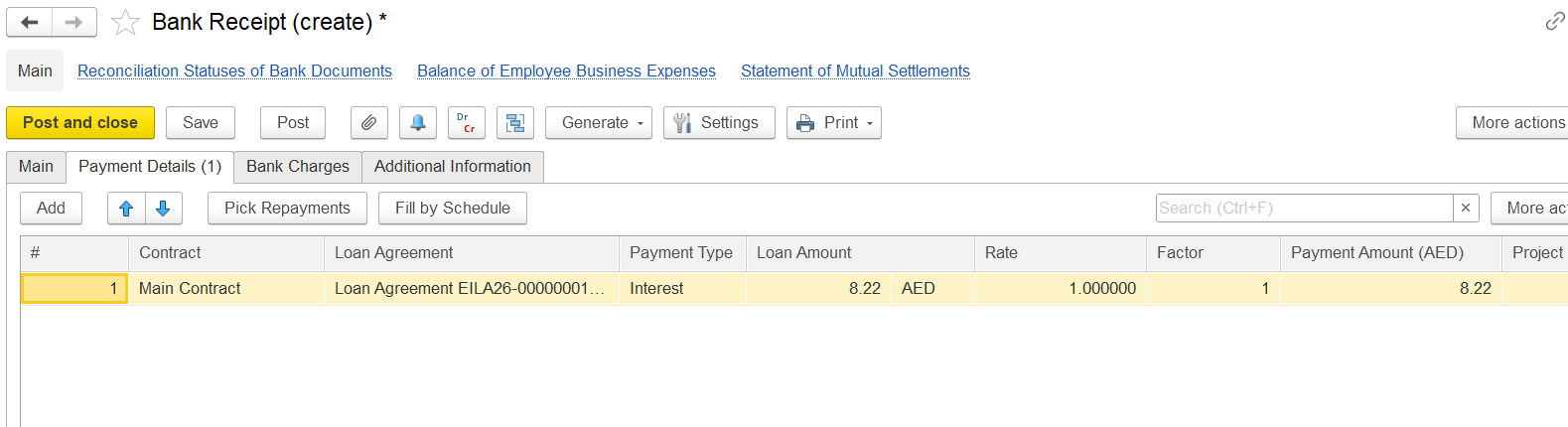
Entry:
Thanks for being a Firstbit Customer! #BankDeposit #SupplierDeposit #Deposits #DepositAccounting #DepositToSupplier #DepositsPaidToSuppliers