A Resource Planning Document is an internal document that lists manpower or equipment needed for a project stage, along with quantities, period, shifts, requisitions, orders and other details. Its purpose is to plan these needs so that resources are properly scheduled, and the project runs without delays.
a) Requisition
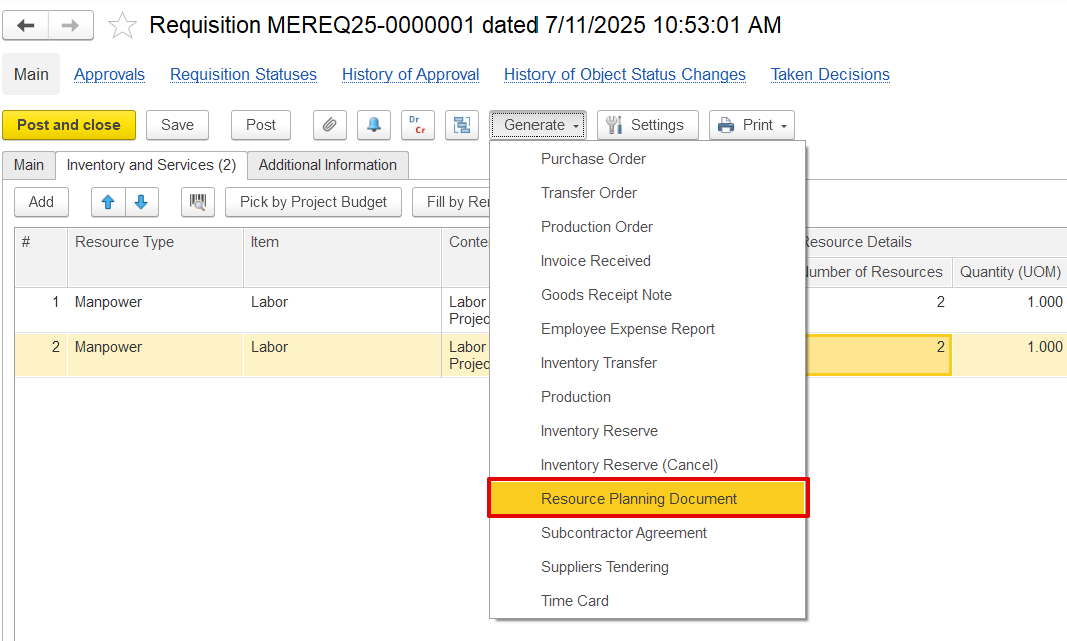
The resource planning document can be generated from the requisition document using the Generate Option.
b) Purchase order (Hired Resources)
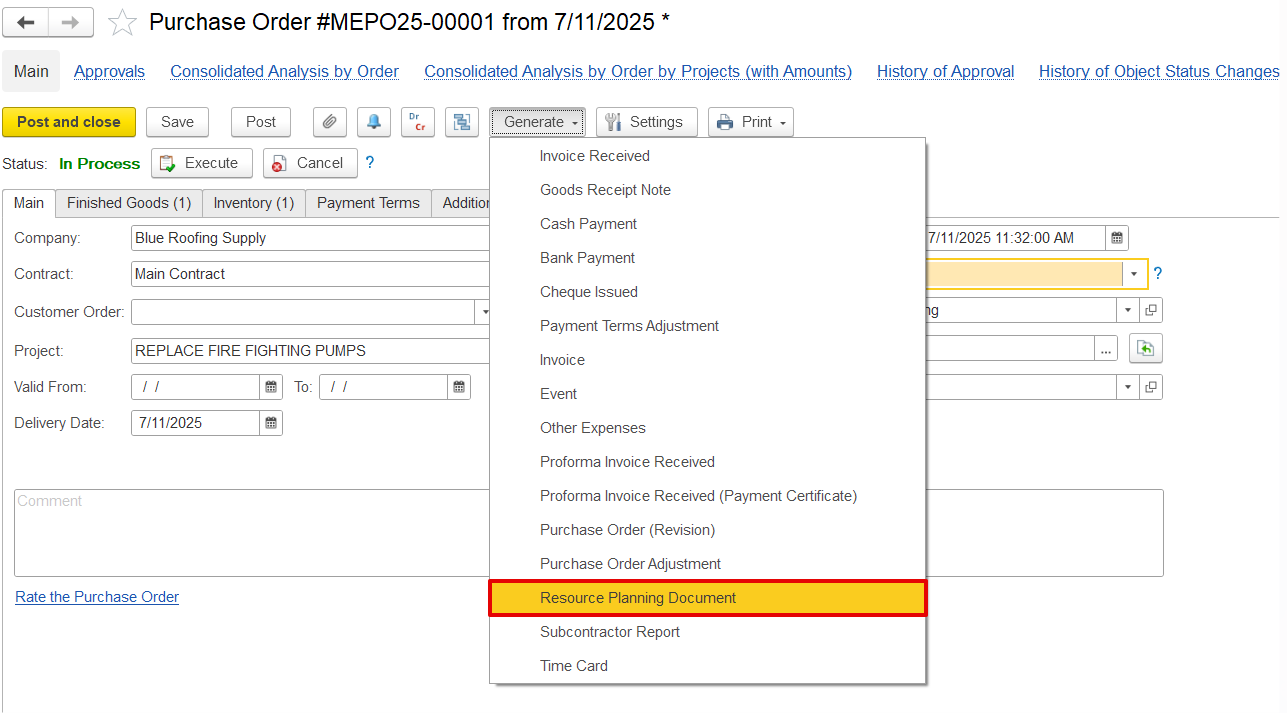
It can also be created using the Generate option in the purchase order document for hired resources.
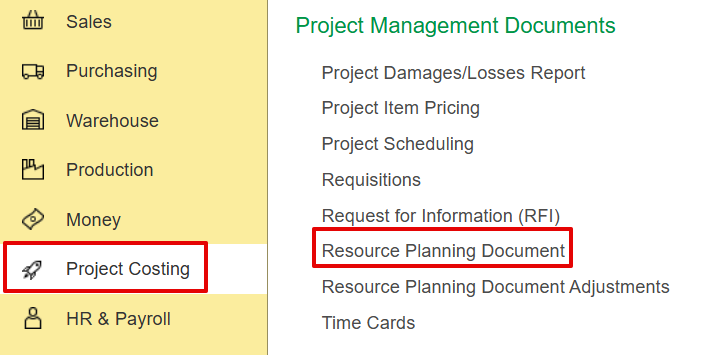
c) Project Costing → Project Management documents → Resource Planning document.
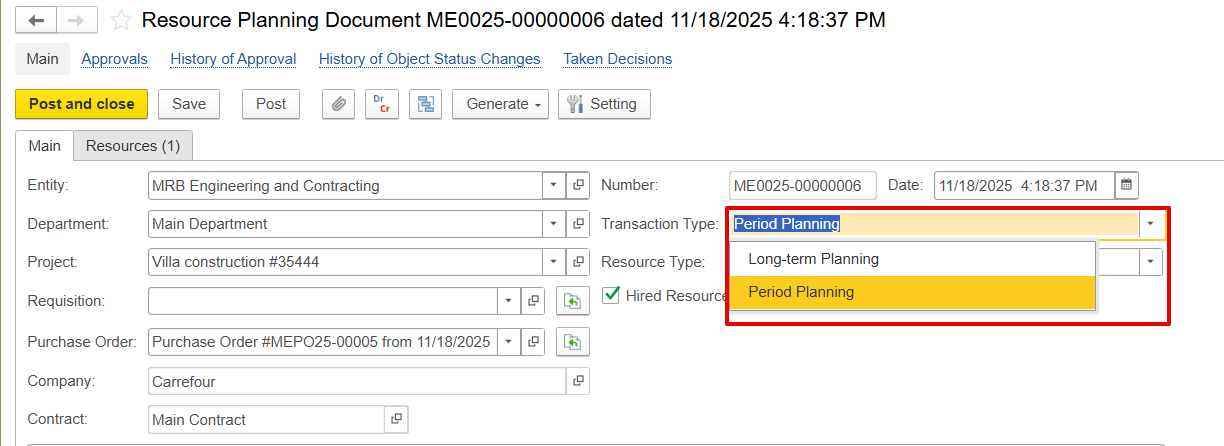
The Transaction Type field determines how the Resource Planning Document is intended to be used in terms of planning duration and detail.
The two available options are Long-term Planning and Period Planning
Long-term planning is used when resources are needed over an extended period, such as several months or the full length of a project. It provides a high-level view of future resource needs. This type of planning focuses on estimating and organizing resources in advance rather than detailing period-by-period usage.
Period Planning focuses on organizing and allocating resources for a limited, specific period, such as daily, weekly, or monthly intervals. It addresses immediate operational needs, ensures the right resources are available at the right time, and supports detailed scheduling and day-to-day execution of tasks.
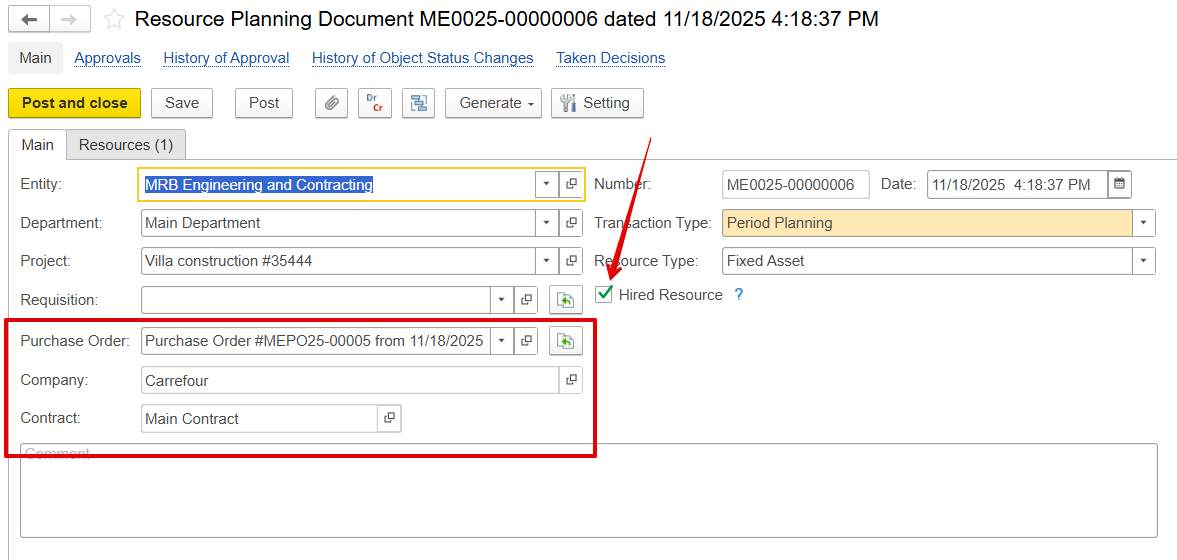
A hired resource refers to employees or equipment acquired from an external source, enabling the management of subcontracted manpower and equipment.
When the hired resources feature is activated, extra fields become available, including purchase orders, company, and contracts. These fields are used to provide the following information:
Purchase Order (PO) - This is used to identify the purchase order under which the resources to be procured or hired are requested.
Company - It is used to specify the external company providing the resource.
Contract - Details the agreement that outlines the resource’s work and duration.
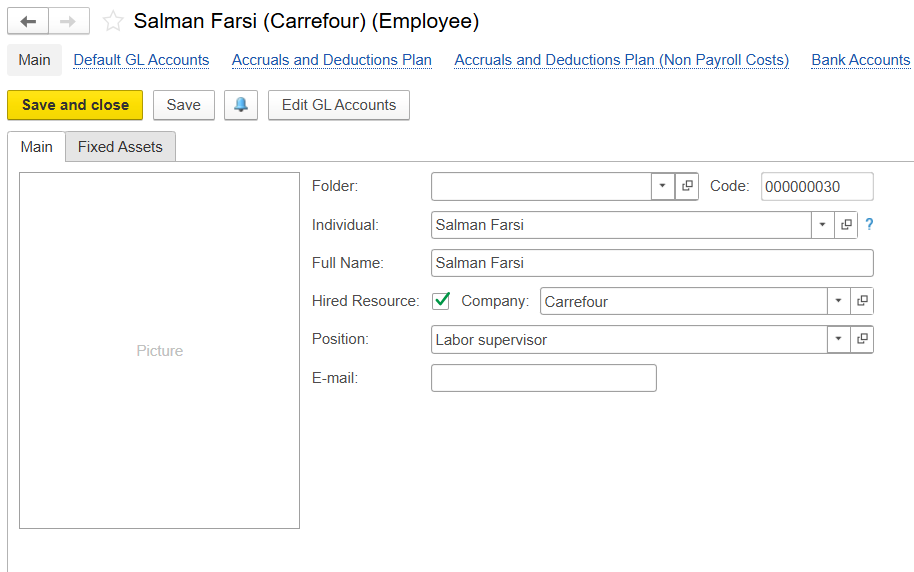
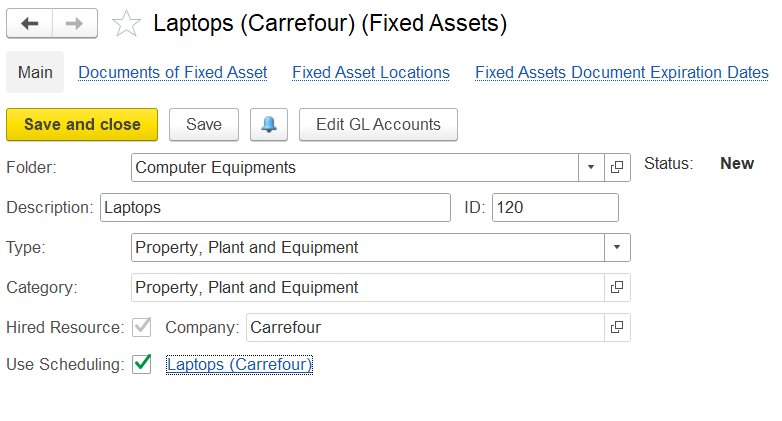
How to create Hired Employee/Fixed assets
Go to Company Master Data and check the hyperlinks under the company name-Hired Employees and Hired Fixed Assets. Click the appropriate hyperlink.

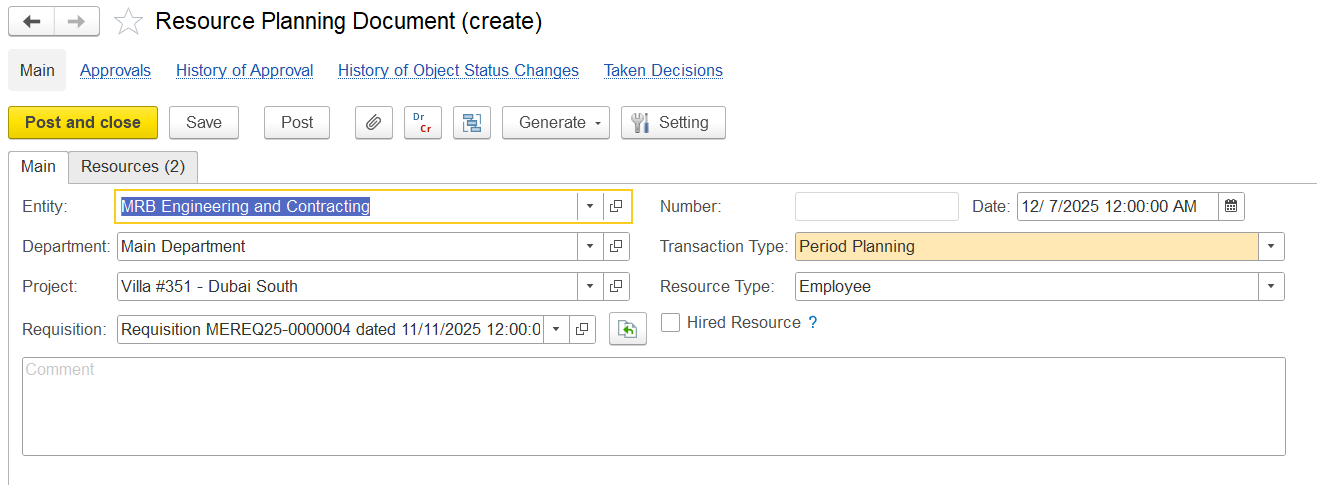
Entity - Choose the name of the entity.
Department - Select the department requesting the resources.
Project - Associate the relevant project.
Requisition - Link to the corresponding requisition document.
Transaction Type - Specify the type of transaction, such as period planning or long-term planning.
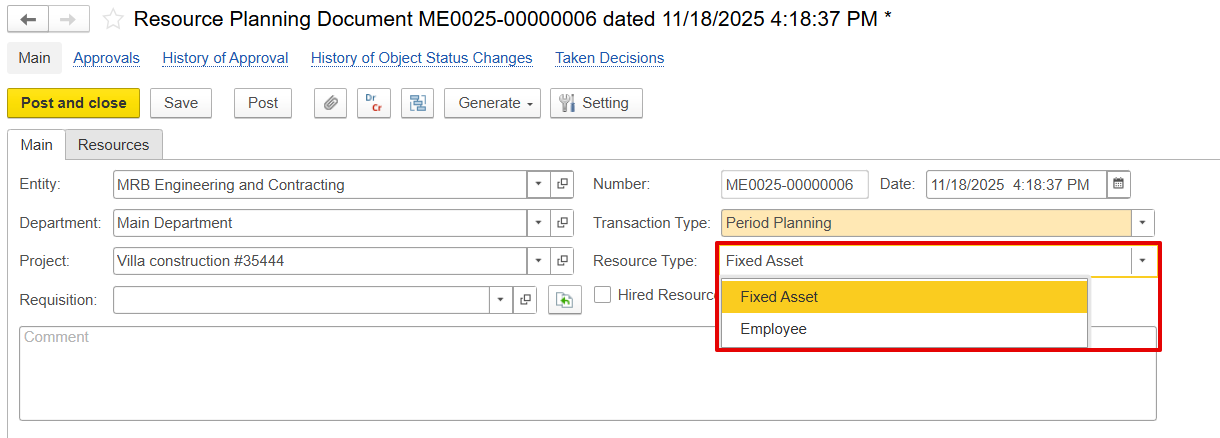
Resource Type - Determine the resource's category, for example, a fixed asset or an employee.
Hired Resource - enable the option if the resource is externally contracted.
Comment - Add any optional notes or internal remarks.
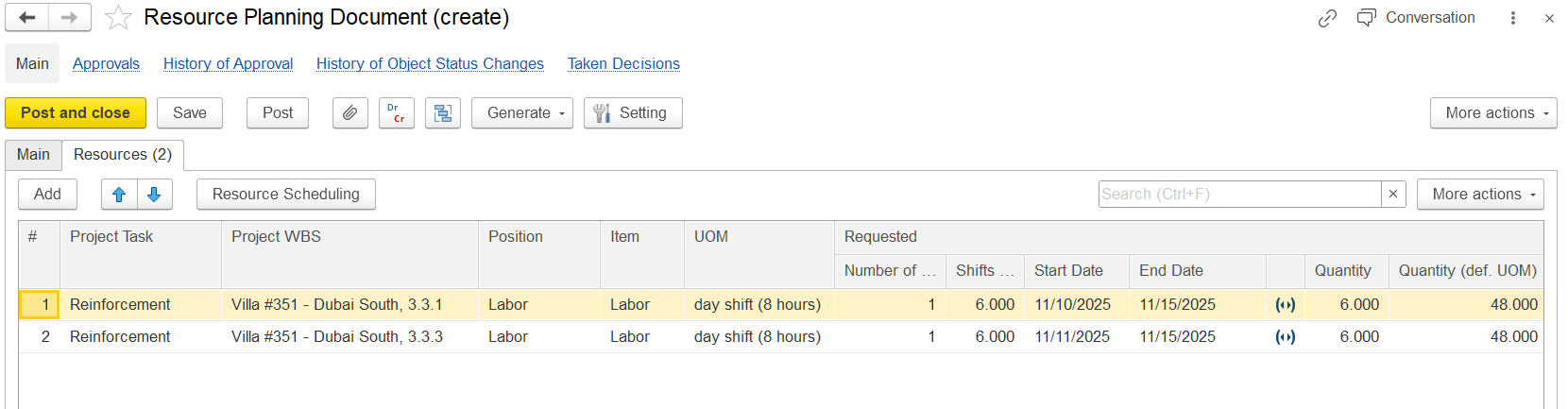
Project Task - Name of the task assigned to the resource.
Project WBS - Work Breakdown Structure of the project
Position - Role or job title of the resource.
Item - Type of resource.
UOM - Unit of Measure
Requested - Number of resources required per shift.
Shifts - Total number of planned shifts.
Start Date - Scheduled start date for resource deployment.
End Date - Scheduled end date for resource deployment.
Quantity - Total number of resources, calculated as Number of Resources × Shifts.
Quantity (default UOM) - Total quantity converted into the system’s default unit of measure. For example, if one shift equals 8 hours, the calculation would be-Number of Resources × Number of Shifts × 8 hours per shift.
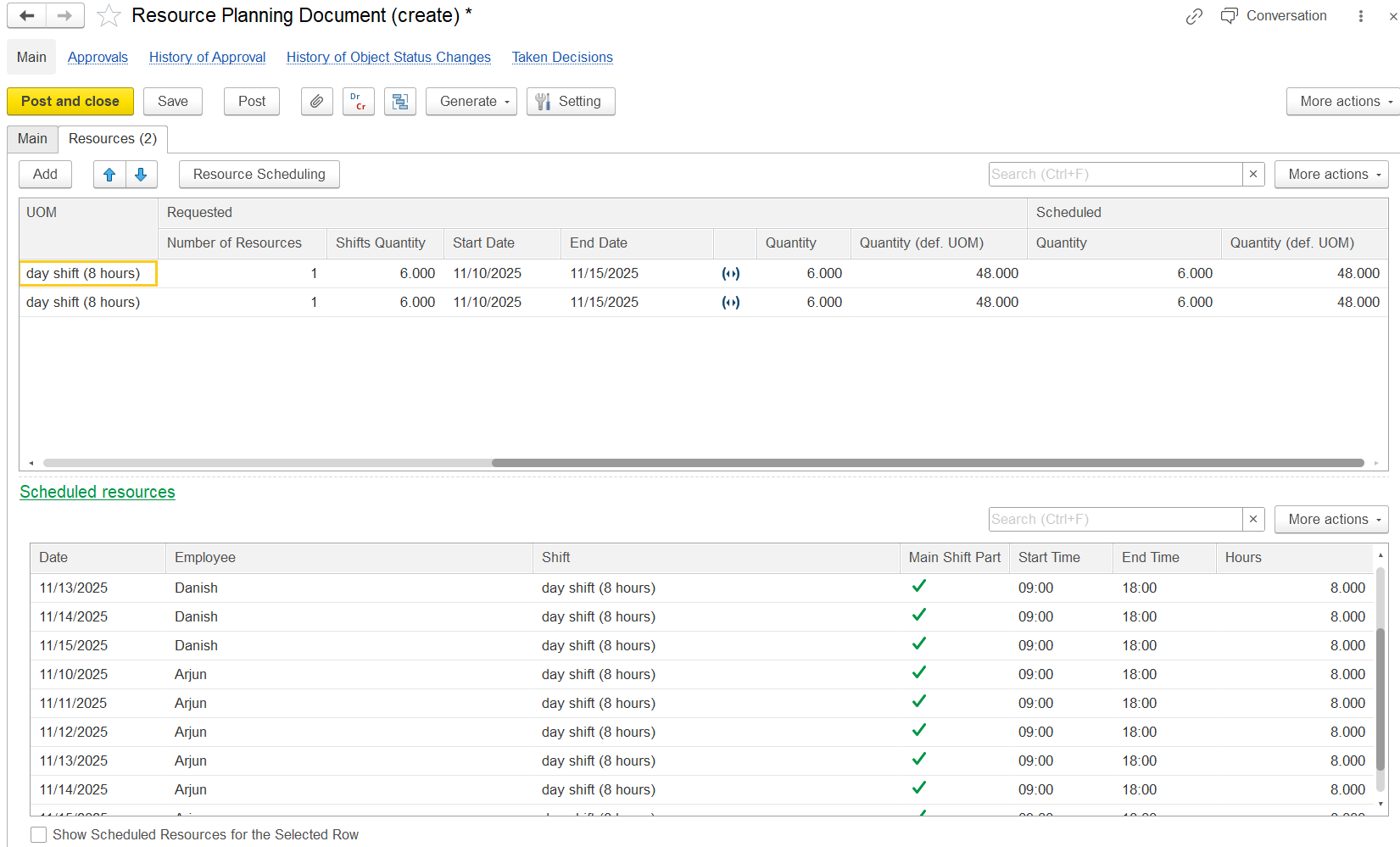
Quantity - The number of resource units scheduled for that specific shift or date. This value is populated according to the resource scheduling.
Quantity (default UOM) - Converts the scheduled quantity into the system’s default unit of measure
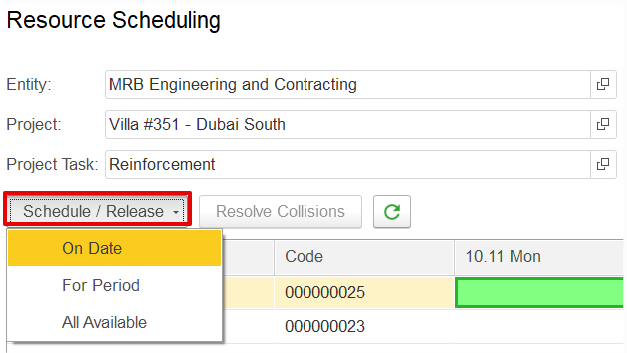
This option is used to allocate specific resources (e.g., labor) to project tasks across defined dates and shifts.
Entity - The entity managing the resources
Project - The specific project requiring the resources.
Project Task - The particular task within the project.
Position - The role or job title of the scheduled resources.
Shift - Type of working hours or shift pattern.
No. of Resources - Total number of individuals needed.
Shifts Quantity - Total count of shifts planned.
Start/End Dates - The timeframe for which resources are scheduled.

Once a scheduling option is selected, employees are assigned according to that choice. Scheduled shifts are shown in green, and in the next resource scheduling document, they turn red to indicate the employees are already assigned.
Employee - Name of the worker assigned to shifts
Code - Unique code of the employee
Date - The specific workday being scheduled
Day - Day of the week corresponding to the date
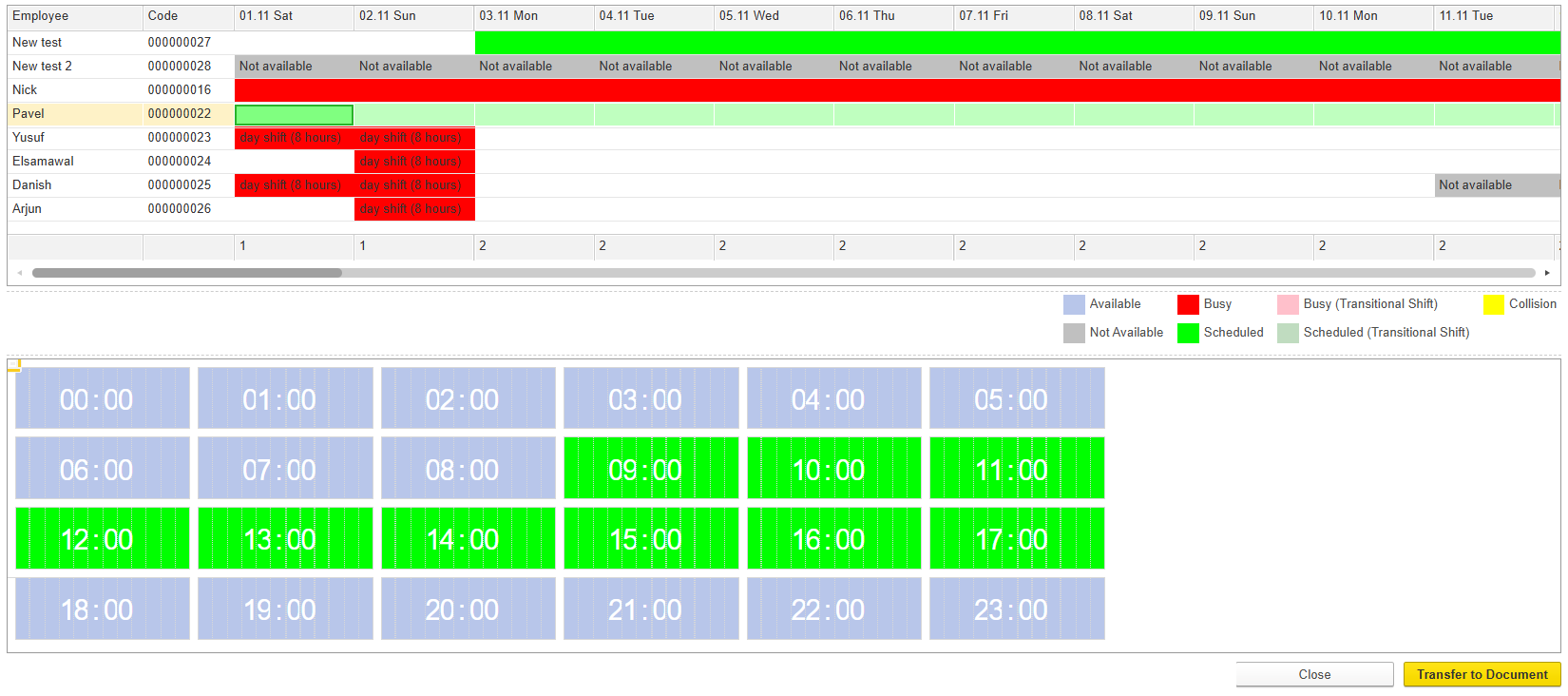
| Color | Meaning | Reason / Explanation |
|---|---|---|
Light Blue | Available | Indicates the resource is free and can be scheduled. |
Pink | Busy (Transitional Shift) | Indicates a partial or transitional busy shift overlapping with another activity. |
Yellow | Collision | Indicates a scheduling conflict where overlapping assignments occur. |
Gray | Not Available | Indicates the resource cannot be scheduled for this day. |
Red | Busy | Indicates the resource is occupied with a full shift and cannot be assigned. |
Bright Green | Scheduled | Indicates the resource is fully scheduled for the day. |
Light Green | Scheduled (Transitional Shift) | Indicates the resource is scheduled for the day with a transitional or partial shift. |
Once scheduled, the data can be sent to the document using the option Transfer to document to finalize the schedule.