As before
A Progressive Invoice is used to bill customers based on actual project progress, such as completed milestones, percentage of work done, or certified quantities. Its purpose is to align billing with the value of work completed, ensuring accurate, stage-wise invoicing in long-term or contract-based projects. It also accounts for advances, deductions, and retention as per contract terms.
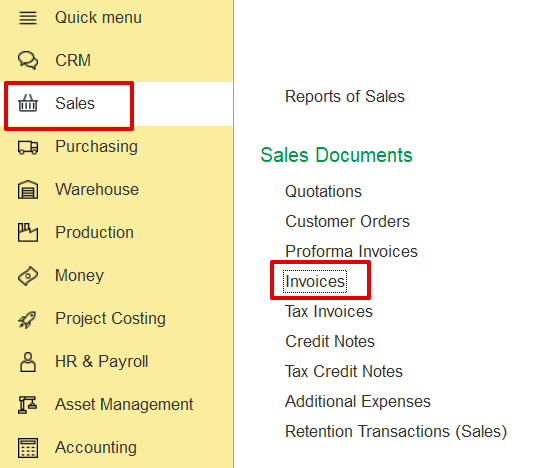
Sales → Sales Documents → Invoices → Create
Then, choose the Progressive Invoice type from the available invoice types.
If generated from a document such as a Payment Certificate, the invoice form will have the progressive settings already applied by default and also automatically populate key fields such as the project, contract, and period, and retrieve related data.
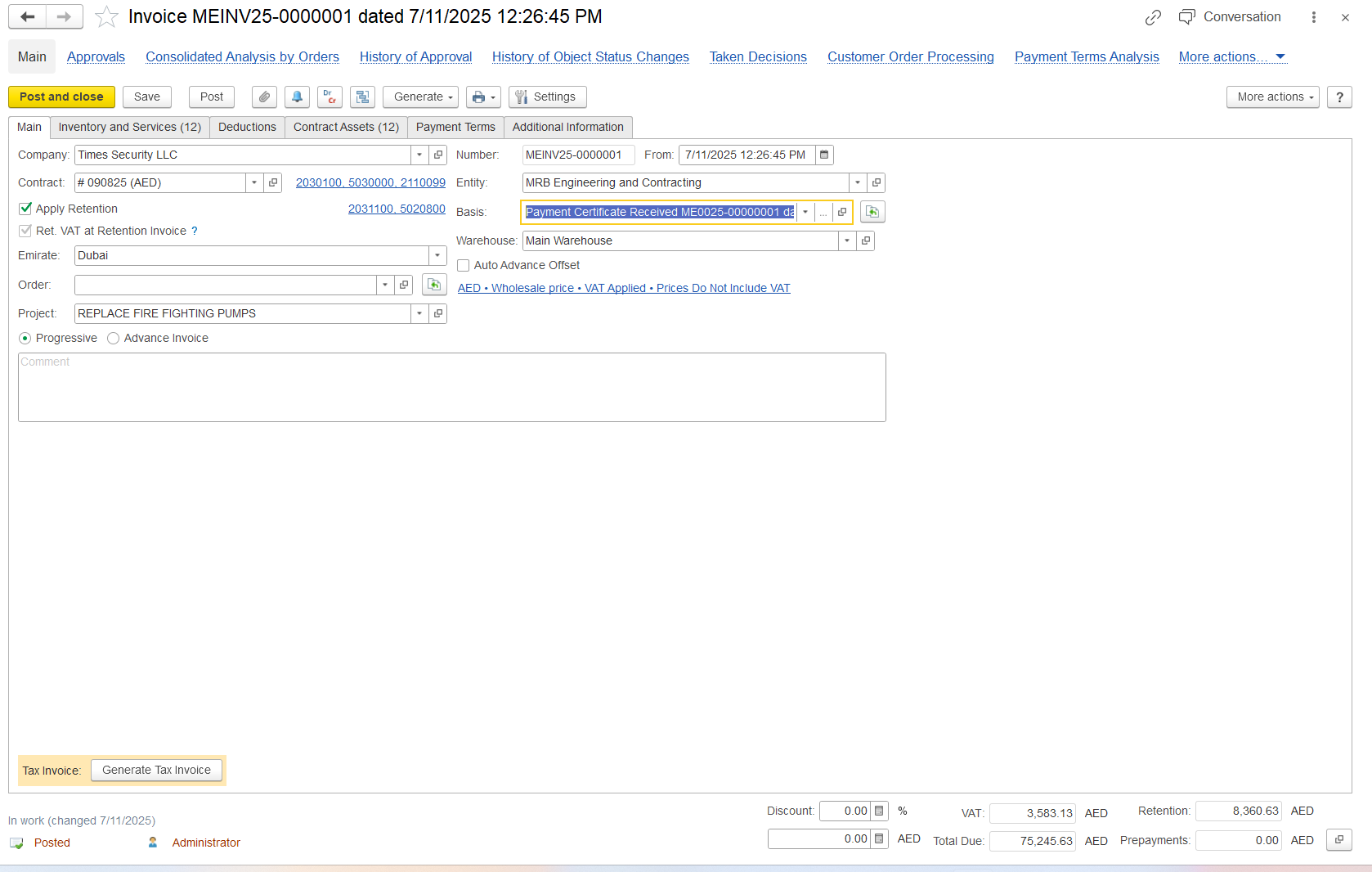
Company – The entity issuing the invoice.
Contract Number – Links the invoice to contractual terms.
Entity – The customer or contractor being invoiced.
Basis Document – Indicates the document the invoice is based on.
Project – The specific project or assignment tied to the invoice.
Invoice Type – Specifies whether the invoice follows the Progressive or the Advance invoice type.
Auto Advance Offset – If enabled, any received advance payments will be automatically applied and deducted from the invoice total, eliminating the need for manual adjustment.