

In cases where site visits or clarifications from the project owner are required to gain a comprehensive understanding of the project scope and requirements, the system facilitates the structured scheduling and tracking of the relevant activities.
Users can schedule events in two ways:
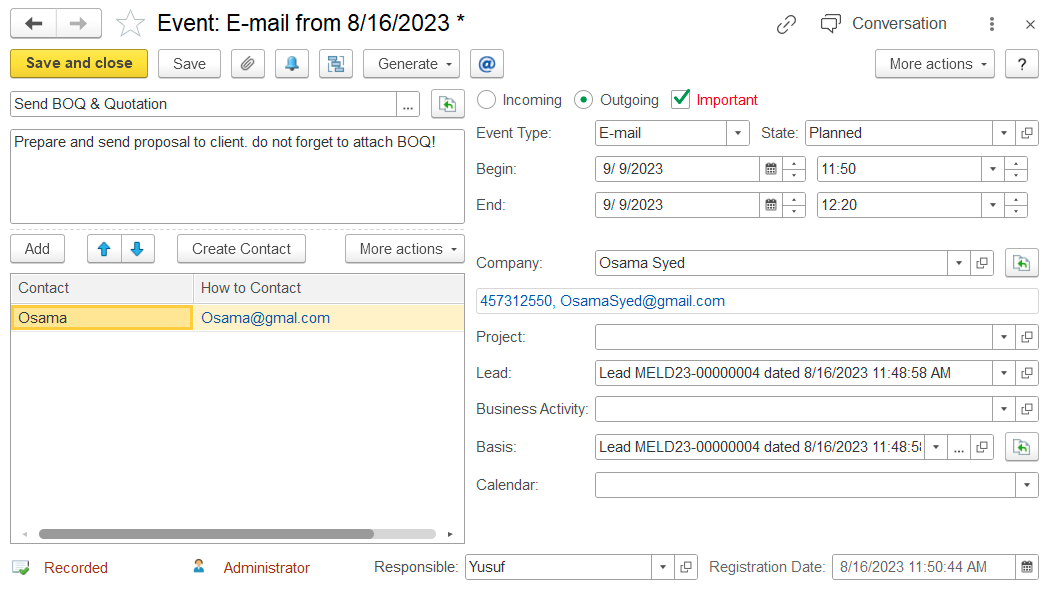
Incoming / Outgoing – Choose if the event is incoming (received) or outgoing (sent).
Important – Tick this box if the event is important. It will be marked in red.
Event Type – Choose the type of activity (E-mail, Private Meeting, or Phone Call).
State – Select the status: Planned, Completed, or Canceled.
Begin / End – Set the start and end date and time of the event.
Company – The name of the company this event is about.
Contact Info – Shows phone number and email of the contact.
Project – Optional. Link to a related project.
Lead – If the event is connected to a lead, it will appear here.
Business Activity – Optional. Add notes about the related business task.
Basis – Shows the document the event is based on. Filled automatically if linked to something like a Lead.
Calendar – Choose users who should see this event on their calendar (CRM → Service Tools → Calendar).
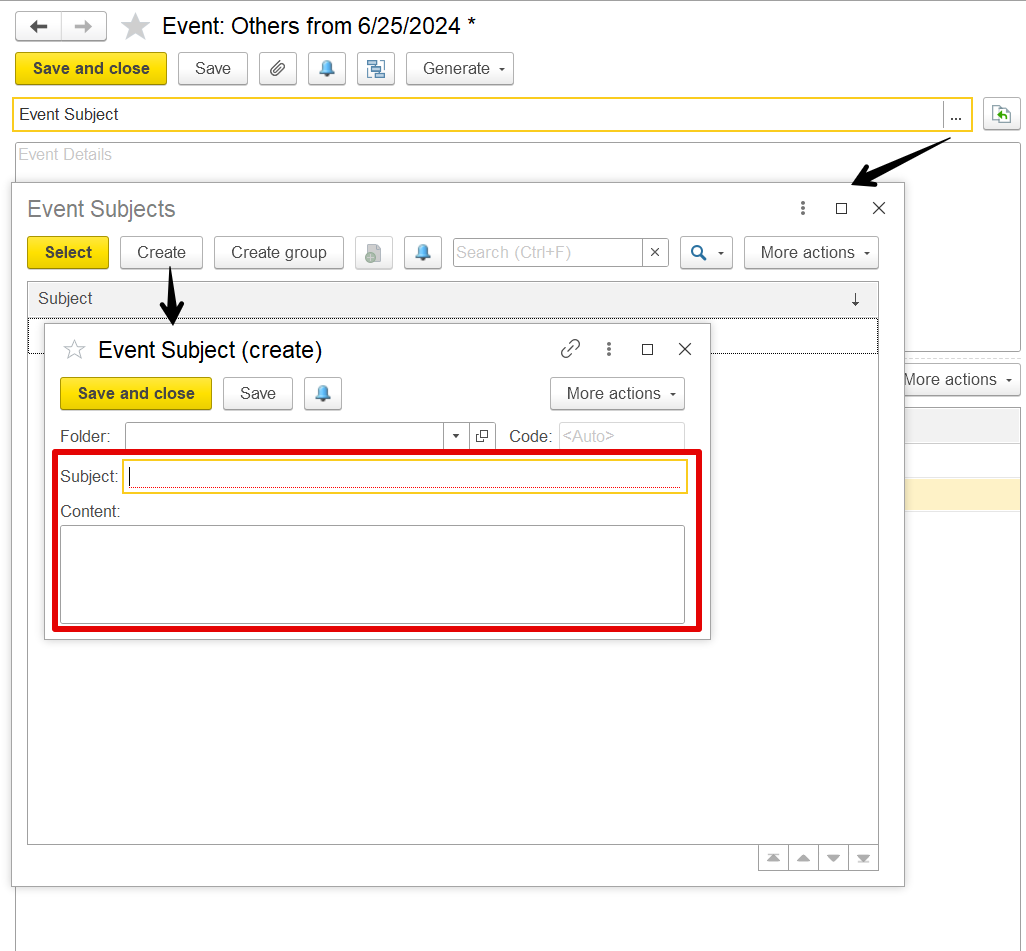
Subject – A short title for the event (e.g., “Send BOQ & Quotation”).
Content – Detailed instructions or notes (e.g., “Prepare and send proposal to client. Don’t forget to attach BOQ!”).

Contact Person - a reference to the contact person.
Responsible _ Person handling the event. Can be changed.
Registration Date – Date and time when the event was created.

To access all events and check their statuses, navigate through CRM → CRM Documents → Events. 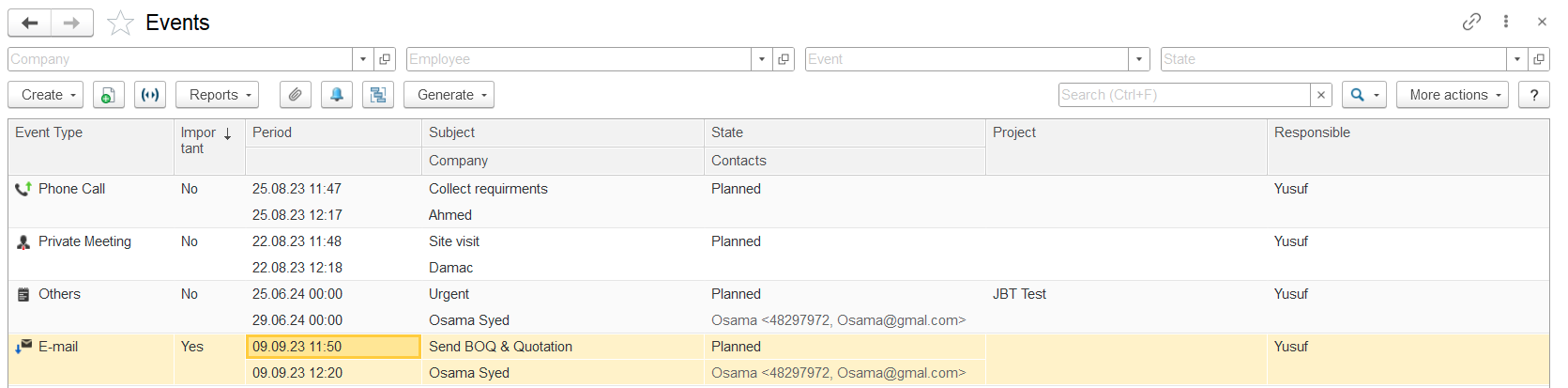
The Events list displays all registered events. To simplify the search, users can apply filters available on the top panel, such as Company, Employee, Event Type, or Status.
Additionally, the Text Search field allows users to find events by entering a keyword or phrase that matches any column data.