The Project Scheduling document is used to define the planned start and finish dates of project tasks. It helps structure the timeline and is essential for:-
Tracking the sequence and duration of tasks.
Providing visibility into the planned timeline of the entire project.
Supporting communication between the project estimation and execution phases.
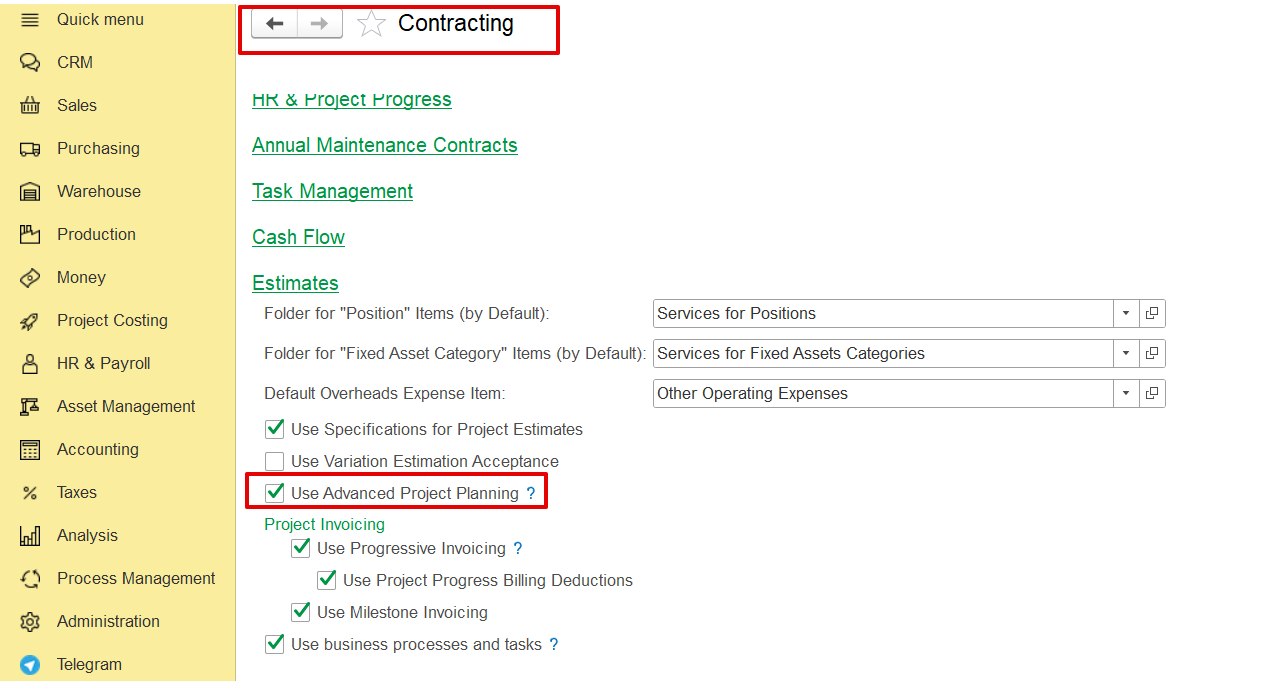
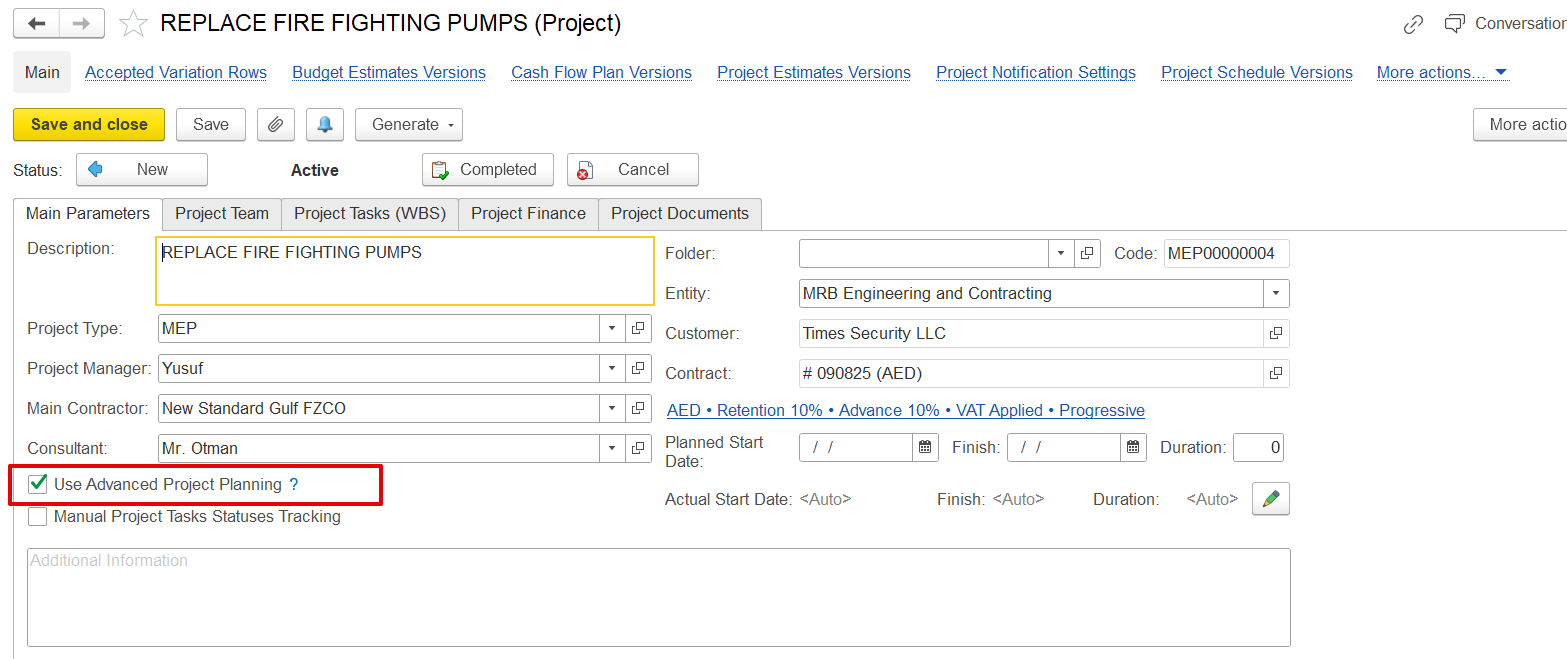
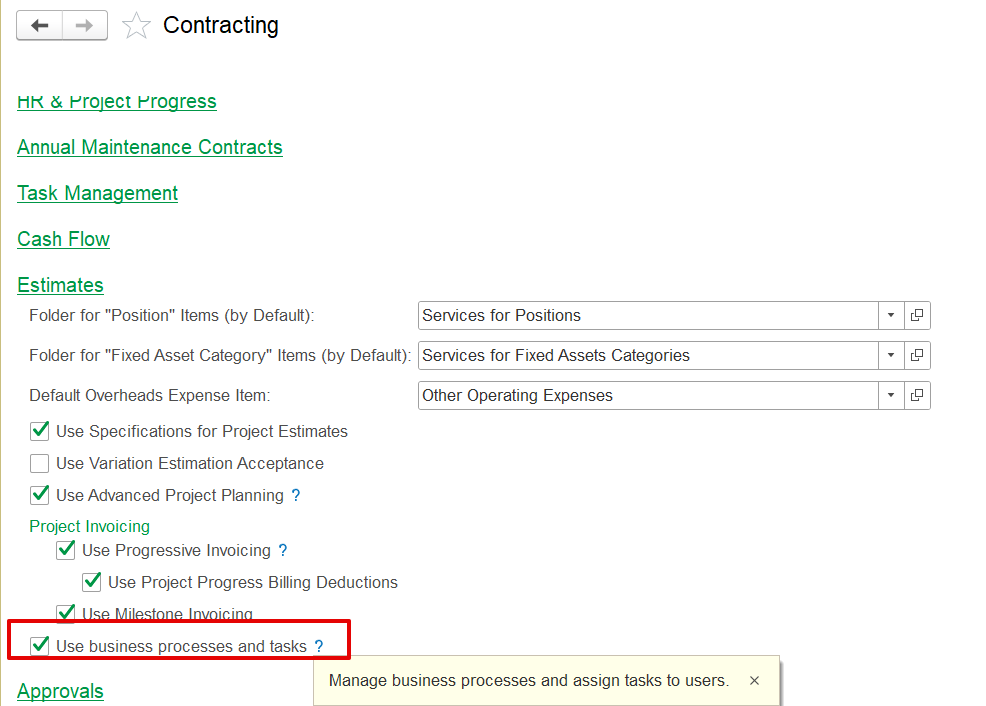
Note:- This option becomes available only when "Use Advanced Project Planning" is enabled in both the Contracting Settings and the Project’s Main Parameters page.
1. How to Create the Project Schedule
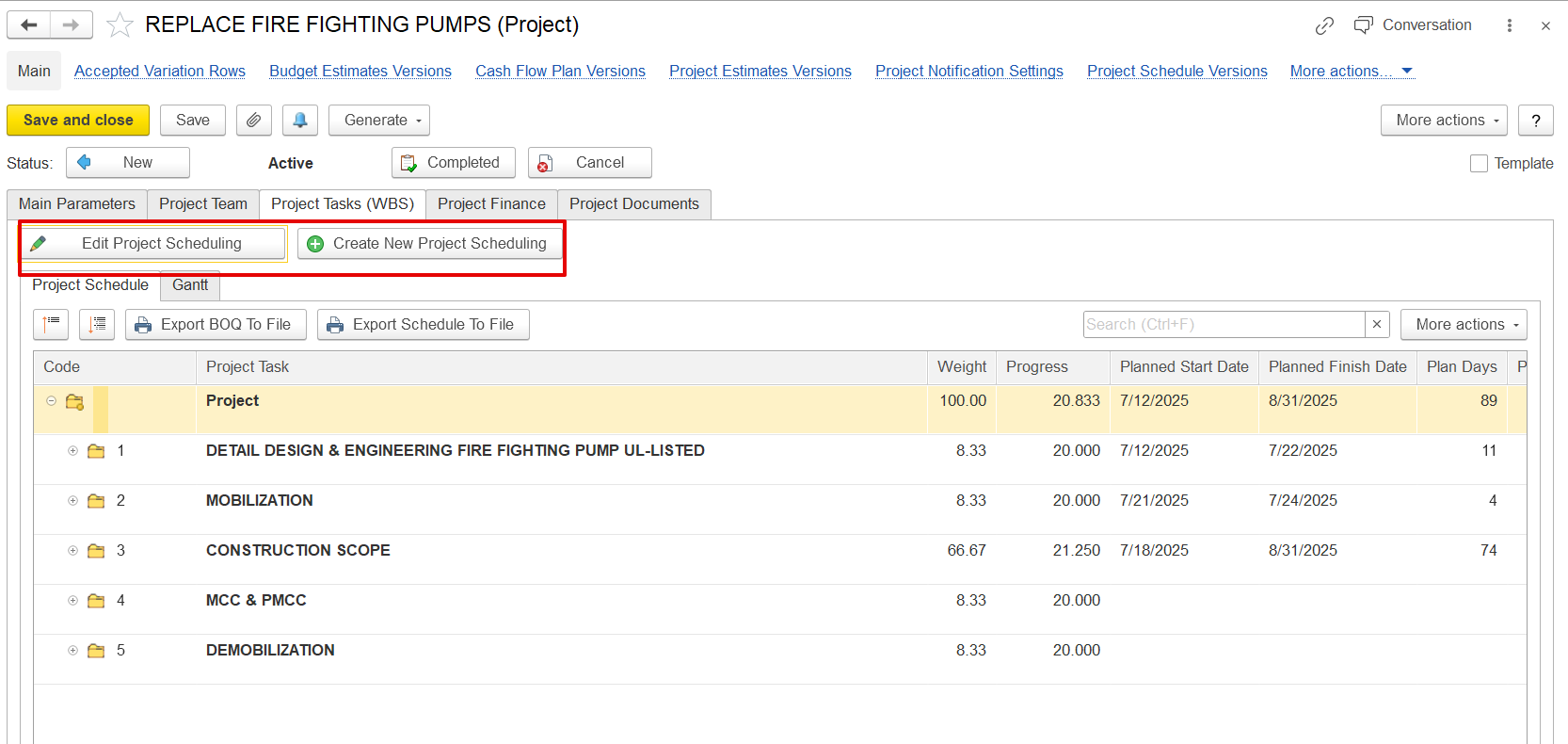
This document can be created in two ways-
From the Project screen directly.
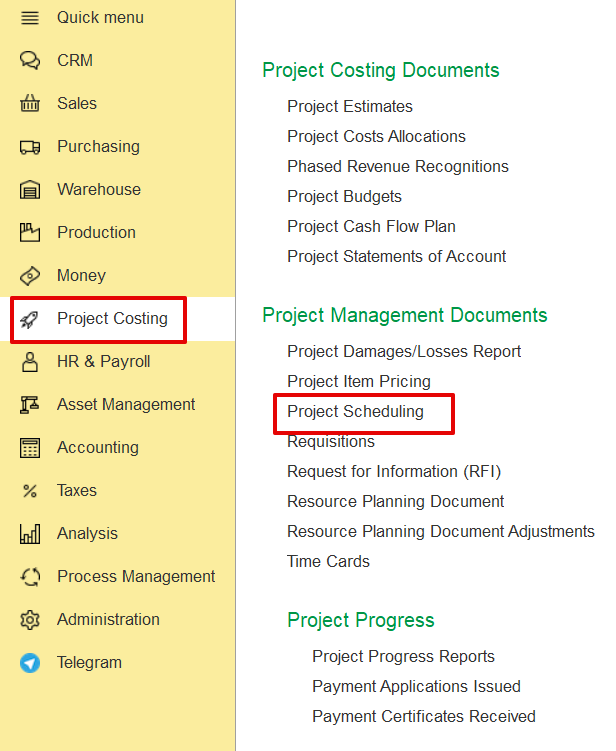
- From the Costing Module:-
Go to Project Costing → Project Management Documents → Project Scheduling
2.
...
Scheduling Document
When creating a new Project Scheduling document, the system automatically pulls the structure from the previously created Estimation. The user can then modify and adjust the schedule as needed.
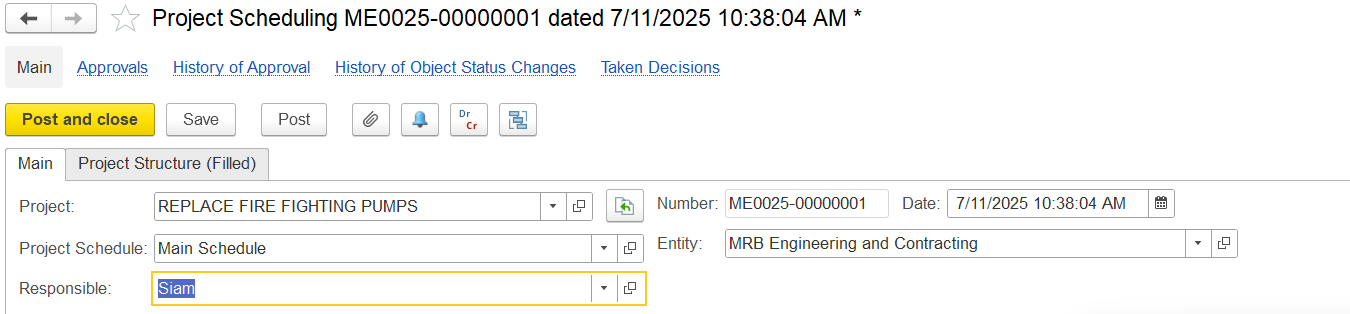
- In the main tab
...
Main tab
The Main tab is used to define general and essential details-
- Project- The name of the project for which scheduling is done
...
- .
...
- Project Schedule
...
- - The name of the schedule version
...
- .
...
- Responsible
...
- - The person in charge of this schedule
...
- .
Number: The document number automatically given by the system.
Date: The date and time the schedule was created.
Entity: The Entity handling the project (e.g., MRB Engineering and Contracting).
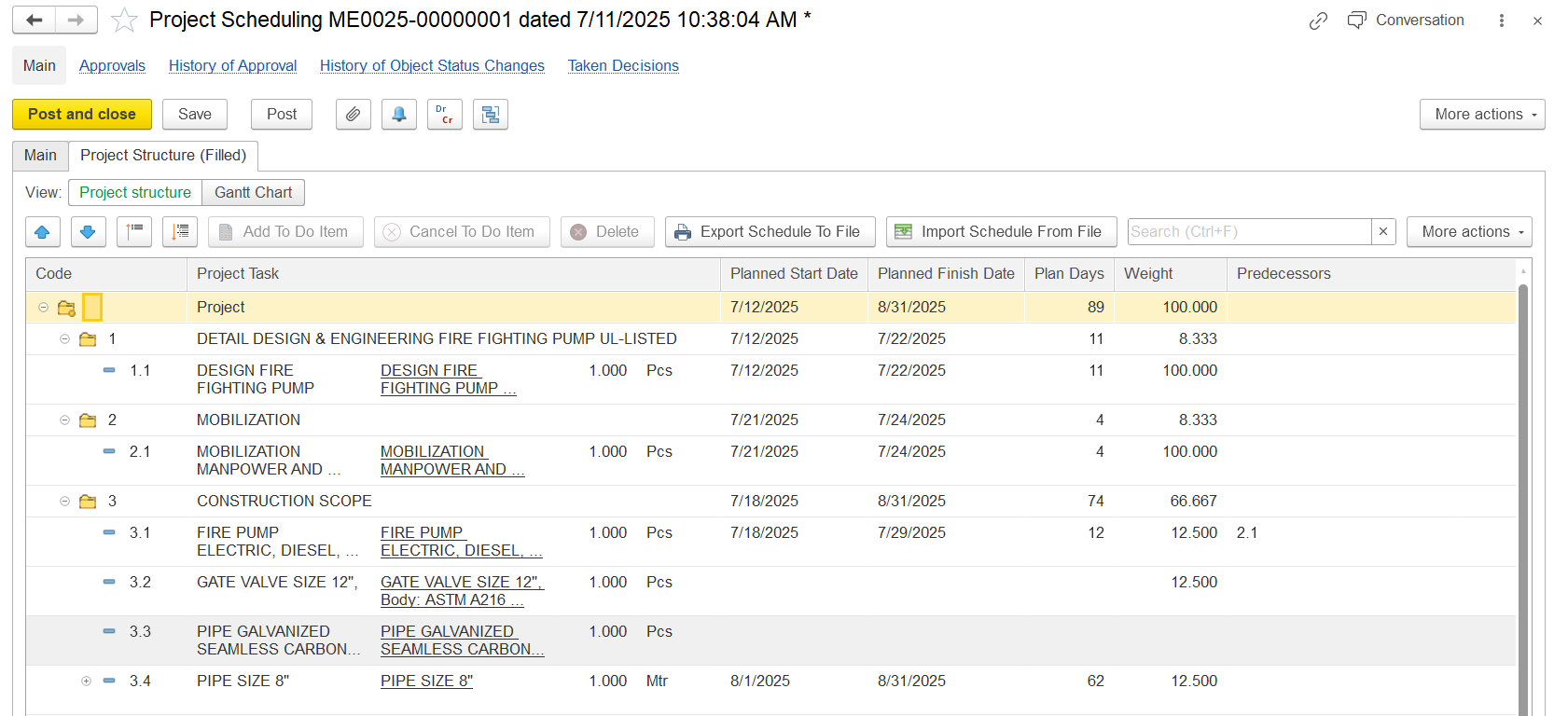
Task Code: Unique identifier for each task (e.g., 1.1, 2.1, 3.4) following WBS hierarchy.
Item and content: Name and content of the task (e.g., “DESIGN FIRE FIGHTING PUMP”).
...
- Entity- The Entity handling the project.
Project Structure tab
The Structure tab is used to define and organize the breakdown of work within a project. It serves the following purposes-
Task Code - Unique identifier for each task following the WBS hierarchy.
Item & Content - Name and description of the task.
Quantity & Unit - Specifies the task scope.
Planned Start/Finish Date
...
- Scheduled execution timeline
...
.
Plan Days
...
- Duration between start and finish dates.
Weight (%)
...
- Contribution of the task to the overall project progress.
Predecessors
...
- Task dependencies
...
.
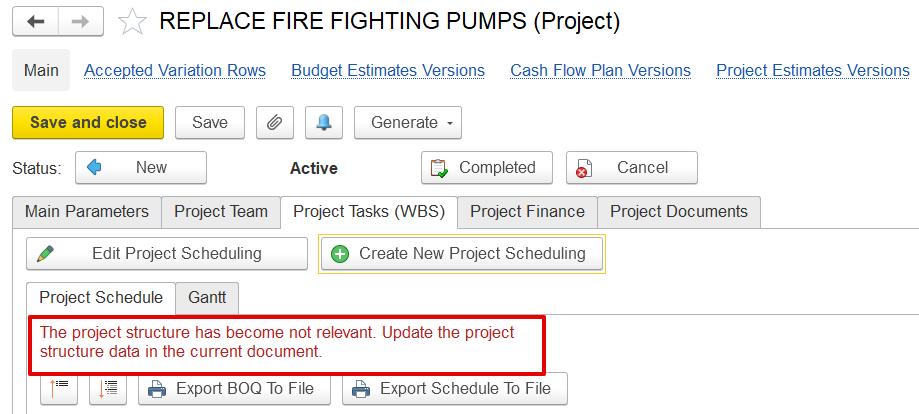
Note- This document is always connected to the most recent version of the estimation. Suppose any modifications, such as revisions or variation order, are made to the estimation. In that case, the system will detect them and notify that the current schedule is outdated, prompting an update.
...
Gantt Chart View
A Gantt Chart is a timeline view of project tasks, showing start & end dates, duration, and dependencies.
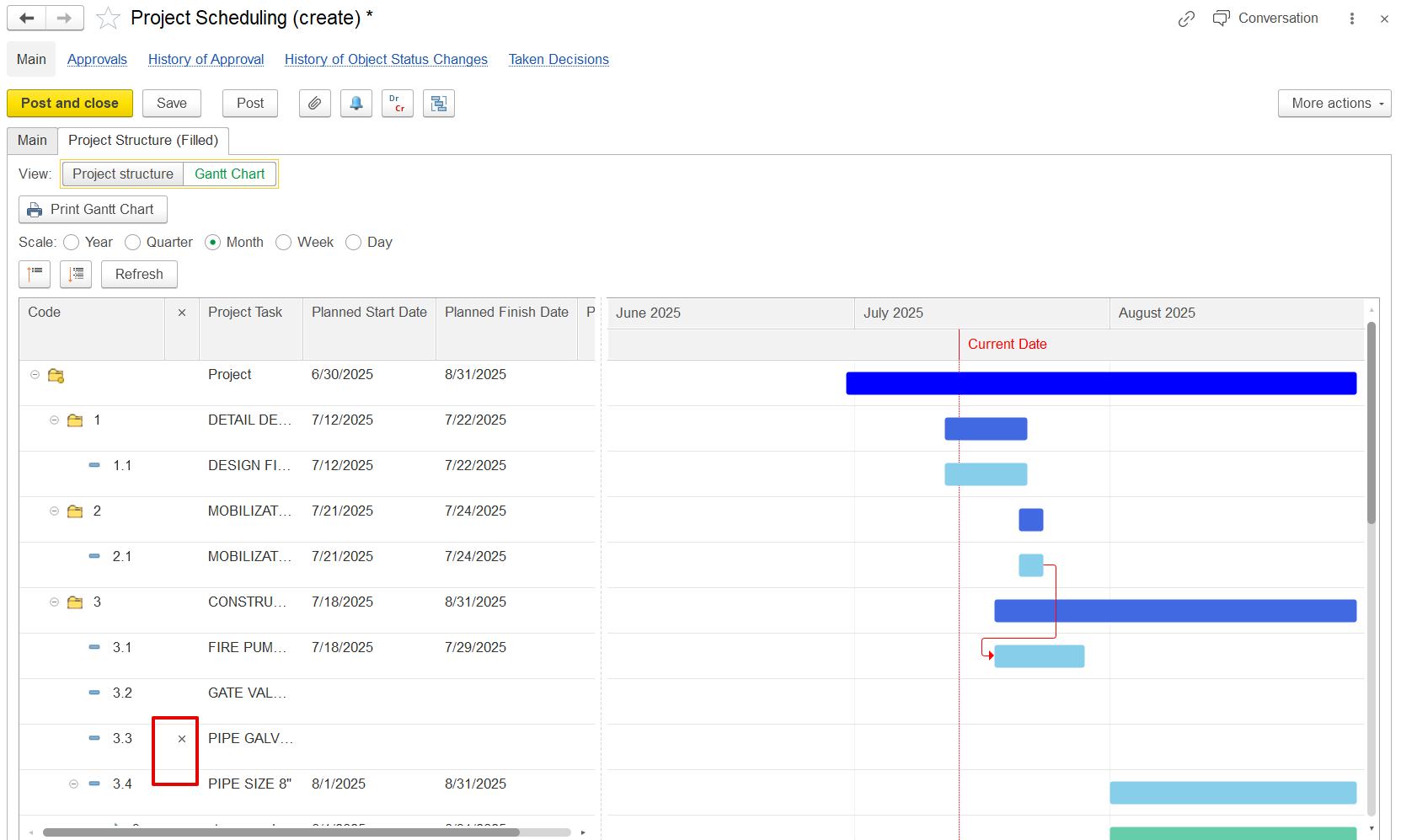
Allows drag-and-drop of tasks to set dependencies.
...
Indicators (x) help users identify cancelled or modified tasks.
...
cancelation BOQ lines, which are not actual in the latest Project Estimates document.
3. To-Do Items
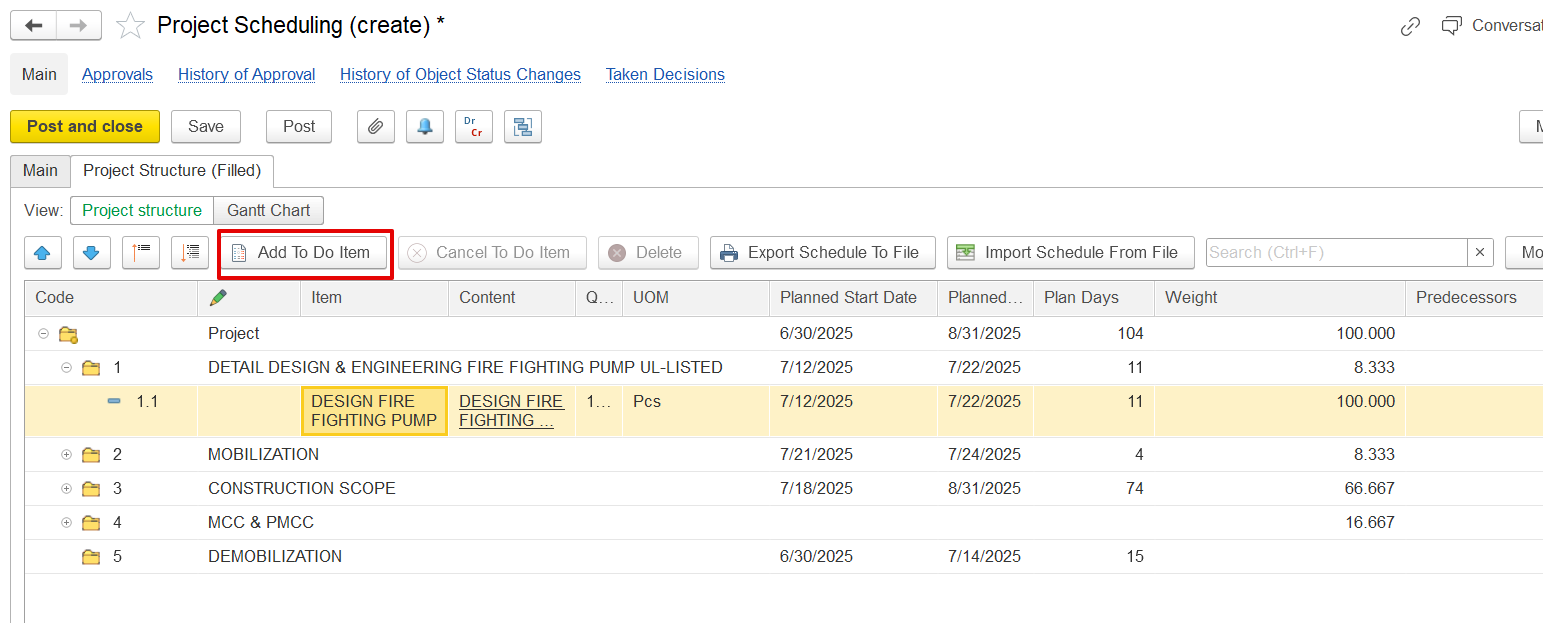
To-do items are internal tasks linked to specific project tasks or revenue line items. They are not visible to the client but help track internal work progress. The "Add To Do Item" button becomes available when the “Use Business Process and Tasks” option is checked in Contracting Settings.
It represents the internal steps the team must take to complete those deliverables. It can be created per project task or revenue line.
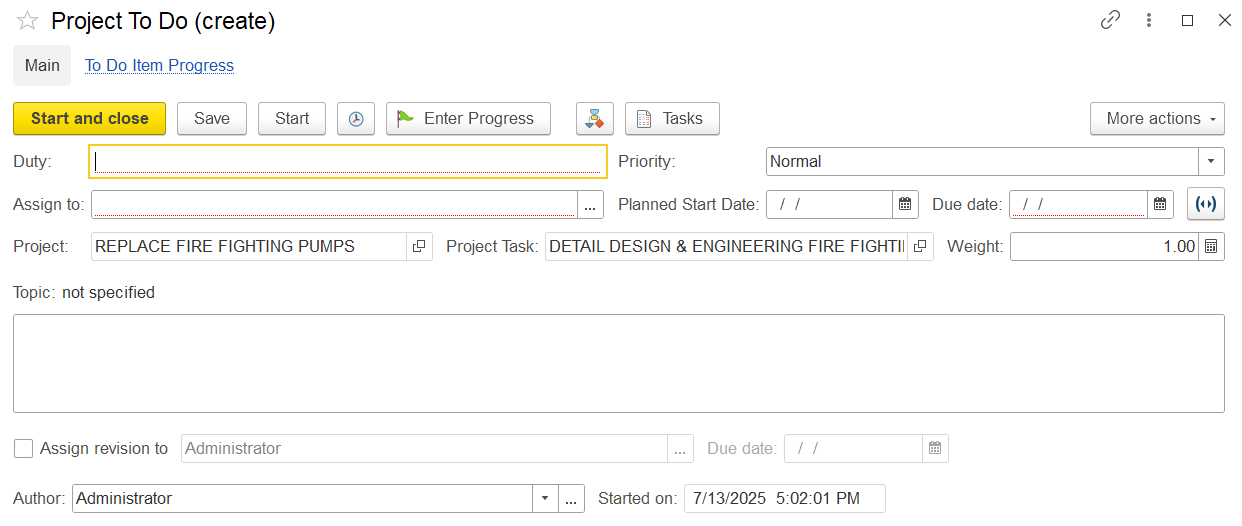
- Duty: - Describes the task to be done (e.g., “DETAIL DESIGN & ENGINEERING FIRE FIGHTING”).
- Assign Assign to : - Select who is responsible—individual responsible, an individual or a team member.
- Priority: - Sets urgency level (e.g., High, Medium, Low).
- Planned Start Date: - When the task is scheduled to begin.
- Due Date: - Deadline for completion.
- Project: - Links the task to its parent project (e.g., “REPLACE FIRE FIGHTING PUMPS”).
- Project Task: - Connects to a specific scheduled item in the master plan.
- Weight: - Indicates task’s importance or contribution to project progress (expressed as a percentage).
- Topic: - Reference section for categorization or discussion thread.
- Author: - Person who created the task entry.
- Start Date (bottom field): - When work was initiated (can differ from planned).
- Revision: - Optional field for assigning the task to an administrator to track edits or version control.
...
4. Import &
...
Export
The system allows data import/export from the scheduling screen:-
Export Schedule to File - Saves the current schedule (task names, planned dates, dependencies) into an Excel file; useful for sharing, external editing, or use in other software.
Import Schedule from File - Allows users to upload an Excel file with planning data (start/finish dates, dependencies).
Please note: - Import/Export tools allow you to manage scheduling data in Excel, but changes apply only to dates and links, not the project structure.