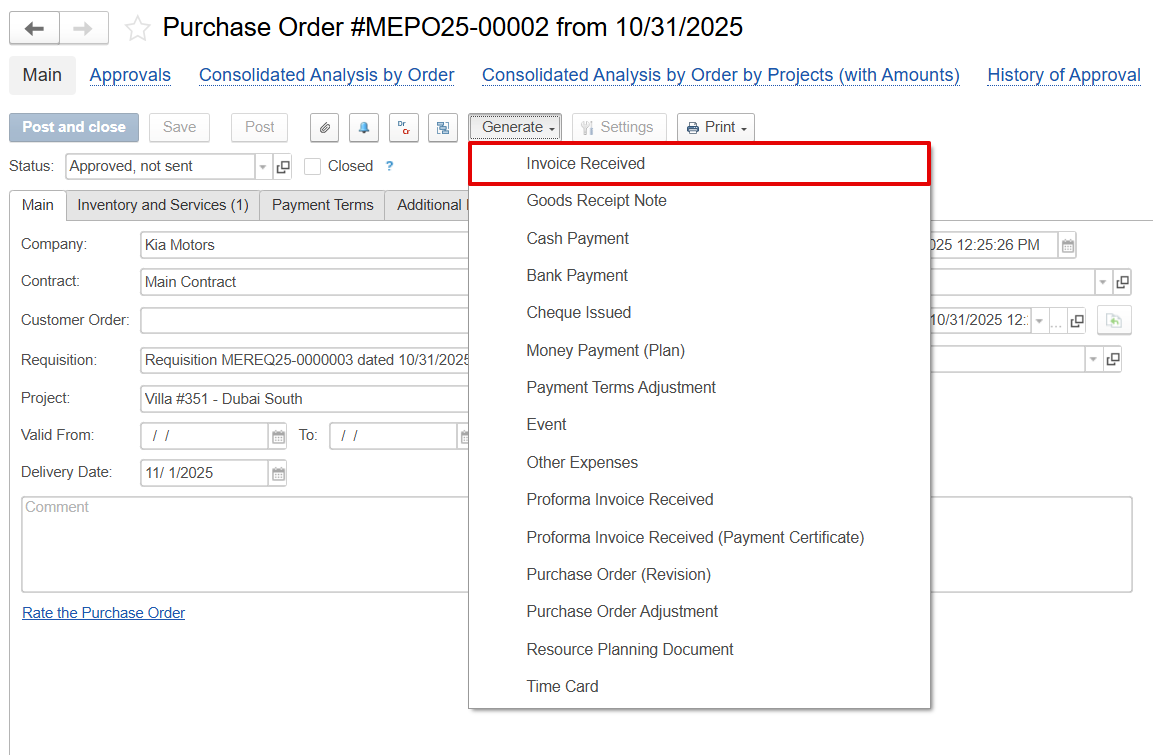
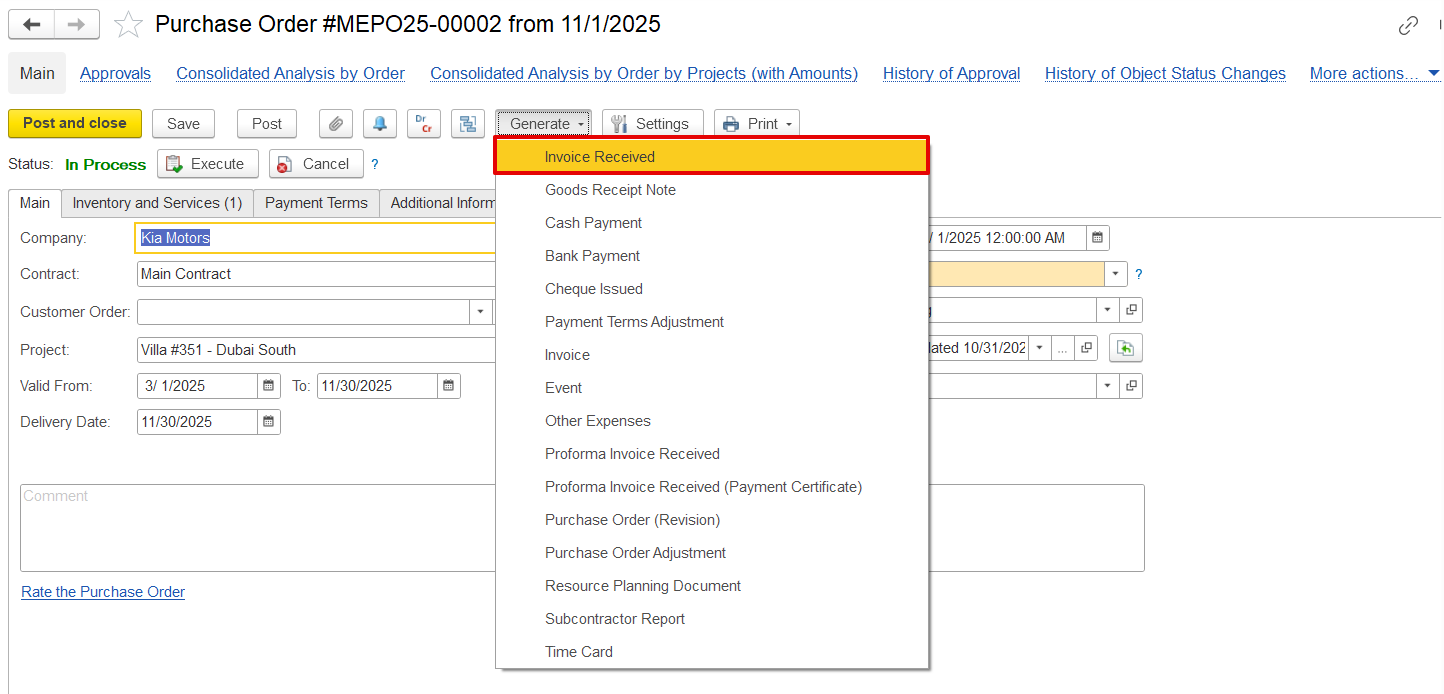
The Invoice Received document is generated directly from the Purchase Order (PO) and is automatically associated with the relevant PO, project, and hired resource.
Main Tab
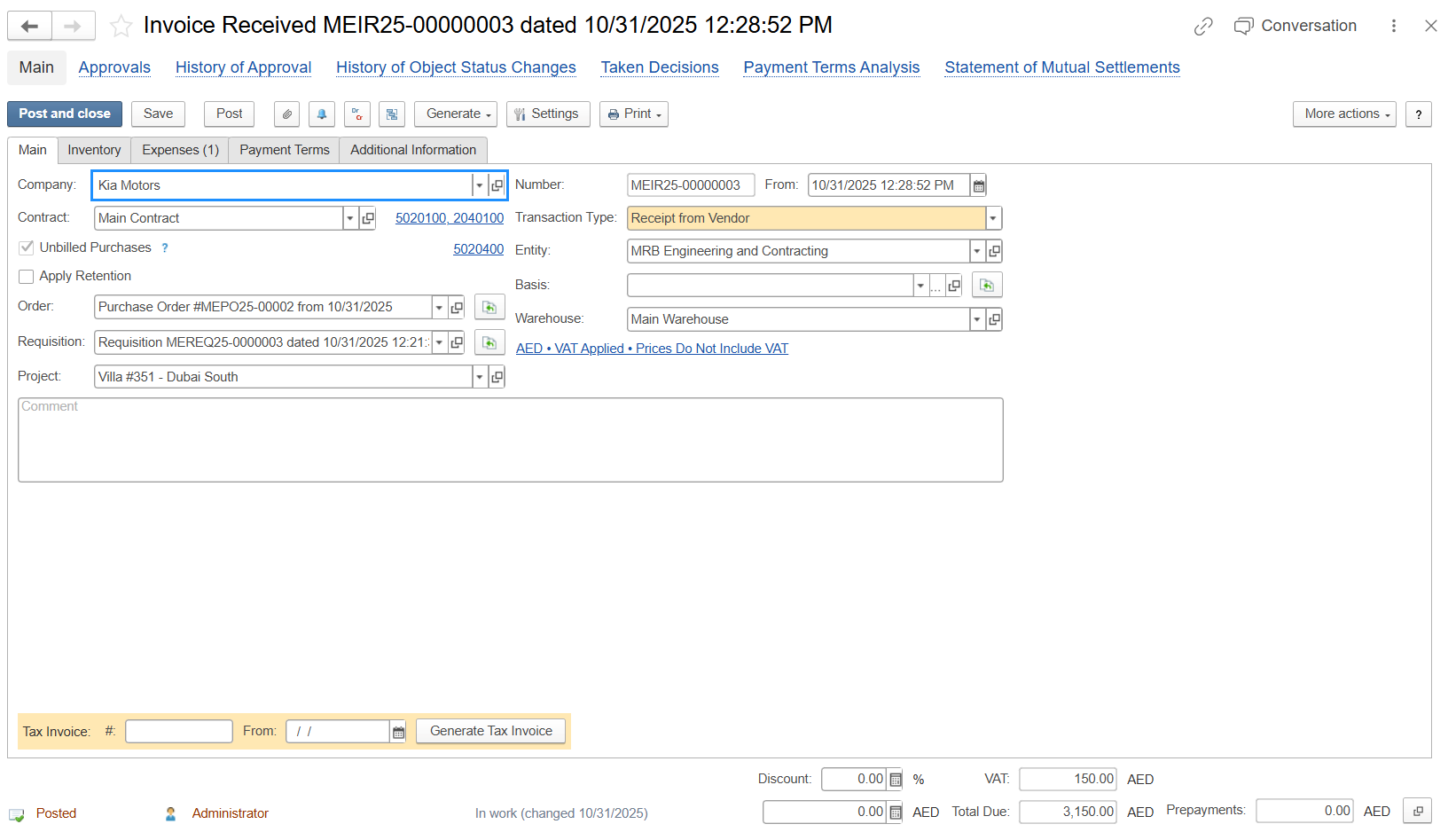
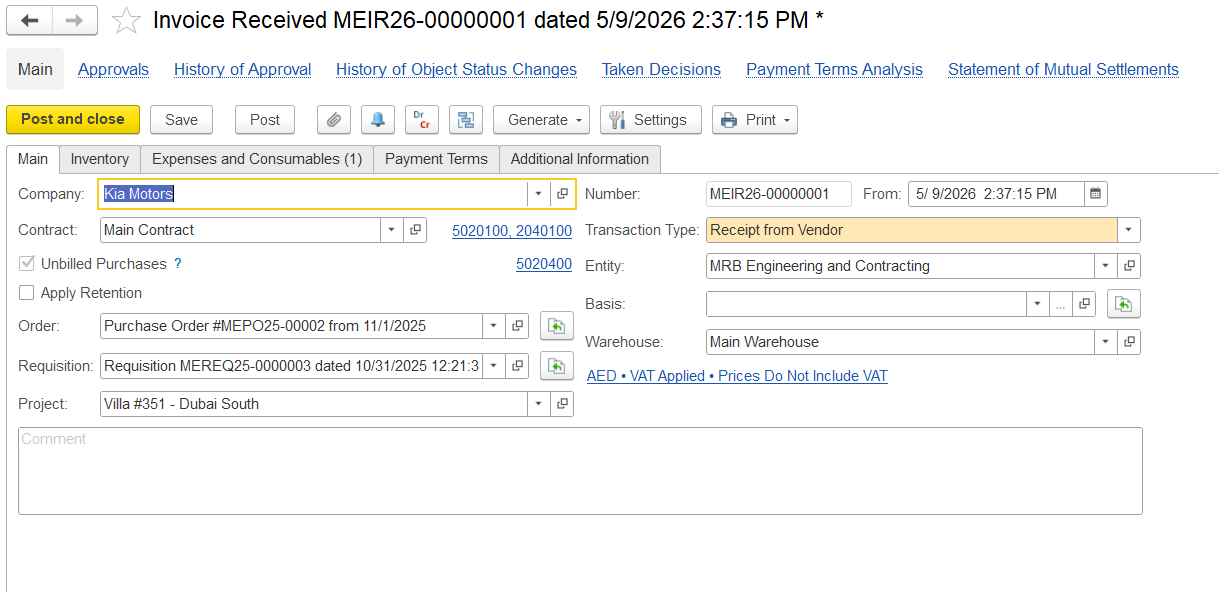
The Main tab captures all the basic and important details of the invoice received.
- Company - The company issuing the Invoice received
- Contract - The contract under which this invoice was received is being processed
- Unbilled Purchases - This means costs were recorded before invoicing, and this option is used to match invoices received to goods or services already received but not yet billed. For resources Unbilled purchase values can be accrued by Time cards and offset by Invoice received with hired resource mark.
- Apply Retention - Option to hold back a portion of the payment as retention
- Transaction Type - Defines the type of transaction, such as Receipt from vendor
- Entity - The entity that is responsible for the document.
- Order - The purchase order linked to this document.
- Requisition - The original request that led to the purchase order
- Basis - A reference used to pull related data.
- Warehouse - The location where goods are received, or services are assigned
- Project - The project to which the invoice cost will be allocated
- Comment - A field to add any notes or additional information
Expense and Consumable Tab
The Expenses table captures tab captures quantities and prices based on the defined Unit of Measure (UOM). It is divided into two parts:
...
- Item - The service type, resource, or expense item received from the Purchase Order.
- Content - Description of the service or resource being invoiced.
- Quantity - Number of billed units, such as hours, days, or months.
- UOM - Unit of Measure used for invoicing, such as Hour, Day, Shift, or Month.
- Price - Agreed rate per unit.
- Quantity (def. UOM) - Quantity converted into the standard company item default unit of measure.
- Price (def. UOM) - Rate converted into the standard unit item default unit for accounting calculations.
- Discount, % - Discount percentage applied to the invoice line.
- Discount - Total discount amount deducted from the invoice line.
- Amount - Total invoiced amount before VAT, after applying quantity, rate, and discounts.
- VAT, % - VAT percentage applied to the invoice line.
- VAT Amount - VAT amount calculated for the invoice line.
- Total Due- Final payable amount including VAT.
...
- .
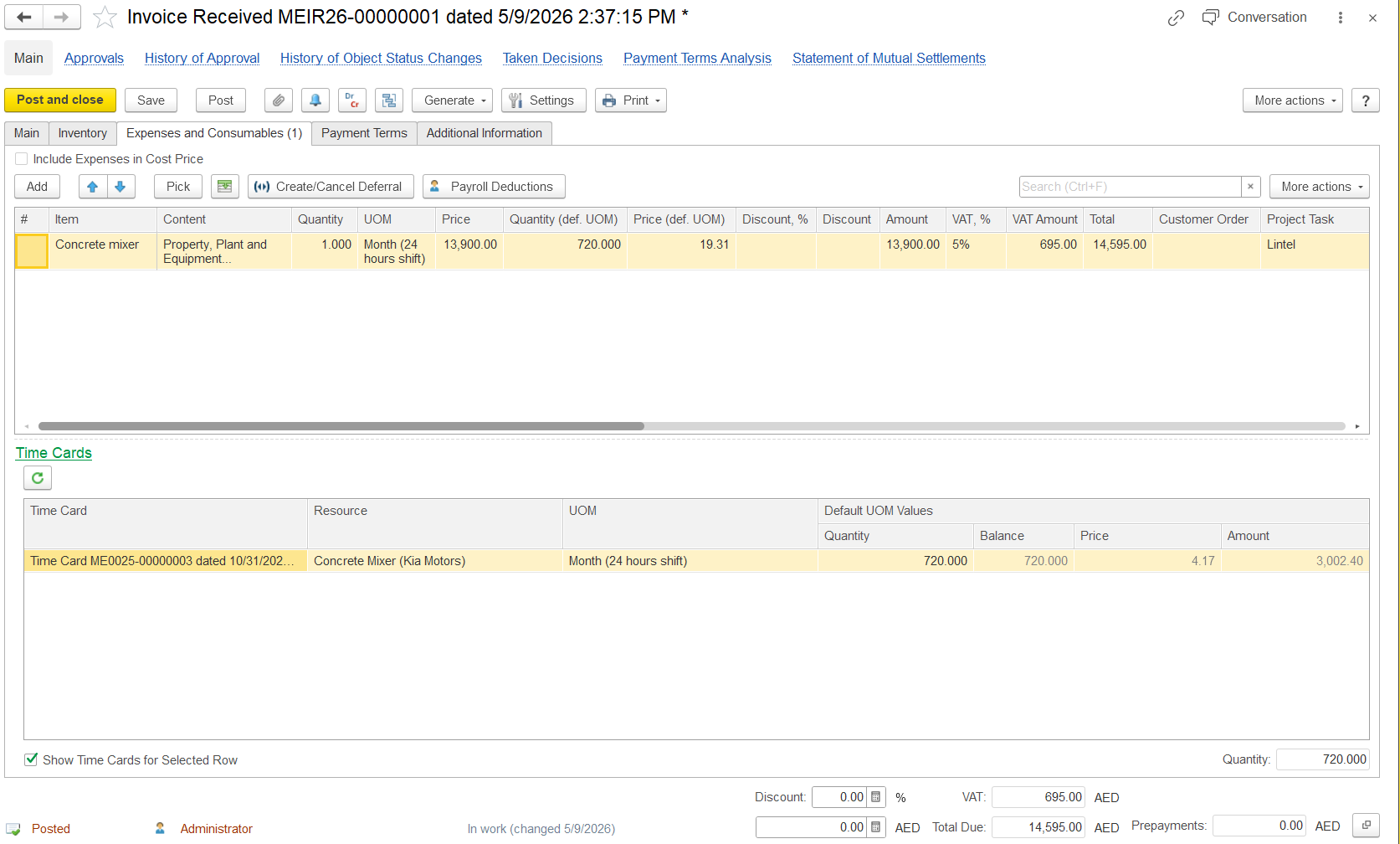
- Customer Order - Related customer order linked to the item line. (not required)
- Project Task - Specific project task associated with the line.
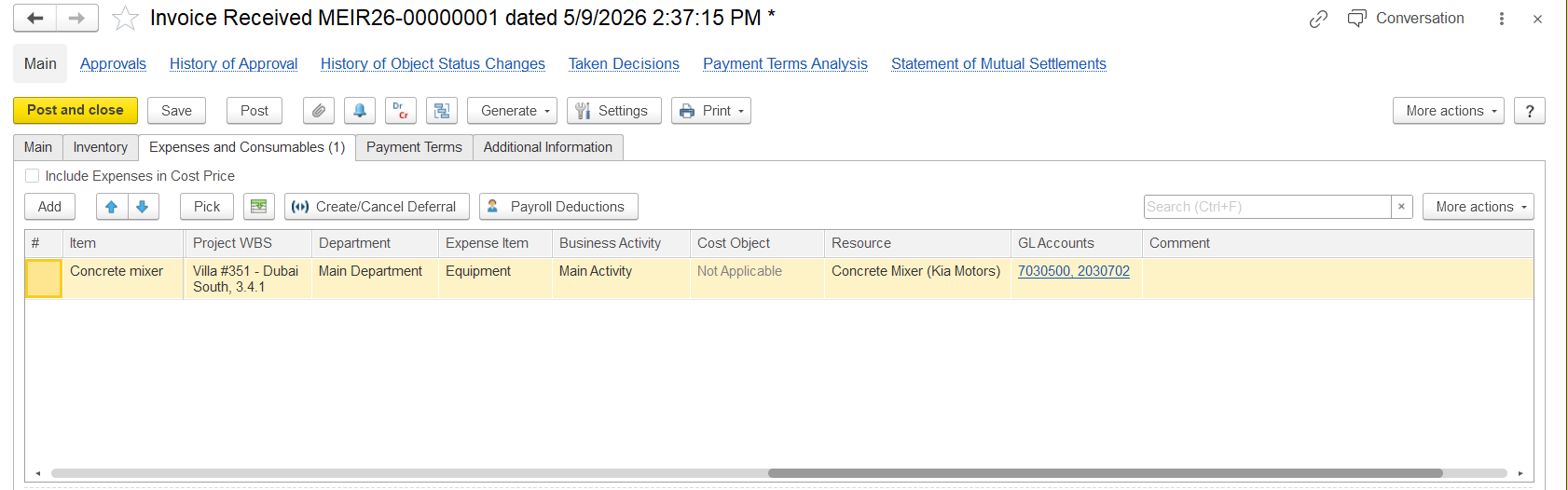
- Project WBS - WBS code assigned to the line item.
- Department - Department responsible for the expense.
- Expense Item - Categorizing the expenses into types of expenses.
- Business Activity - Type of business activity the cost relates to (e.g., Main Activity, Support Activity).
- Cost Object - Asset, project receiving the cost.
- Resource - Fixed asset or employee resource linked to the transaction. Will be used as Cost center for posting of Invoice received with hired resource mark.
- GL Accounts - General Ledger accounts used for financial posting.
- Comment - Additional notes or explanations related to the invoice line.
The Time Cards table is automatically populated from time card entries recorded by each resource against the Purchase Order (PO). Each line reflects the actual work performed and is used directly in calculations.
...
Also, any change in Quantity in the Time Cards table will automatically recalculate the relatedparent line in the “Invoice Received” document.
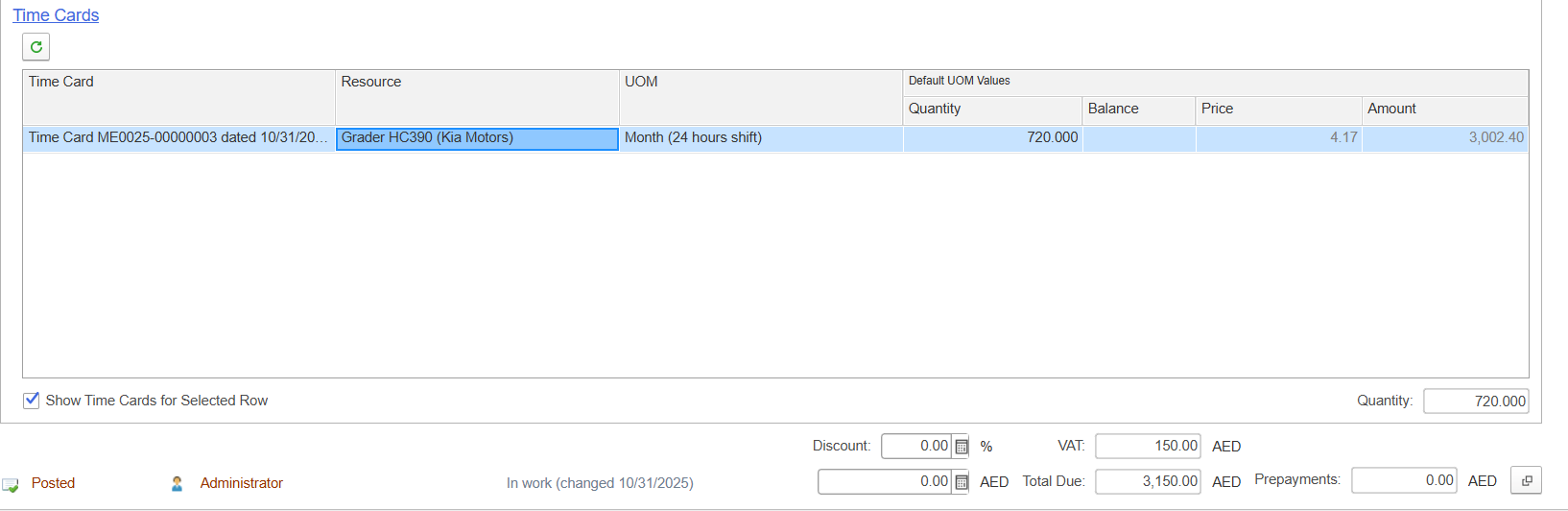
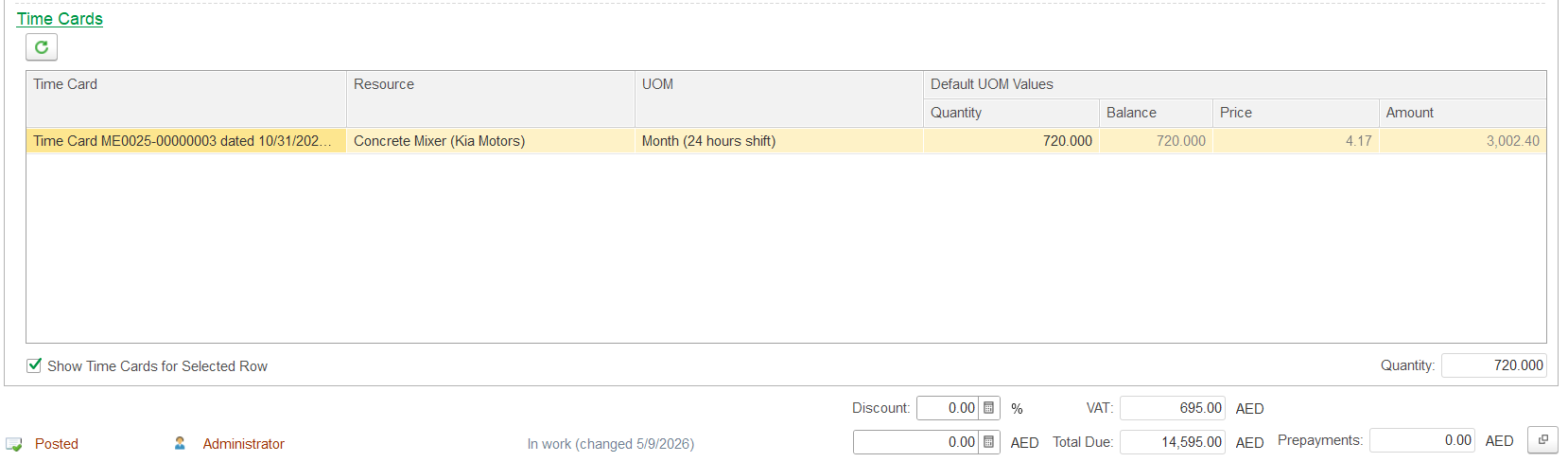
Show Time Cards for Selected Row - Displays the related time card entries for the selected invoice line or resource row.
Additional information
...
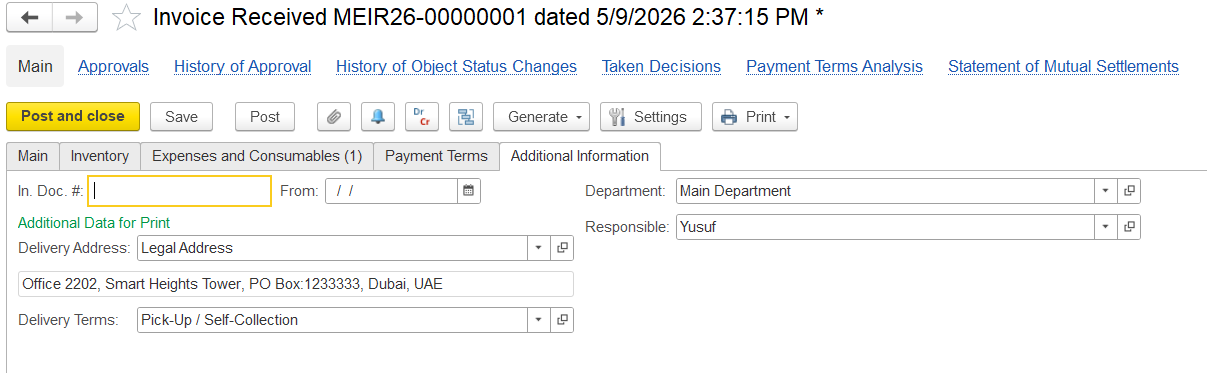
Additional details for the Invoice received.
- In. Doc. # & From - Supplier invoice details
- Department - Related department
- Responsible - Assigned the employee responsible for the document.
- Delivery Address - From entity data, editable if needed
- Delivery Terms - Delivery conditions.
Unbilled Purchase
When Unbilled Purchase is enabled in the main tab, the system initially records the timecard, and then the system calculates the cost using hours × PO rate and posts it to the Unbilled Purchase GL account. This is a separate general ledger account from the standard Trade Payables GL account.
...