...
Unlike lessees, lessors continue to distinguish between finance and operating leases.
1. Operating Lease (Lessor)
An operating lease (as a lessor) is simply a rental arrangement. The lessor allows someone else to use the asset for a period of time, but ownership does not change. Since the risks and rewards of ownership are not transferred, the asset remains on the lessor’s balance sheet.
Because the lessor still owns the asset, it continues to depreciate just like any other asset they use in their business. The lease payments received are treated as rental income and are usually recognized evenly over the lease term. It can record in below ways.
a) When Lease Payment is Received (or Receivable)
- If cash is received, create a cash receipt document with transaction type Others, and GL can be finance income (User can create a new GL and separate the lease income from other finance income)
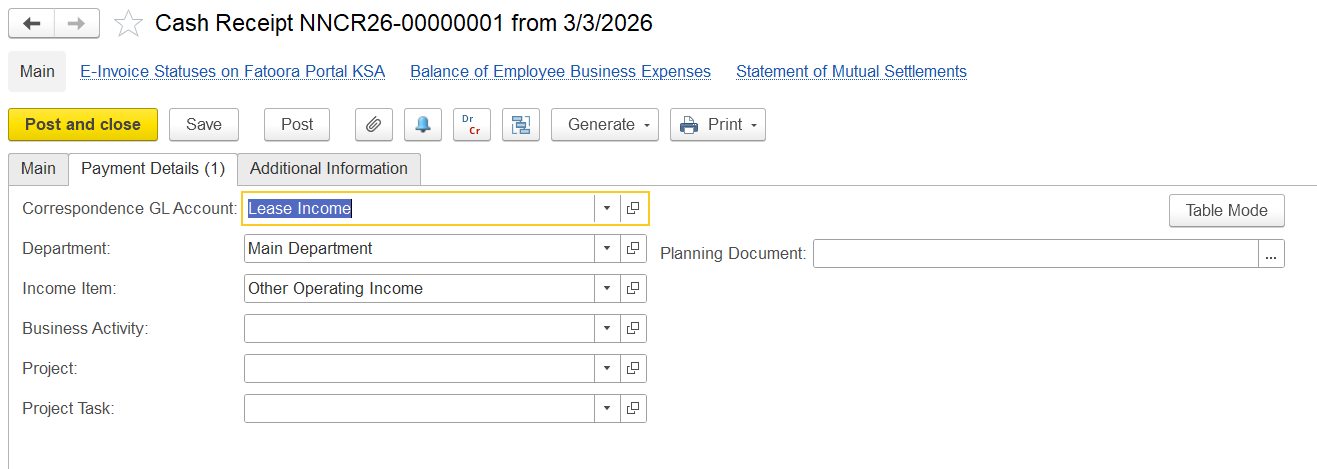
The entry below will be created
Debit: Cash
Credit: Lease Income

If a payment is expected but the cash will be collected at a later date, set up a new GL account under Current Financial Assets and generate an Other Income document with the Transaction Type set to Accrual. The journal entry should be:
Debit: Lease Receivable
Credit: Lease Income
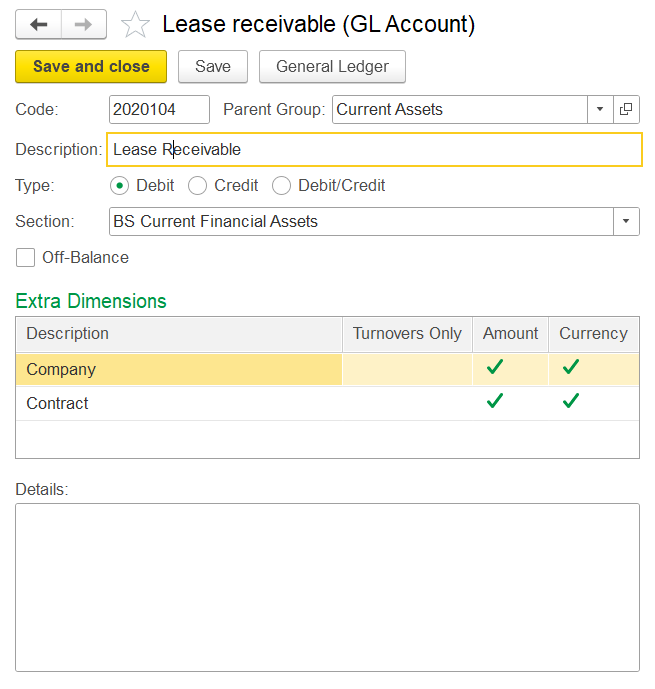

Create a Bank/Cash Receipt document with the Transaction Type set to Other. In the Payment details tab, add the Lease receivable Gl and the company details. Once filled, the entry below will be created.
Debit: Cash on Hand
Credit: Lease Receivables

This ensures that the receipt properly records the cash collection against the previously recognized lease receivable.
2. Finance Lease (Lessor)
A lease is classified as a finance lease if it transfers substantially all the risks and rewards incidental to ownership of the underlying asset.a) The
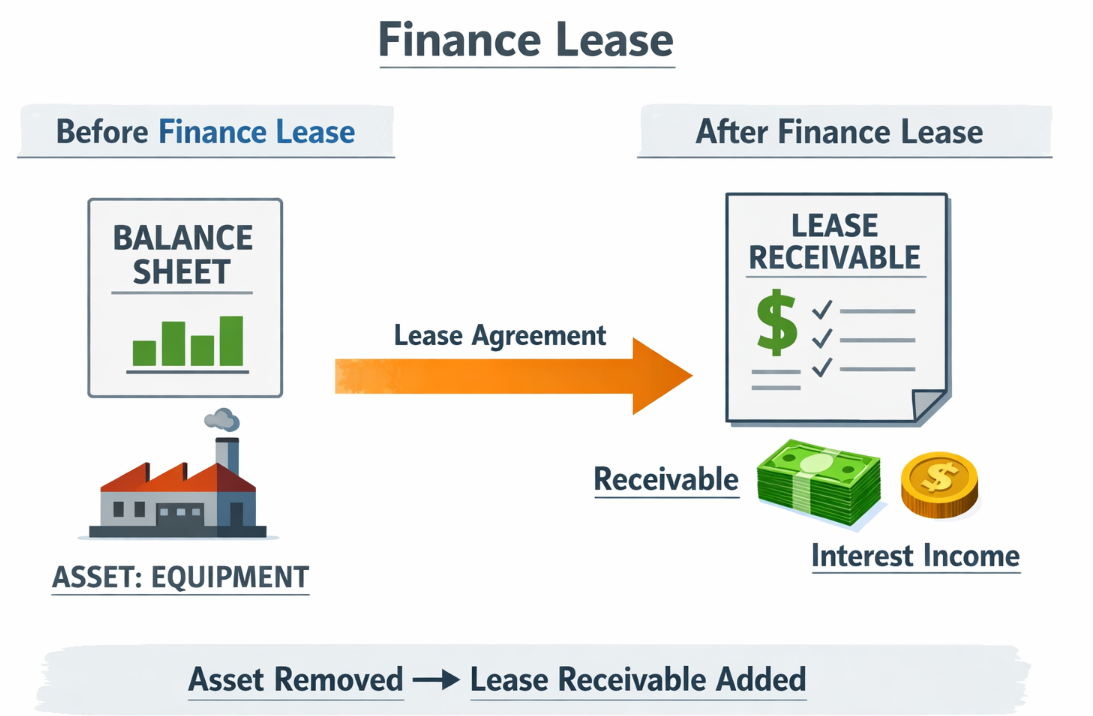
- At lease commencement, the lessor removes the
...
- leased asset from the balance sheet
...
At lease commencement:
Derecognize the asset from the balance sheet.
Recognize a lease receivable (net investment in the lease).
...
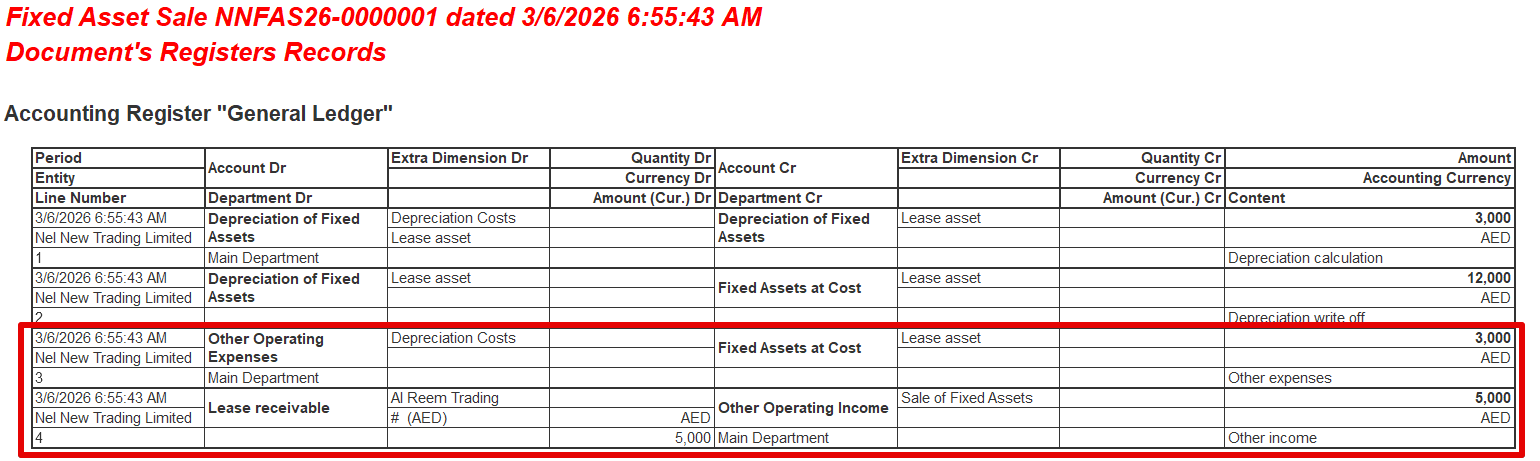
- by creating a Fixed Asset Sale document. The journal entry is:
Dr Lease Receivable - records the amount to be collected from the lessee under the finance lease.
Cr Asset (carrying amount of leased asset)
Cr Gain on Sale/Finance Lease (if any)
During the lease term:
Recognize interest income on the lease receivable using the effective interest method.
Dr Lease Receivable
Cr Interest Income
When cash is received from lessee:
Dr Cash
Cr Lease Receivable
Recognition of Net Investment:
The lessor recognizes a receivable equal to the net investment in the lease (present value of lease payments plus any unguaranteed residual value).
Income Recognition:
- removes the leased asset from the balance sheet based on its net book value.
Cr Gain - the difference between the Fixed asset cost and the selling amount (2,000 AED) is recognized as profit.
Interest income should be recognized over the lease term. The interest earned on the lease receivable is recorded using the Other Operating Income document, which is created with the Transaction Type: Accrual. The accounting entry should be:
Debit: Lease Receivable
Credit: Lease Income

When the lessee makes a payment, a Bank/Cash Receipt document is created using Transaction Type: Others, and the lease receivable is entered in the Payment Details tab. The accounting entry is:
Debit: Cash
Credit: Lease Receivable

The lessor records a receivable representing the lease’s net investment. Finance income is recognized over the lease term using in a pattern way that reflects produces a constant periodic rate of return on the net investment.
2. Operating Lease (Lessor)
An operating lease (as a lessor) is simply a rental arrangement. The lessor allows someone else to use the asset for a period of time, but ownership does not change. Since the risks and rewards of ownership are not transferred, the asset remains on the lessor’s balance sheet.
Because the lessor still owns the asset, it continues to depreciate just like any other asset they use in their business. The lease payments received are treated as rental income and are usually recognized evenly over the lease term (straight-line basis)
a) When Lease Payment is Received (or Receivable)(Interest should be recorded manually on a periodic basis.)
Thanks for being a Firstbit Customer!