...
For example, a company purchased 5 units of an item, and later all 5 units were fully sold. As a result, the actual stock balance of this item is zero.
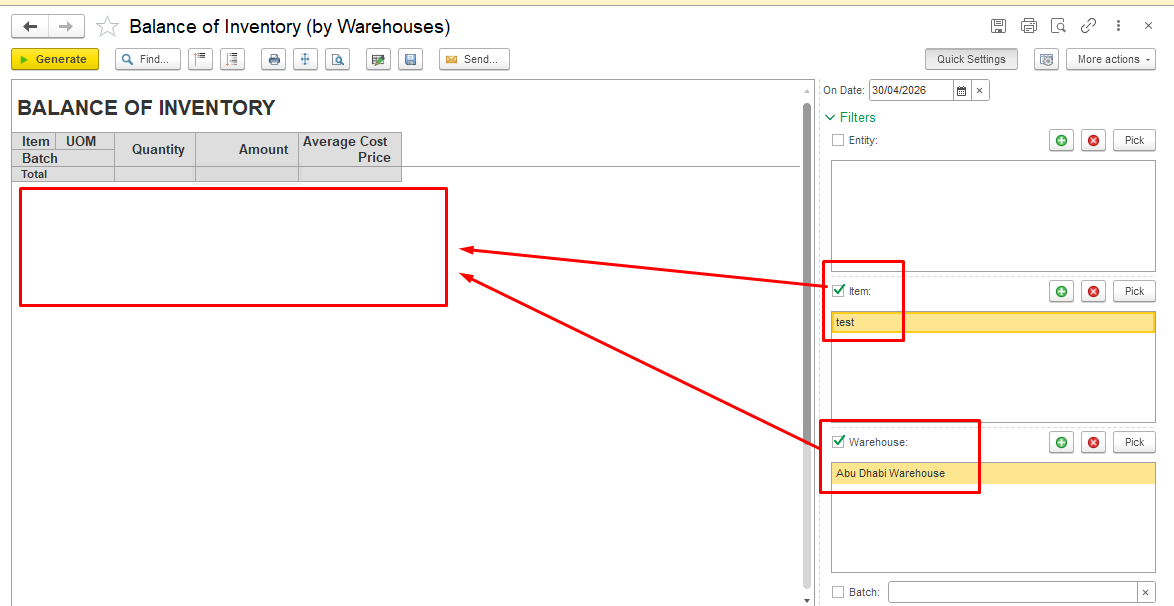
However, when creating an Inventory Write-Off document to write off other materials, this item is still automatically pulled into the document lines when using the Fill by balance option, even though there is no physical stock available.
...
This behavior is related to warehouse settings. Please check if the Separate Inventory and Financial Documents option is enabled.
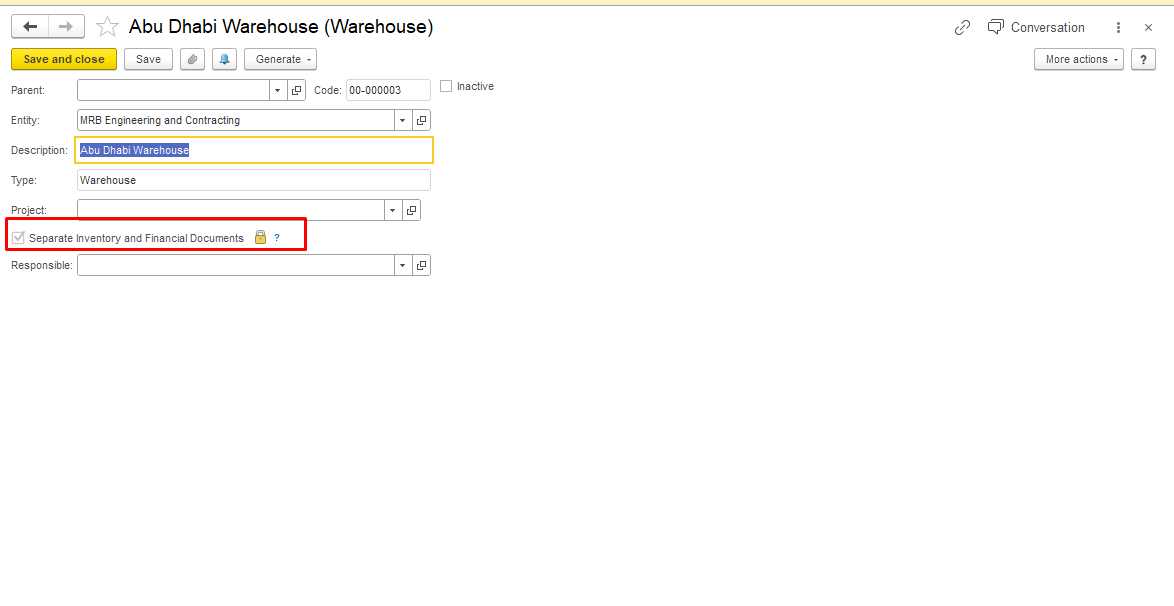
When the Separate Inventory and Financial Documents option is enabled, the system does not write off items from the warehouse (stock) registers.
...
Go to Warehouse module - Warehouse Documents - Material Dispatch Note, and create a new document.
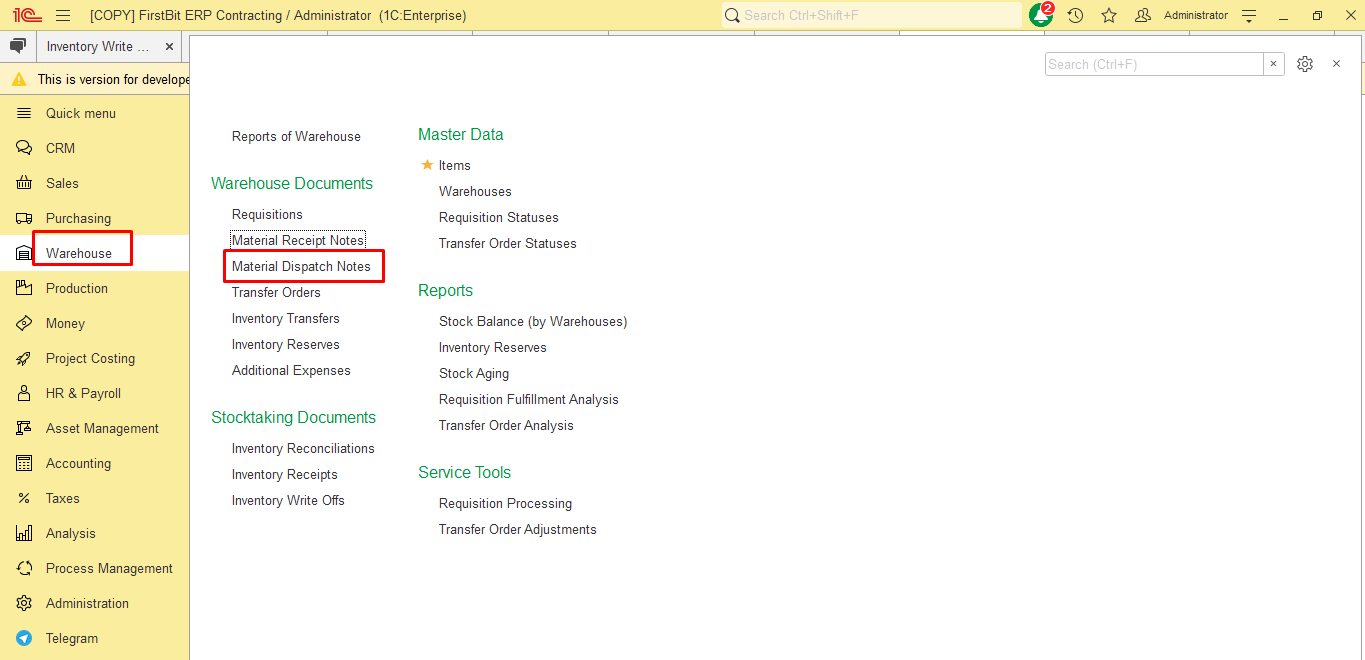
Fill in the Company field and select the required Warehouse on the main tab.
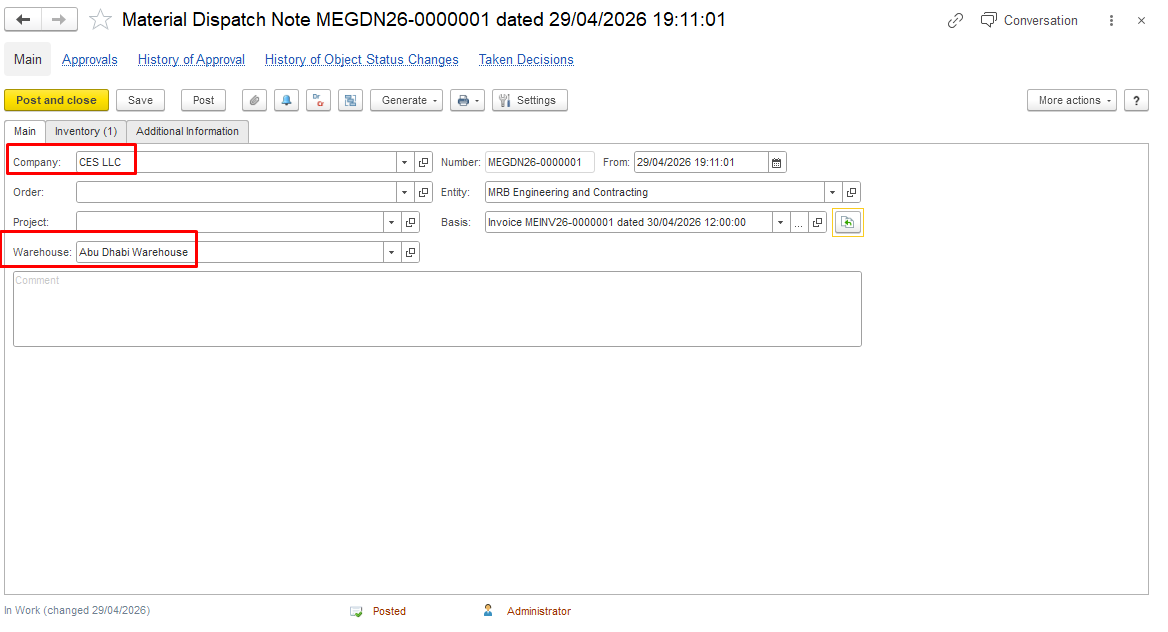
On the Inventory tab, specify the item and the quantity of goods sold. Save and post the document.
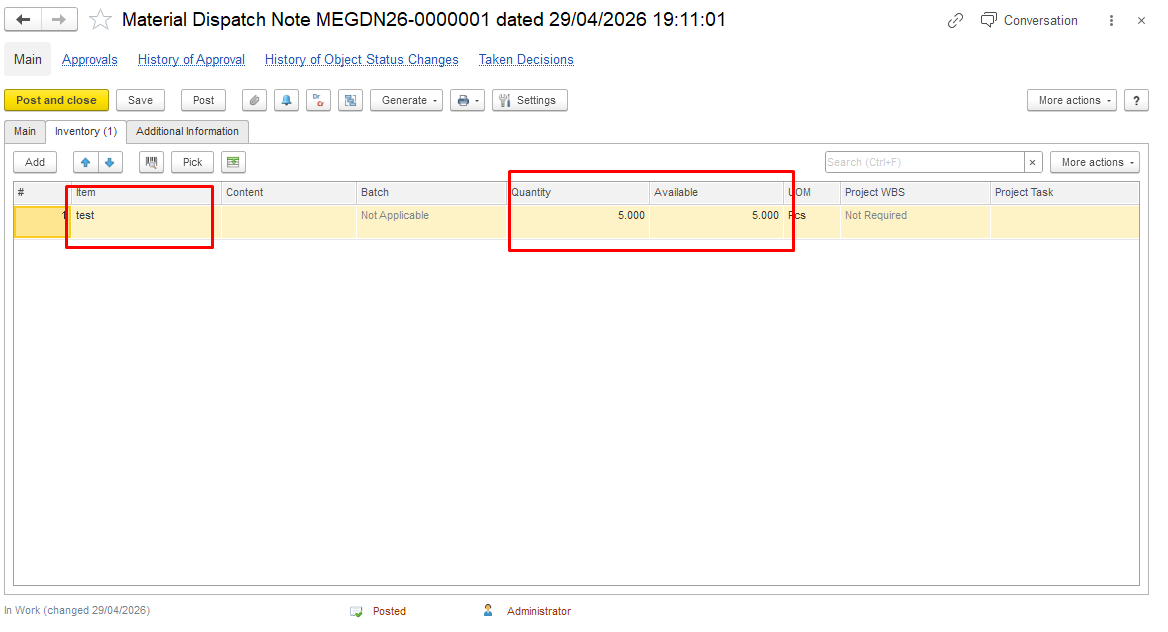
Then proceed with the Inventory Write-Off. The sold items will no longer appear in the Inventory Write-Off document.
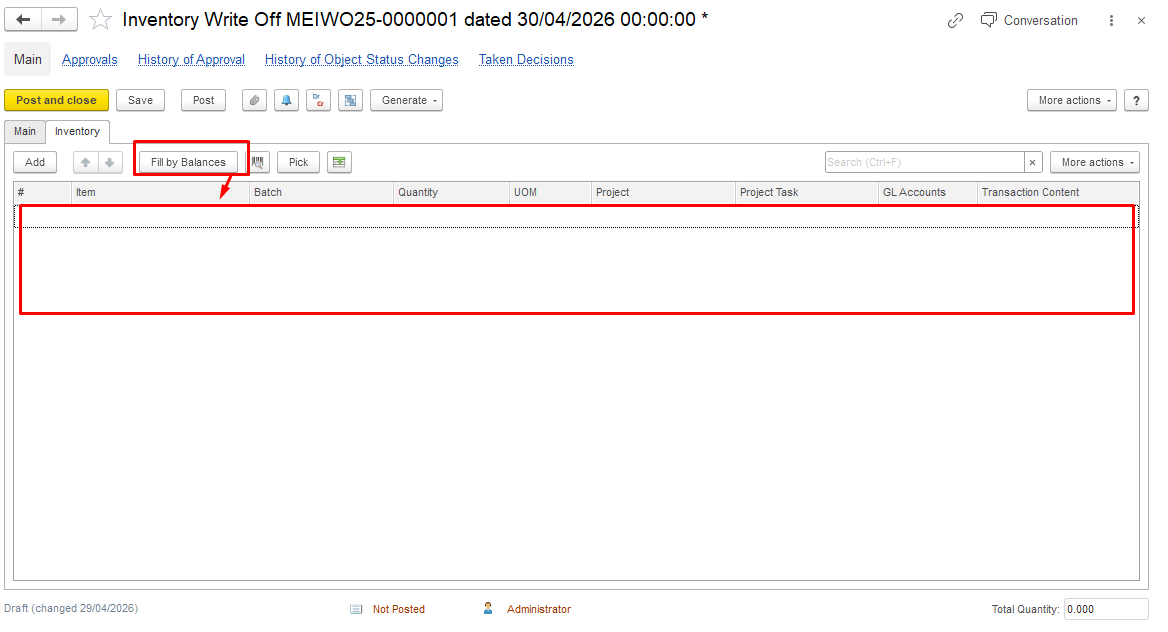
Opposite scenario: no stock is available for operations because the financial register shows zero, while the warehouse report still shows a balance
In such cases, the system may block operations (e.g., Write-Off) due to lack of financial availability.
This type may be found with Stock Balance (by Warehouse) report
Navigate Warehouse - Reports - Stock Balance (by Warehouse)
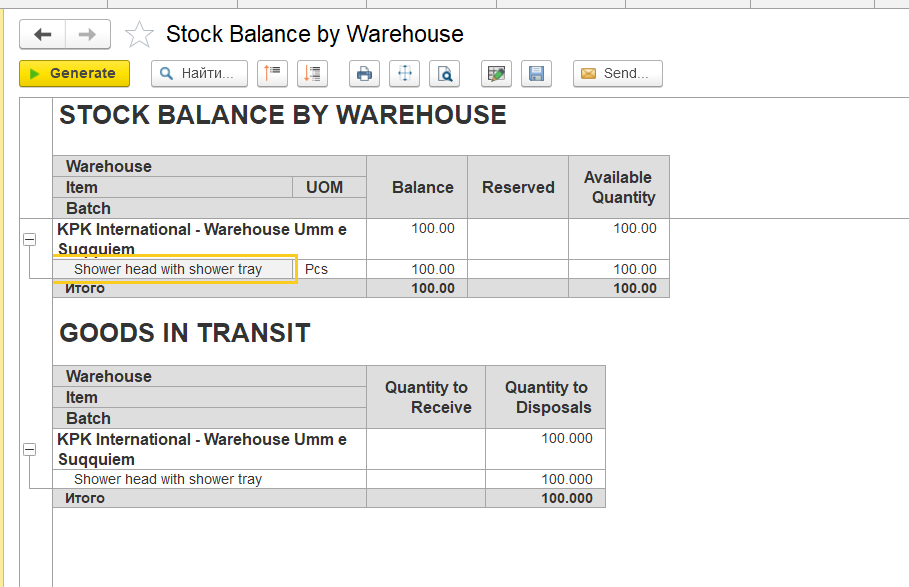
Top Section (Stock Balance)
Data source:
- Inventory on hand accumulation register (warehouse quantity register)
This report reflects physical stock in the warehouse (e.g., 100 units).
However:
- Write-Off checks the Inventory and expenses accumulation register (financial accounting).
If no stock exists in the financial register, the operation cannot be completed.
Why discrepancies occur
Typical reasons:
- Different posting sequences
- Documents affecting only one register
Common document types:
- Invoice Received
- Inventory Transfer
- Inventory Write-Off
How to investigate
- Open Stock Balance and drill down into movements for Inventory on hand accumulation register
- Open Statement of Inventory (by Warehouse) and review Inventory and expenses accumulation register data
- Compare:
- document postings
- sequence
- status
This helps identify which document caused the discrepancy.
Goods in Transit (Bottom Section)
This section is based on two registers:
- Inventory to Receive → Quantity to receive accumulation register
- Inventory to Transfer → Quantity to Disposal accumulation register
In the current example, the user can verify that a financial write-off was performed (Inventory Write-Off for 100 units), while no corresponding warehouse document (Material Dispatch Note) was created. As a result, the quantity of 100 is reflected in the Quantity to Disposal column.
And if Material Dispatch Note will be correctly generated, report will not show any outstanding balances:
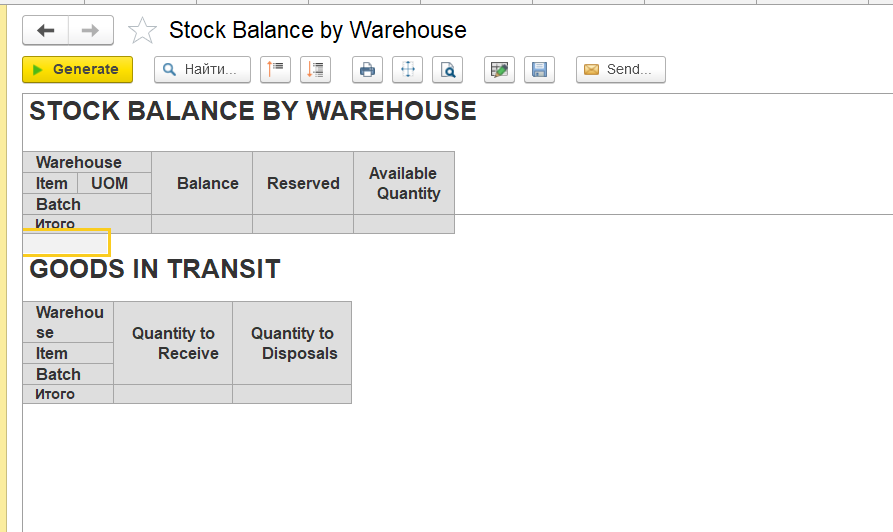
Summary
- Stock Balance reflects warehouse quantities
- Write-Off relies on financial availability
- Goods in Transit shows items in transfer
Discrepancies occur due to differences between registers and document postings.
Thanks for being a Firstbit Customer!
#inventorywriteoff
...
#meterialdispatchnote #separateFinancialandWarehouseAccounting