...
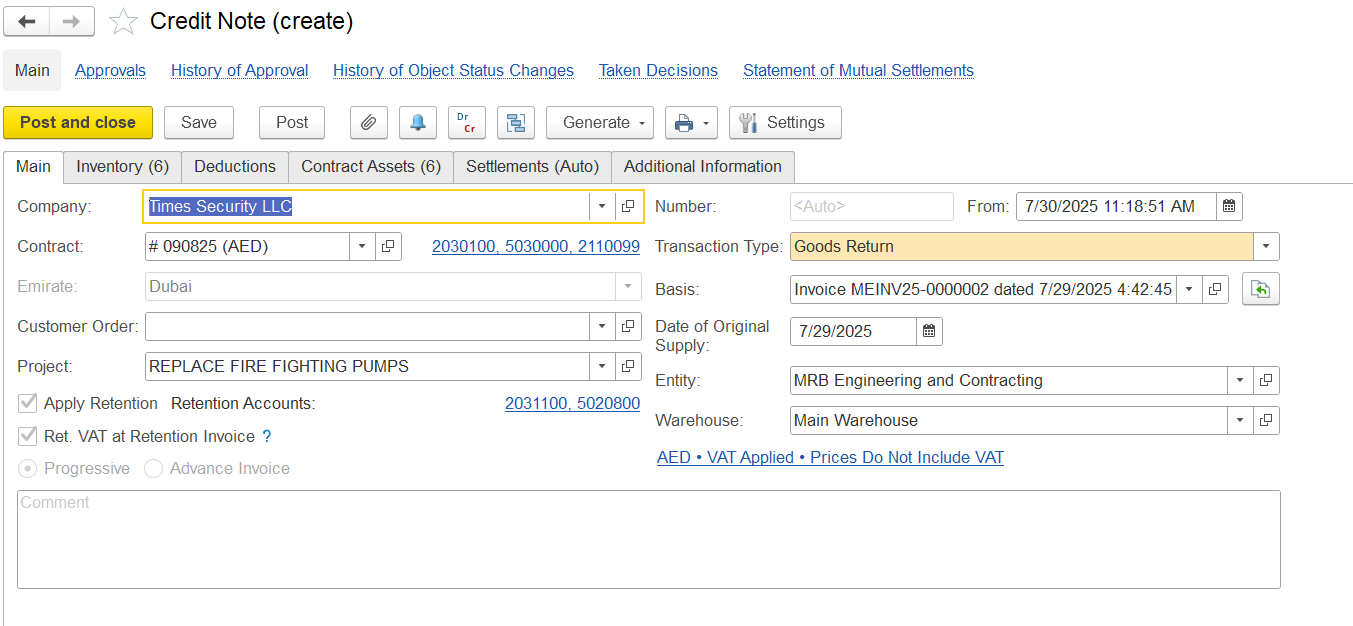
Company Name - The company for whom the invoice is being created
- Contract - Refers to the agreement associated with the transaction.
- Emirate - Indicates the emirate where the transaction was carried out.
- Customer Order - Represents the client’s order linked to this credit note.
- Project - Specifies the project or job connected to the transaction.
- Apply Retention / Ret. VAT at Retention Invoice - Indicates if retention should be applied (as defined in the contract) and specifies how VAT is handled for retention-related invoices
- Progressive / Advance Invoice - Indicates whether the credit note is linked to progressive billing or related to a previously issued advance invoice.
- Comment - A field used for entering internal comments or notes.
- Transaction Type - Describes the nature of the credit transaction.
- Basis - Indicates the original invoice that the credit note is reversing.
- Date of Original Supply - The date when the original goods or services were provided.
- Entity Name - The entity issuing the invoice
- Warehouse - The location of the inventory involved, if applicable.
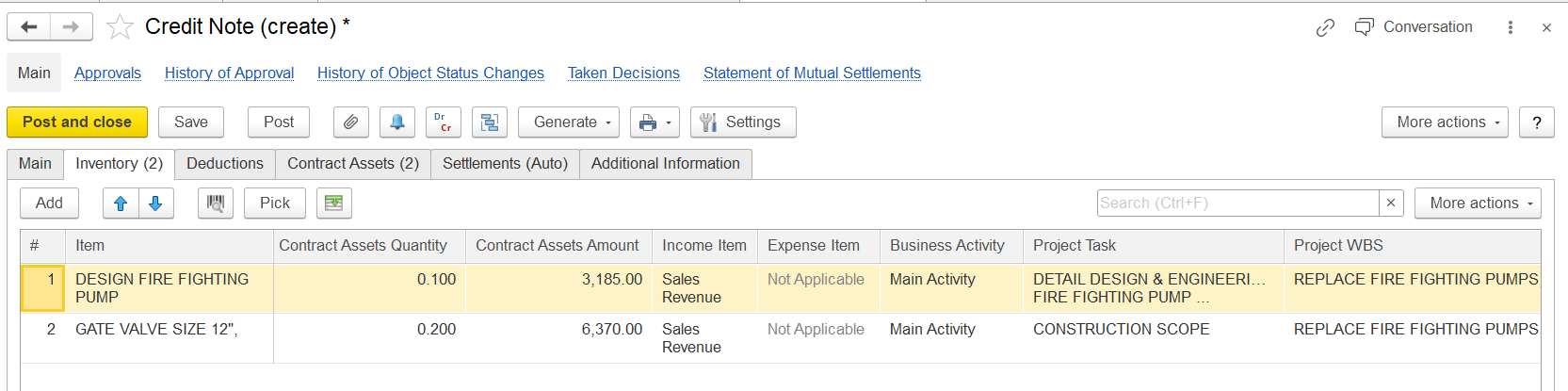
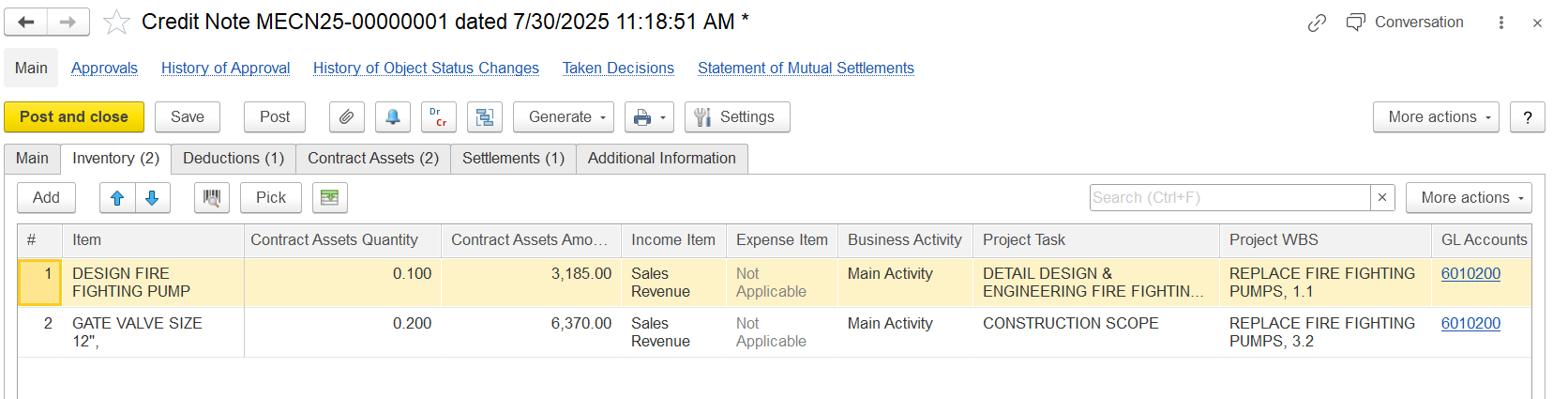
Inventory tab
- Item Description - Name of the returned or reversed item
Quantity-Number of units being credited back.
Unit Price-Price per unit before any deductions.
Amount-Total value for the line (Quantity × Unit Price).
VAT (%)-The VAT rate applied to the item.
VAT Amount- The VAT calculated on the item value.
Total Before Retention-The sum of the item amount plus VAT, before deducting any retention.
Retention-Amount withheld according to the project's retention rules.
Retention VAT-VAT amount related to the retention deduction.
Net Total-The final credited amount after retention and VAT on retention are deducted.
Contract Asset Quantity-Portion of the item quantity being reversed from the contract asset records.
Amount (Contract Asset)-The value reversed from the contract asset, calculated by multiplying the unit price by the contract asset quantity.
Note: These fields auto-fill when you click “Fill Contract Assets” in the Contract Asset tab.Income Account-The account where the original revenue from this item was recorded.
Business Activity-The reporting category this item belongs to (e.g., Main Activity).
Project Task / WBS-Links the item to a specific project task or work breakdown structure segment.
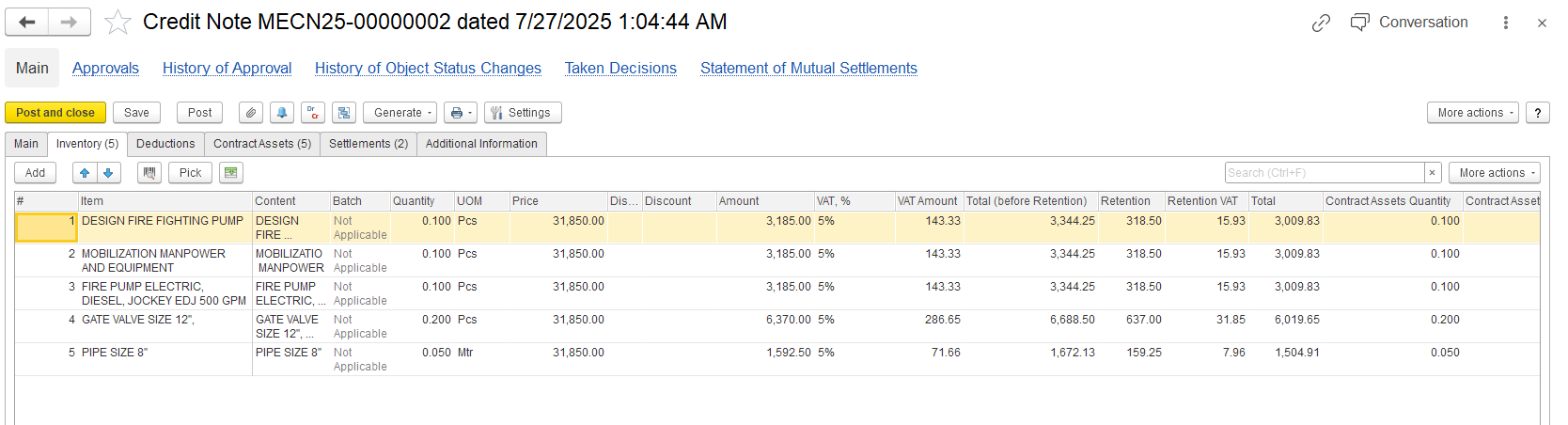
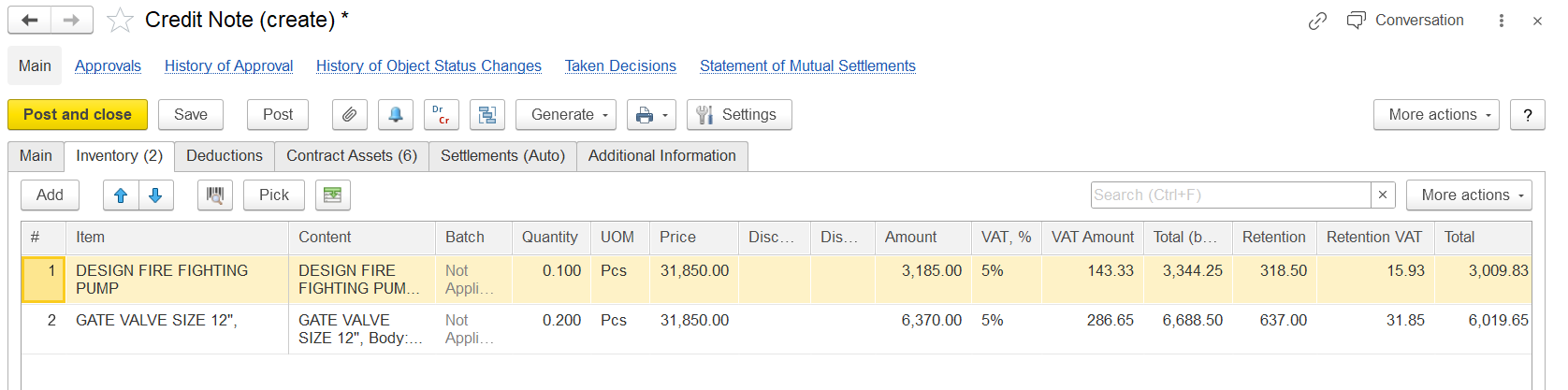
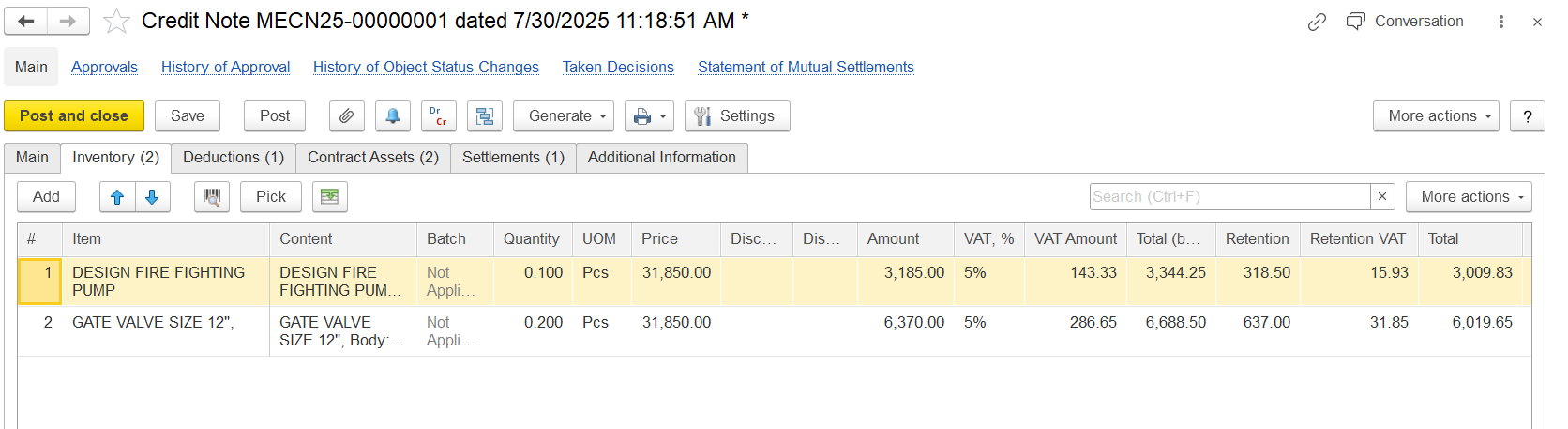
Deduction Tab
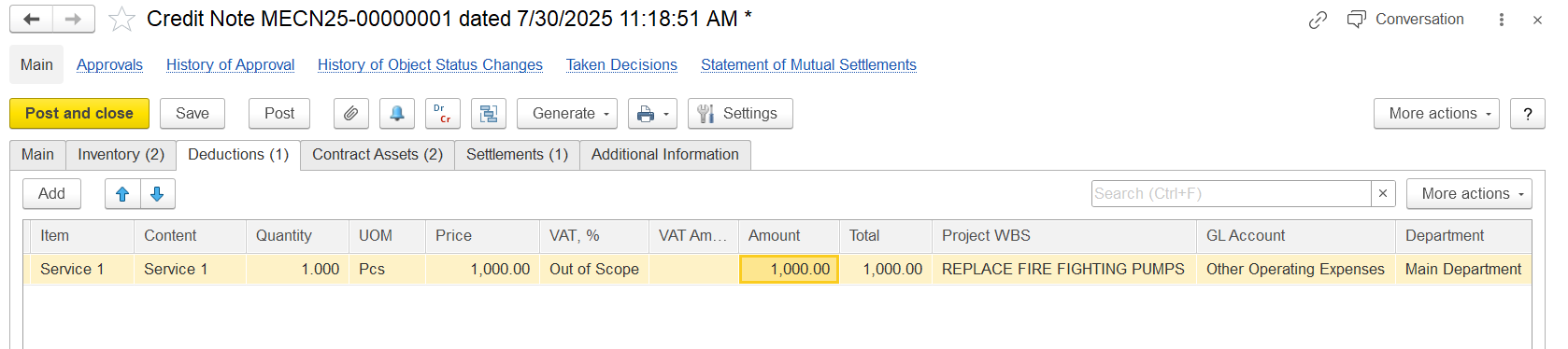
The Deduction tab is used to record and manage any deductions related to the credit note, such as penalties, withholding taxes, or other amounts withheld before settling the credit.
Item-Name of the deduction or credited item.
Content-Brief description or reference, often the same as the item name.
Quantity-Number of units being credited or deducted.
UOM (Unit of Measure)-The unit used to measure the quantity (e.g., pieces, kg).
Price-Price per unit of the item.
VAT%-VAT rate applied to this item.
VAT Amount-VAT calculated based on the price and quantity.
Amount-Total value before VAT (Quantity × Price).
Contract assets Tab
The Contract Assets tab records reversals or adjustments to previously recognized contract asset values in the credit note.
...